Bob's Watches Bob's Watches
The most popular IWC Pilot’s Watches is the Mark XX, a 40mm aviator watch with an IWC made movement and a long power reserve, while larger budgets and bolder tastes step up to the Big Pilot’s Watch, the Pilot’s Chronograph, or the Top Gun and Spitfire lines. Choosing the right one comes down to four things: case size and wrist fit, budget, how you plan to wear it, and the material and look you prefer.
This guide walks through the history that shaped the collection, decodes IWC’s sub-collection names, covers every model worth a shortlist spot, lays out current prices, and gives you a clear way to narrow the field. By the end you should know exactly which IWC Pilot’s Watch fits your wrist, your budget, and your style.
Key Takeaways
- IWC Pilot’s Watches are built on aviation design codes: a matte dial, bold Arabic numerals, a triangle marker at 12 o’clock, and sword shaped hands.
- IWC sorts these watches into looks and material tiers named Classic, Spitfire, Top Gun, Le Petit Prince, and Antoine de Saint-Exupéry. They share the same shapes but differ in size, material, and dial color.
- The Mark XX is the entry point and the most recommended all rounder, with a 40mm case and a power reserve of about 120 hours.
- The Big Pilot’s Watch, with its oversized crown, is the brand’s signature piece, while the chronographs add a stopwatch plus day and date.
- Most current models use movements IWC builds itself and the EasX-CHANGE system for quick strap and bracelet swaps.
- IWC tends to hold value better than many peers, and limited ceramic Top Gun editions hold the best, though any watch should be bought for enjoyment first.
These watches reward a little homework. Below, we start with what makes a Pilot’s Watch an IWC, then move through the models, the prices, and the buying decision itself.
What Is an IWC Pilot’s Watch?

An IWC Pilot’s Watch is an aviation inspired tool watch from the Swiss maker IWC Schaffhausen, built around one core idea: a pilot needs to read the time at a glance. IWC set these design rules for military and civilian flyers in the 1930s and 1940s, and the look has carried throughout the history of IWC to today, which is why this collection remains the brand’s top seller.
The appeal is that the watches still feel honest. There is no clutter on the dial, the case is sturdy, and every choice traces back to a real cockpit need. That mix of clean function and Swiss watchmaking is what draws engineers, designers, aviation fans, and collectors who prefer quiet quality over loud branding.
The signature design codes you will see across the line include:
- A matte dial, often black, with strong contrast for instant reading
- Bold Arabic numerals and a triangle marker at 12 o’clock, usually flanked by two dots
- Sword shaped hands coated with plenty of Super-LumiNova
- A large, grippable fluted crown, with an oversized “onion” crown signaling a Big Pilot
- A soft iron inner cage that shields the movement from magnetism on many references
- A sapphire crystal seated to resist popping out during a sudden drop in cabin pressure
- Solid water resistance, usually between 60 and 100 meters
A Brief History of IWC Pilot’s Watches

As a brand, IWC watches has been making timepices for aviators since the late 1930s, and two early pieces still shape the whole collection. The original Big Pilot’s Watch of 1940 was a large navigation watch with a stark, legible dial, and the Mark 11 of the late 1940s, built for the British Royal Air Force, set the template for the slim, no nonsense Mark watches that followed. Both leaned on the same idea of clarity above all else.
Over the decades, IWC turned those two ancestors into a wide modern range, adding chronographs, complications, and new materials while keeping the core look intact. One clear trend in recent years is the steady switch from supplied movements to calibers IWC builds itself, which has improved the watches without large jumps in price. The timeline below hits the milestones worth knowing.
| Year | Milestone |
| 1936 | Special Watch for Pilots, IWC’s first aviation watch |
| 1940 | Original Big Pilot’s Watch, built for military use |
| 1948 | Mark 11, made for the British Royal Air Force |
| 1994 | Mark XII, the modern revival of the Mark line |
| 2002 | Reissued Big Pilot’s Watch at 46.2mm |
| 2003 | Spitfire introduced as its own look |
| 2006 | First Le Petit Prince editions |
| 2007 | First Top Gun model |
| 2016 | Mark XVIII, the 40mm sweet spot |
| 2022 | Mark XX, with an IWC built movement |
| 2026 | Le Petit Prince 20th anniversary range, new ProSet calendar, and a watch certified for spaceflight |
Understanding IWC’s Pilot’s Watch Sub-Collections

The names IWC uses for its Pilot’s Watches confuse a lot of first time shoppers, so here is the simple version: Classic, Spitfire, Top Gun, Le Petit Prince, and Antoine de Saint-Exupéry are mostly looks and material tiers, not separate kinds of watch. The same shapes, a three hand model, a chronograph, a complication, show up across each tier, dressed in different cases, dials, and price points.
A couple of quick rules clear up most of the rest. The oversized fluted crown marks a Big Pilot, while a normal crown means a standard Pilot’s Watch. And the question buyers ask most, Top Gun versus Spitfire, has a one line answer: Top Gun is the modern ceramic line, and Spitfire is the vintage flavored steel and bronze line. Here is how the five tiers compare:
- Classic: The pure tool watch core, including the Mark XX and the base chronographs. Stainless steel cases, black or colored dials, the most accessible prices.
- Spitfire: A vintage military feel with warmer fonts and sword hands. Steel and bronze cases, often green dials, closest to the original 1930s flieger look.
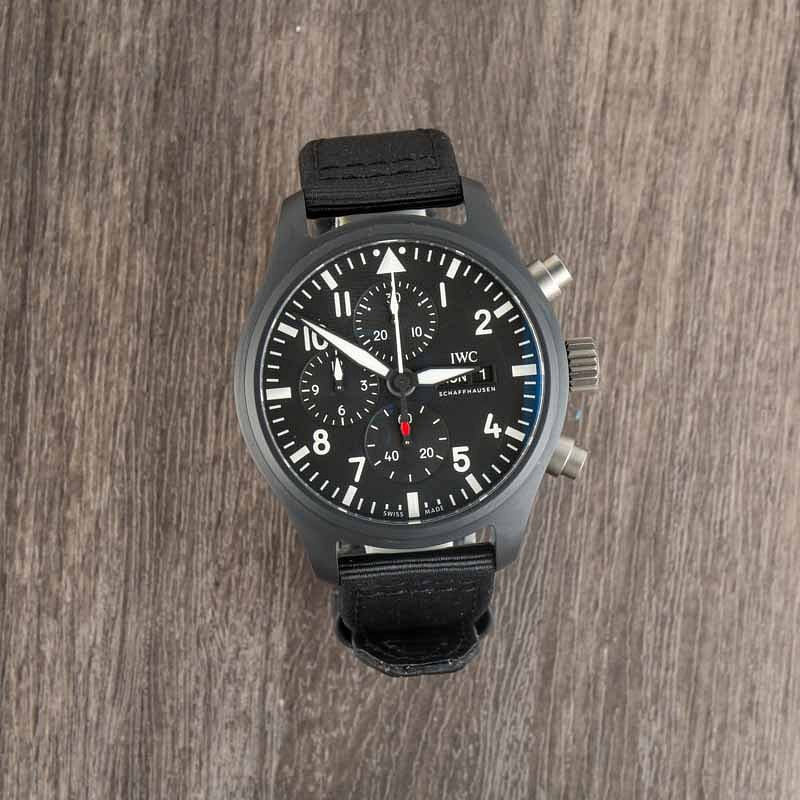
- Top Gun: Modern and stealthy, made from ceramic and Ceratanium. Known for colored editions such as Lake Tahoe, Mojave Desert, Woodland, and Oceana. Light, scratch resistant, and often limited.
- Le Petit Prince: A dressier, romantic take with a deep blue sunburst dial and a Little Prince engraving on the caseback. Offered in steel, ceramic, and gold.
- Antoine de Saint-Exupéry: Heritage and collector editions in tribute to the aviator and author, usually in bronze or precious metals with warm, tobacco tones.
The Key IWC Pilot’s Watch Models to Know

Once you understand the tiers, the real choice is about the model shape itself. Most buyers end up weighing the same handful of archetypes, from the clean three hand Mark XX to the icon status Big Pilot and the everyday chronographs. The sections below cover each one, with a short spec line so you can compare them quickly.
Pilot’s Watch Mark XX
The Mark XX is the heart of the collection and the watch most people should look at first. It carries a 40mm steel case, a clean dial with a date window at 3 o’clock, and a movement IWC builds itself with a power reserve of roughly 120 hours. The look is the direct heir to the military Mark 11, stripped to the essentials, which is exactly why it works so well for daily wear.
It also fits a wide range of wrists and pairs easily with the EasX-CHANGE strap and bracelet system. For value and versatility, it is the easiest IWC Pilot’s Watch to recommend.
- Case: 40mm steel
- Power reserve: about 120 hours
- Best for: a first IWC, daily wear, small to medium wrists
Big Pilot’s Watch
The Big Pilot is the brand’s signature piece, defined by the large fluted crown that gives the line its name. Larger references run about 46.2mm and add a power reserve indicator and a day and date display, while a more wearable 43mm version brings the size down without losing the presence. The crown was first made oversized so pilots could set the time while wearing thick gloves, and that detail still tells you at a glance that you are looking at a Big Pilot.
This is the watch for buyers who want a statement and have the wrist for it. Collectors prize it, and the larger models often pair their size with longer running movements.
- Case: about 43mm or 46.2mm
- Signature: oversized onion crown, power reserve display on larger refs
- Best for: larger wrists and a bold, iconic look
Pilot’s Watch Chronograph
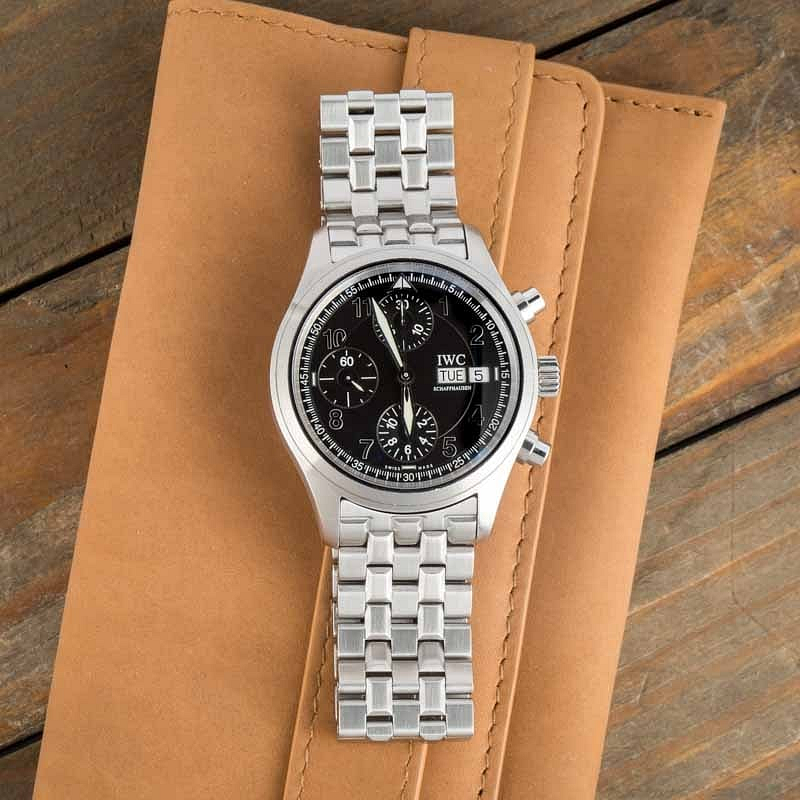
The chronograph is the most useful everyday option, adding a stopwatch and a day and date display to the familiar pilot’s dial. It comes in 41mm and 43mm cases, both powered by IWC’s own column wheel chronograph movement with a power reserve of about 46 hours. The 41mm size has become the favorite for buyers who want one watch that handles work, weekends, and a bit of everything.
The Top Gun versions of this chronograph swap steel for ceramic or Ceratanium, which keeps the weight down and shrugs off scratches. If you only plan to own one IWC Pilot’s Watch, this is a strong place to land.
- Case: 41mm or 43mm
- Functions: chronograph plus day and date
- Best for: one watch buyers who want a stopwatch
Pilot’s Watch Automatic and Spitfire
For smaller wrists or a more understated wear, the Pilot’s Watch Automatic comes in 36mm and 41mm sizes that show the time and date with no extra clutter. The 36mm in particular reads as unisex and suits buyers who find the chronographs or the Big Pilot too large. The Spitfire models sit nearby with a vintage military character, offered in steel and in bronze, the latter developing a natural patina over time.
Both routes deliver the full pilot’s watch look in a friendlier package. The Spitfire is the pick for heritage fans, while the smaller Automatic is the easy answer for a compact daily watch.
- Case: 36mm or 41mm Automatic; Spitfire in steel or bronze
- Best for: smaller wrists, vintage tastes, and patina fans
High Complications and Special Editions
A handful of models climb well past the daily wear bracket and into serious watchmaking. These are not shortlist picks for most buyers, but they show what the collection can do. Recent and notable examples include:
- Big Pilot’s Watch Perpetual Calendar with ProSet: A 2026 system that lets the perpetual calendar be set both forward and backward, with a moon phase accurate to one day in 1,040 years.
- Timezoner Chronograph: Change time zones by rotating the bezel.
- Pilot’s Watch Venturer Vertical Drive: A 2026 piece built with the space company Vast, with no traditional crown and certification for human spaceflight.
- Precious metal, tourbillon, and charity editions that round out the high end.
IWC Pilot’s Watch Prices: What You Will Pay

New IWC Pilot’s Watches generally start around $5,300 for a simple automatic and run past $100,000 for Big Pilot’s watches with intracate movements. Where a given watch lands depends mostly on case material and how much watchmaking sits inside it.
The table below gives approximate ranges to set expectations before you shop. Prices shift by region and release, so treat these as a starting point and confirm the current figure with IWC or an authorized dealer.
| Model | Approx. Case Size | Approx. Pre-Owned Price |
| Pilot’s Watch Automatic 36/41 | 36 to 41mm | $4,000 to $6,500 |
| Pilot’s Watch Mark XX | 40mm | $4,000 to $6,800 |
| Spitfire (steel or bronze) | 39 to 43mm | $5,200 to $12,000 |
| Pilot’s Chronograph 41/43 | 41 to 43mm | $6,800 to $15,600 |
| Top Gun Chronograph (ceramic) | 41 to 44mm | $9,500 to $13,800 |
| Big Pilot’s Watch 43 | 43mm | $5,200 to $12,000 |
| Big Pilot 46 / long power reserve | 46.2mm | $11,000 and up |
| Perpetual Calendar or precious metal | varies | $15,000 and up |
Prices last verified in 2026 and are approximate.
How to Choose the Right IWC Pilot’s Watch
With the models and prices in view, the decision gets easier once you weigh four factors in order. Sort out size, budget, use, and material, and the field usually narrows to one or two watches on its own. The short sections below walk through each factor.
Case Size and Wrist Fit
Size is the first filter because an IWC Pilot’s Watch can run from a compact 36mm up to a wrist filling 46.2mm. The 40mm Mark XX is the most universal, the 41mm and 43mm chronographs add a little heft, and the Big Pilot is a commitment. One detail many shoppers miss is lug to lug length, which on these watches runs long, so a watch can wear larger than its diameter suggests. Try a few on if you can.
Budget and Use
Budget tends to slot buyers into clear brackets. Entry money of roughly $4,900 to $6,000 covers the Automatic and the Mark XX, the middle ground of about $6,000 to $12,000 opens up the chronographs, Spitfire, Top Gun, and the Big Pilot 43, and anything above that moves into long power reserve Big Pilots, complications, and precious metals. Pair the bracket with your use case:
- One watch for daily wear: Mark XX or Chronograph 41
- A statement or collector piece: Big Pilot
- Active and durable: a ceramic or Ceratanium Top Gun
- A dressier aviator: a Le Petit Prince with the blue sunburst dial
Material and Movement
The last factor is what the watch is made of and what powers it. Steel is the versatile default, bronze offers a patina that changes over time, ceramic and Ceratanium stay light and resist scratches, and gold sits at the luxury end. Where you can, favor the models with movements IWC builds itself, listed as IWC manufactured, since they tend to age well and support resale value. Also note the EasX-CHANGE system, which lets you switch straps and bracelets without tools, so one watch can cover several looks.
Which IWC Pilot’s Watch Should You Buy?

There is no single right answer, but there is usually a right answer for you, based on the priority that matters most. For the widest set of buyers, the Mark XX remains the smart default thanks to its balanced size, fair price, and IWC built movement. From there, the pick shifts with your wrist, your taste, and how you plan to wear it.
Use the quick guide below to match a common priority to a model, then handle the final call in the metal:
- Buying your first IWC: Mark XX, for the best balance of size, price, and movement
- Smaller wrist: Pilot’s Automatic 36 or the Mark XX, which wear compact
- Want the icon: Big Pilot’s Watch, for the crown and the collector status
- One watch collection: Pilot’s Chronograph 41, for date and stopwatch versatility
- Durability first: a ceramic or Ceratanium Top Gun
- Heritage lover: a bronze Spitfire, for vintage character
- Best value retention: limited ceramic Top Gun editions
Do IWC Pilot’s Watches Hold Their Value?
IWC Pilot’s Watches generally hold their value better than many comparable luxury watches, though they are best bought for enjoyment rather than as an investment. As experts who track the used market often point out, a watch tends to dip in value after purchase, hold for a few years, and then recover over a longer stretch, with limited and special material editions performing best.
A watch is not a regulated financial asset, so any resale upside should be treated as a bonus and not a plan. With that framing in mind, a few patterns are worth knowing:
- Limited ceramic and Ceratanium Top Gun editions, such as Lake Tahoe and Mojave Desert, hold value best because of small production and steady demand.
- Core, iconic references like the Mark XX and the Big Pilot trade easily on the used market.
- Buying a clean, previously owned example lets the first owner absorb the steepest early drop, which is the smartest way to own one without overpaying.
Where and How to Buy an IWC Pilot’s Watch

You can buy an IWC Pilot’s Watch new from an IWC boutique or an authorized dealer, or used from a reputable specialist, and each path has a clear trade off. New purchases bring the full warranty and the latest releases at full retail. The used market offers better pricing on the same models, which is why so many buyers start there once they know exactly what they want.
If you go the used route, a short inspection protects you. Whether you shop a trusted dealer or a private seller, confirm the following before money changes hands:
- The box, papers, and warranty card, with the reference and serial numbers matching the watch
- A known service history and a movement that runs cleanly
- Authentic dial, hands, crown, and caseback engraving
- The strap or bracelet system, since newer models use EasX-CHANGE while older ones use standard spring bars
Caring for Your IWC Pilot’s Watch

A well kept IWC Pilot’s Watch can last for generations, and the upkeep is simple. Plan on a service roughly every five years, or as IWC advises and as your wear demands, to keep the movement healthy and the water resistance intact. Beyond that, basic habits go a long way.
Day to day, keep the crown screwed down, avoid strong magnets where you can, and rinse off salt water or grit. The strap and bracelet swaps are easy on current models thanks to EasX-CHANGE, and many references still accept standard 20 or 21mm straps if you want more options. Care also varies by material:
- Steel: wipe clean and polish lightly only when needed
- Bronze: expect a patina to form, which many owners value
- Ceramic and Ceratanium: highly scratch resistant, but still avoid hard knocks
Finding the Right IWC Pilot’s Watch for You
Choosing an IWC Pilot’s Watch is really a process of matching one of a few archetypes to your own life. The Mark XX is the smart default, the Big Pilot is the icon, the chronographs are the everyday workhorses, and the Top Gun, Spitfire, and Le Petit Prince lines are simply different routes to the same aviation DNA. Run the watch you like through the four filters of size, budget, use, and material, and the right pick tends to reveal itself.
The deeper value here is not about resale at all. An IWC Pilot’s Watch puts a living piece of aviation history on your wrist, engineered around the simple goal of reading the time clearly, and that purpose is what has kept the design relevant for nearly a century. Try a couple on, trust the one that feels right, and you will own a watch that earns a quiet nod from the people who know.
Frequently Asked Questions
The post IWC Pilot’s Watches Buying Guide: Models, Prices, and How to Choose appeared first on Bob's Watches.