Bob's Watches Bob's Watches
Each year, Watches & Wonders sets the tone for the watch industry, and 2026 was no exception. Rolex releases at Watches & Wonders created several moves that collectors and dealers are still processing, from high-profile discontinuations to a new off-catalog Daytona that already has the market buzzing. For anyone buying or selling on the secondary market, understanding what Rolex did and why it matters is essential.
The through line across all of these announcements is the same: Rolex is tightening its catalog. Fewer references, more intentional offerings, and a growing gap between what the brand produces and what the market wants. Here is a full breakdown of every major move and what each one means for prices and demand.
The Discontinuations
Two of the most talked-about references in the Rolex watch catalog are now gone. The Pepsi and the Cookie Monster have both been officially discontinued, and each one tells a slightly different story about where Rolex is headed.
The GMT-Master II Pepsi Is Gone, and There Is No Replacement
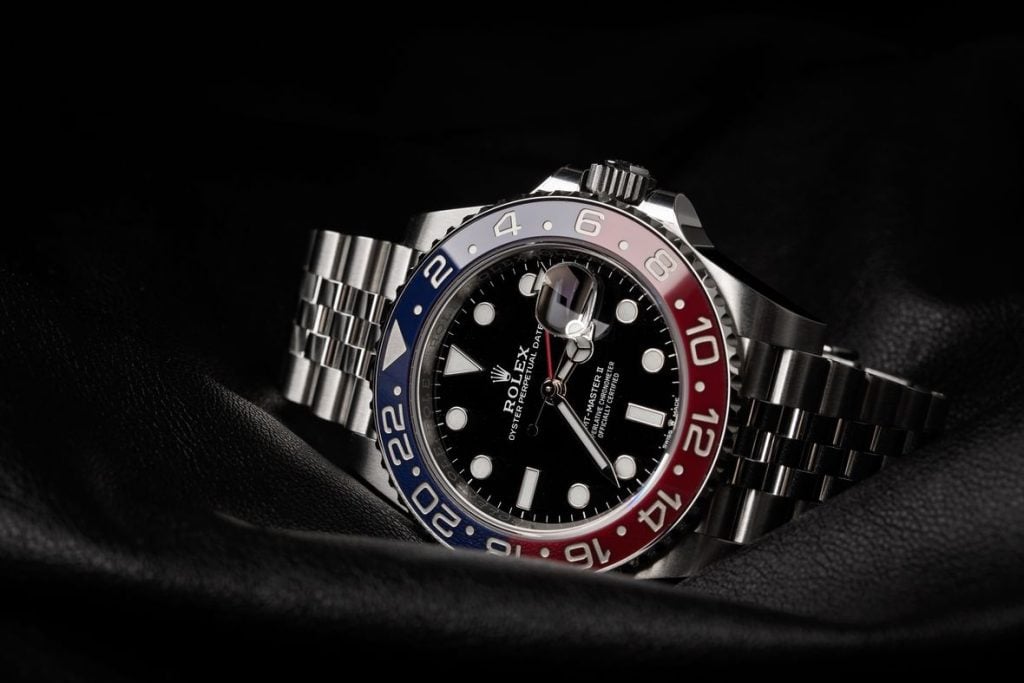
The Rolex Pepsi, available in both stainless steel (ref. 126710BLRO) and white gold (ref. 126719BLRO), has been officially discontinued. No replacement model was announced alongside the news, which means the red and blue colorway is now completely absent from the GMT-Master II collection for the first time in over a decade.
A few factors likely drove this decision. The red and blue ceramic bezel has always been one of the more difficult components for Rolex to manufacture, with a higher rejection rate than other bezel inserts. The Rolex GMT-Master II lineup also already includes multiple colorway options in stainless steel alone, so trimming the Pepsi is not exactly leaving buyers without choices. There is also what collectors have started calling the “Coke Theory.” Rolex filed a patent in 2022 for a process related to producing a single-piece red and black ceramic bezel, which may hint at what is planned for the future.
What this means for the secondary market:
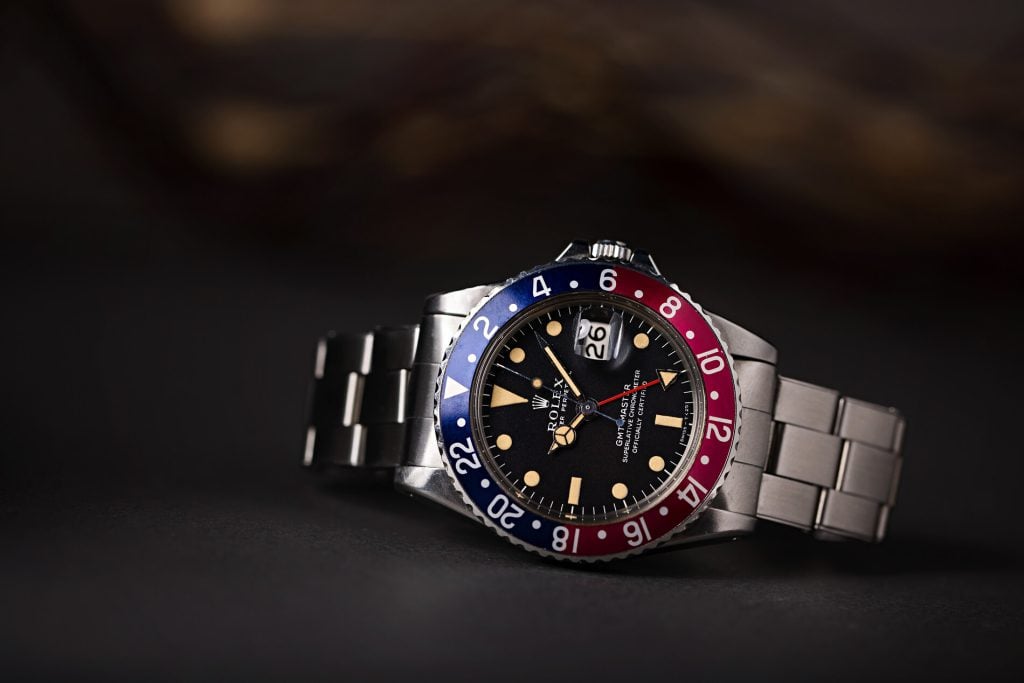
Since discontinuation rumors picked up in late February, prices across the Pepsi family have moved quickly:
- Stainless steel ref. 126710BLRO: up 21.1%
- White gold ref. 126719BLRO: up 7.8% (combined average across meteorite and blue dial)
- Vintage ref. 1675: up 39.5%
- Average price across the full Pepsi range: from $18,995 in January to $21,352 in April
These kinds of spikes tend to level off after a few months, which is consistent with what was seen after the Rolex Hulk discontinuations. There was a sharp run-up, a period of stabilization, and then a new price floor. With supply now permanently capped and no replacement in sight, the Pepsi has crossed from a current production watch into a closed chapter. The question is not whether prices will hold, it is where that new floor lands.
The Cookie Monster Exits Quietly

The white gold Submariner Date ref. 126619LB, known as the Rolex Cookie Monster, has also been discontinued. Unlike the Pepsi, its exit came without much buildup or warning. Introduced in 2020 as the successor to the Smurf, the watch paired a 41mm white gold case with a blue ceramic bezel and a black dial, and it held its place in the Rolex catalog for six years.
The Cookie Monster was always a more niche piece. At retail, it was priced higher than a full yellow gold Submariner, but it lacked the visual impact that tends to justify that premium for a broader audience. It appealed to a very specific type of buyer. Whether Rolex pulled it due to softer demand or is simply making room for something new is unclear, but the result is the same.
What this means for the secondary market:
Since the announcement, prices have climbed 8.25%, with the watch now averaging $41,995. Because relatively few were produced and sold compared to the steel Submariner, supply is inherently limited. That scarcity will likely support prices over time, but the full picture will take longer to develop than it did with the Pepsi.
The New Releases
Rolex did not just create discontinued Rolex’s at Watches & Wonders. Several new references were unveiled, and each one has its own set of implications for collectors and the secondary market.
The Rolesium Daytona (Ref. 126502)

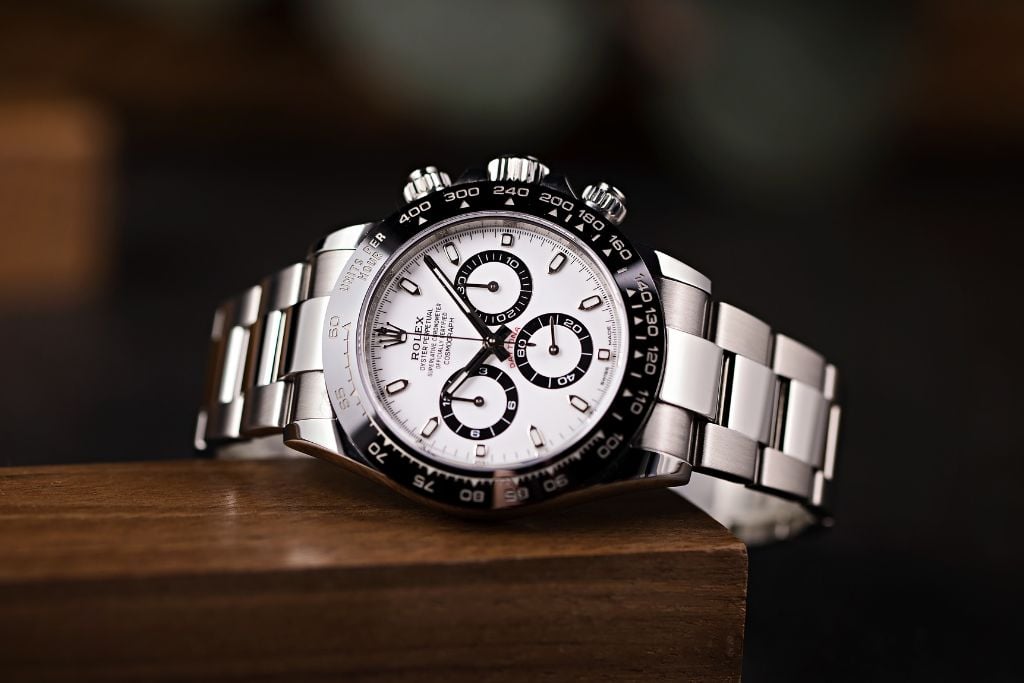
The new Rolex Daytona ref. 126502 pairs oyster steel with platinum accents on the bezel, ring, and caseback frame. It is the first time platinum has ever appeared on a Daytona, and that alone makes it notable. The dial is white enamel, a technique rarely seen on modern Daytona models, and the anthracite ceramic bezel edged in platinum is paired with a tachymeter scale that references the fonts used on older, pre-ceramic Daytona watches. A sapphire caseback, previously reserved for gold and platinum Daytona models, rounds out the package.
This reference is off-catalog, meaning it does not appear on Rolex’s configurator or official website. Its retail price of $57,800 makes it more expensive than most 18K gold Daytona configurations, even those fitted with a matching solid gold bracelet. Rolex has used this playbook before. Keeping a model off-catalog controls desire and limits supply. The Le Mans Daytona is the clearest example, a quiet, understated reference that became one of the most sought-after Rolex watches precisely because of its scarcity.
What this means for the secondary market:
The Rolex Daytona Le Mans, released in 2023 at a retail price of $51,400, currently averages $251,995 at Bob’s Watches, representing a 390.26% increase in just three years. If the new Rolesium Daytona follows a similar path, especially if it ends up being a short production run like the white gold Le Mans before the yellow gold variant replaced it, this reference could move into an entirely different tier. The first examples are not expected to hit the secondary market until later this year.
The Yacht-Master II Gets a Second Chance
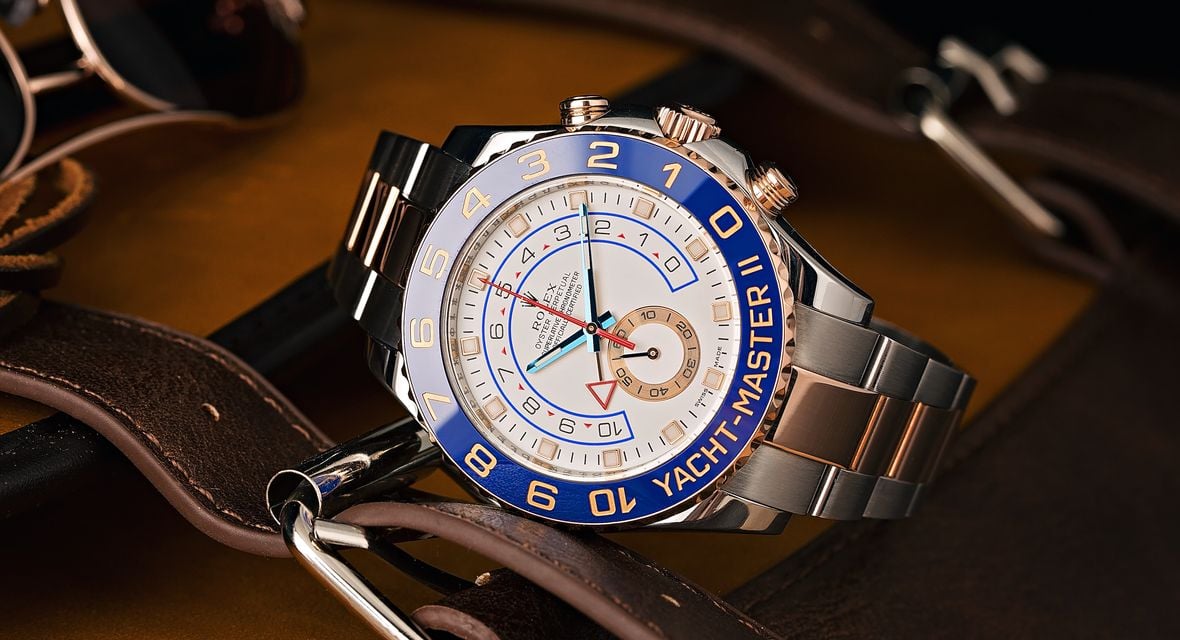
The original Rolex Yacht-Master II launched in 2007 and spent nearly two decades struggling to find a clear identity within the Rolex catalog. It was discontinued in 2024. The 2026 version keeps the same 44mm case diameter and regatta-inspired function, but the watch has been rebuilt from the ground up.
The cluttered Ring Command bezel has been replaced with a clean blue ceramic timing bezel. The countdown display has moved off the dial and onto the flange. Both countdown hands now run counterclockwise, a first for any Rolex, and the timer can be set entirely through two pushers rather than requiring the crown to be unscrewed. The “Yacht-Master II” text that appeared on the original bezel is also gone. The result is a watch that is more compact, more legible, and more practical for actual use on the water.
What this means for the secondary market:
When Rolex reinvests in a collection that the market has largely written off, it tends to bring fresh attention to the entire family. Collectors who had not considered the Yacht-Master are likely to take another look, and that renewed interest tends to lift prices across the broader lineup. Demand for the Yacht-Master family is expected to increase through the rest of 2026.
The Oyster Perpetual Updates
The Rolex Oyster Perpetual lineup received two significant additions in 2026, both tied to the 100th anniversary of the Rolex Oyster case. One leans into color and personality, and the other is a more restrained but historically meaningful piece.
The Multicolor Jubilee Dial
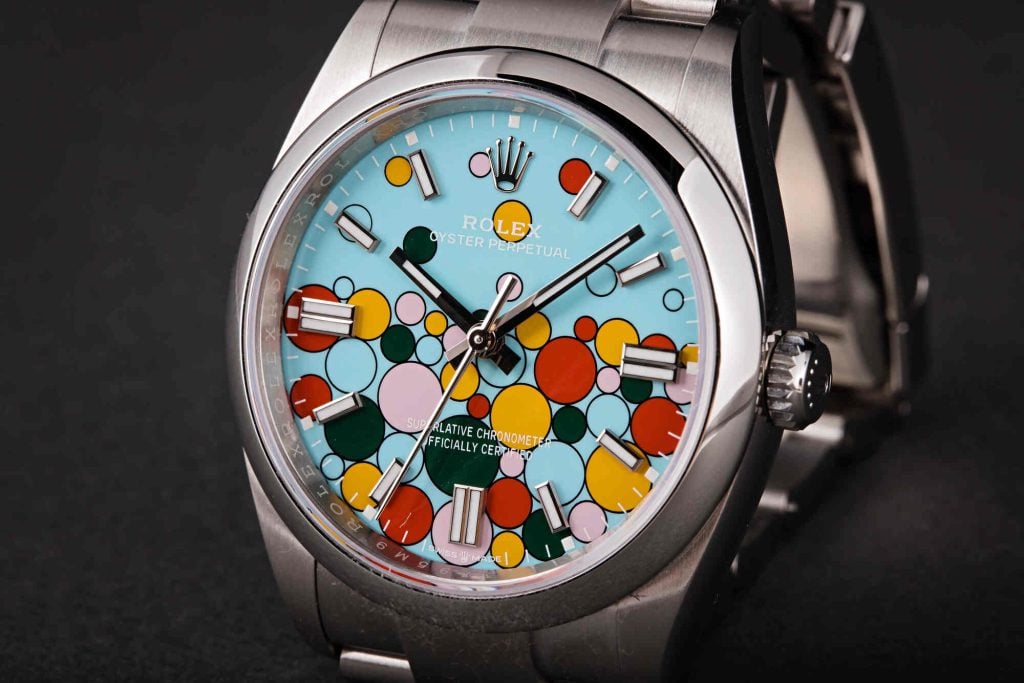
For 2026, Rolex introduced the Oyster Perpetual with a multicolor Jubilee dial, using ten distinct colors of lacquer applied one layer at a time. The Jubilee dial pattern dates back to the late 1970s and is most closely associated with the 1985 Datejust anniversary collection. It consists of the letters of the Rolex name repeating across the entire dial surface, and it has a devoted following among collectors.
The new multicolor version is available in the 31mm, 36mm, and 41mm Oyster Perpetual, all in oyster steel, and it is priced identically to the standard model. The Rolex Celebration Dial from 2023 is the closest comparison, and it still trades well above retail. As mentioned in our Rolex Celebration dail review, the brand has not discontinued the watch, but the arrival of this new option is only likely to reinforce interest in colorful Oyster Perpetual variants. The first Jubilee dial examples are not expected to reach the secondary market for several months.
The OP 100 Anniversary Model
The Oyster 100 is Rolex’s official centenary piece, marking 100 years of the Oyster case. It is the first Rolesor Oyster Perpetual in the modern catalog, combining a stainless steel case and bracelet with an 18-karat yellow gold bezel and winding crown. The “100” marking appears both below the Rolex logo on the crown tip and on the dial itself, where “Swiss Made” would typically appear.
It is available in 31mm, 36mm, and 41mm, and the 41mm version is priced at just under $9,000. Historically, two-tone Rolex models have not performed as strongly on the secondary market as their steel counterparts. However, this is the first Rolesor Oyster Perpetual in the modern era, and the explicit anniversary branding adds a layer of collectibility that standard two-tone pieces do not carry. If production is limited to a short window, the OP 100 has the potential to become a grail piece for collectors.
The Gradual Retreat of Stone Dials

The discontinuation of stone dial references at Rolex is not a 2026 story on its own. It is a pattern that has been building for several years. Models like the Falcon’s Eye Yacht-Master 42 and the white gold turquoise Day-Date were both gone within three years of their introduction, and more stone dial variants left the catalog this year.
Rolex introduced a wave of exotic material references in the early 2020s, let the market respond, and has spent the last two years editing the lineup down. Stone dials have always occupied a unique space. No two are identical, and that inherent variation gives them a scarcity that even limited production runs cannot replicate. With fewer options available at retail, collectors looking for something distinctive are increasingly turning to the secondary market, which is putting upward pressure on prices for discontinued stone dial references.
The 2026 catalog still includes stone dial options, particularly across the solid gold Perpetual models, which introduced natural stone hour markers this year. An off-catalog Jubilee gold Day-Date with a light green aventurine dial has already attracted serious attention. But the overall direction is clear. There are fewer stone dials than there were two years ago, and the ones that remain are not guaranteed to stay.
Final Thoughts
Watches & Wonders 2026 was one of the more consequential years Rolex has had in recent memory. High-profile discontinuations, a new off-catalog Daytona, a redesigned Yacht-Master II, and a pair of anniversary Oyster Perpetual models all landed in the same week.
The broader pattern is that brand is tightening its catalog of Rolex watches for sale with intention. Fewer references, more scarcity, and a sharper line between what they produce and what the market wants. For collectors and dealers, that is worth paying close attention to. Bob’s Watches will be tracking how prices and demand respond across all of these references as the year progresses.
The post Watches & Wonders 2026: How Rolex Announcements Impact the Secondary Market appeared first on Bob's Watches.