Bob's Watches Bob's Watches
Conventional wisdom has long held that steel sport watches such as Submariners, GMT-Masters, Daytonas, drive Rolex appreciation, but the 2026 secondary market is telling a different story. While pre-owned Rolex values did appreciate through the spring, the real momentum is coming from smaller-cased dress watches, mid-size classics, and vintage references that collectors once overlooked. Drawing on proprietary Bob’s Watches data comparing December 2025 to May 2026, the standouts will likely surprise you. Here’s a closer look at which Rolex models gained the most value in 2026 so far, and what’s driving the move.
Rolex Market Trends Through April 2026
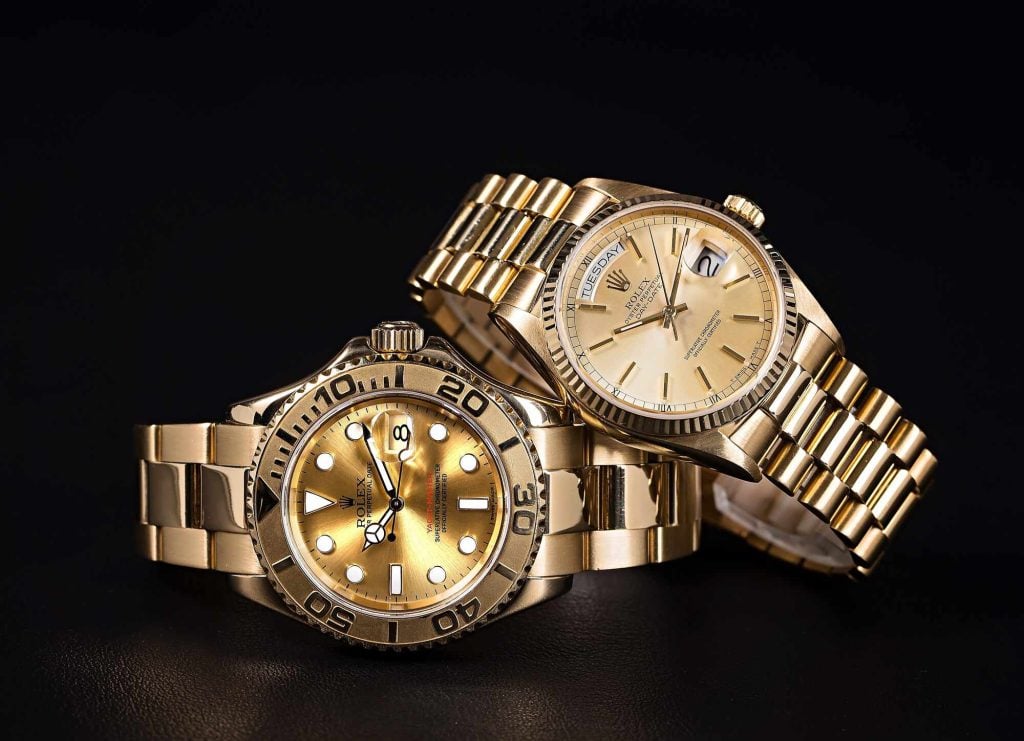
While Rolex brand’s overall achieved baseline growth of 7.92% in average value as of May, smaller-cased, under-the-radar models and vintage references saw double-digit surges that are driving growth.
Specifically, the Rolex 6827 (Datejust 31) came in as the top-appreciating model year-to-date with a 68.42% increase in AOV, while Lady-Datejust ranked as the top-performing collection with 22.73% AOV growth.
In a departure from historical trends dominated by steel tool watches, the raw market data reveals a surprising narrative: mid-size, vintage, and classic dress watch references are currently leading secondary market appreciation percentages, quietly outperforming traditional powerhouse collections.
Top 10 Rolex Reference Numbers by Value Increase in 2026
| Reference Number | AOV % Increase |
| Datejust 31 6827 | 68.42% |
| Date 1550 | 40.04% |
| Lady-Datejust 6917 | 38.58% |
| Lady-Datejust 179174 | 32.17% |
| Datejust 36 16030 | 29.68% |
| Lady-Datejust 279174 | 28.59% |
| Lady-Datejust 279171 | 26.93% |
| Oyster Perpetual 26 76094 | 26.03% |
| Lady-Datejust 69174 | 25.03% |
| Submariner 1680 | 24.01% |
| * Comparing Dec 2025 to May 2026 | |
Top Rolex Collections by Value Increase in 2026
| Collection | AOV % Increase |
| Lady-Datejust | 22.73% |
| Rolex Day-Date II | 19.48% |
| Rolex Explorer 40 | 15.86% |
| Rolex Day-Date 40 | 14.83% |
| Rolex Air-King | 14.53% |
| Rolex Oyster Perpetual 36 | 13.68% |
| * Comparing Dec 2025 to May 2026 | |
Why the Lady-Datejust Is Leading Rolex’s 2026 Appreciation
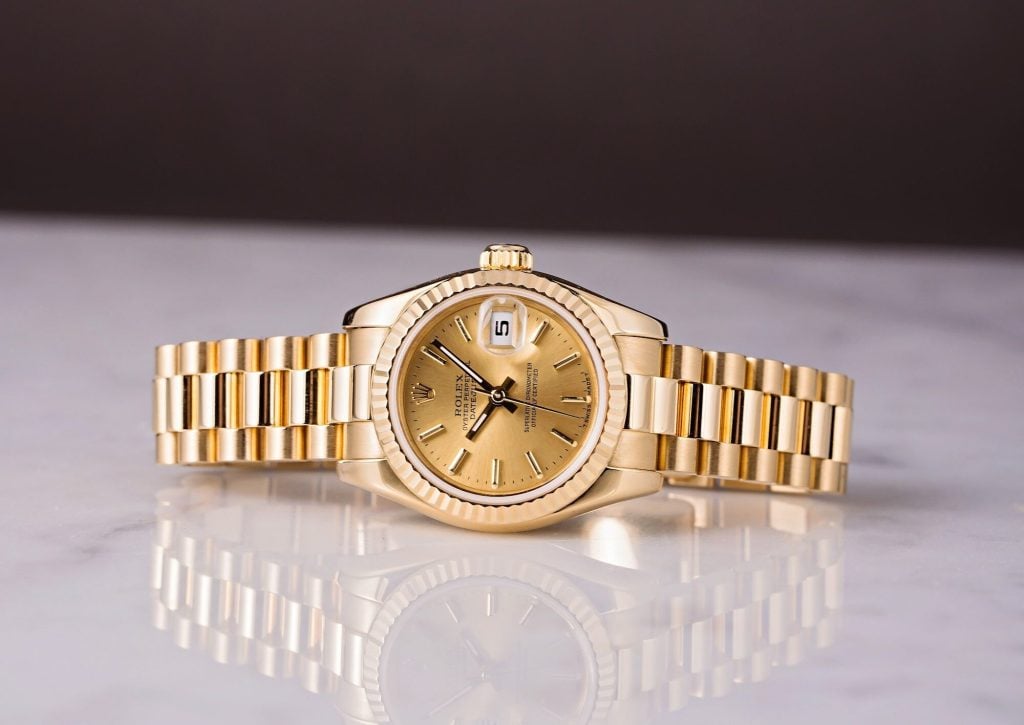
With five of the top 10 references, Rolex Lady-Datejust stands out as the top-performing collection so far this year with an AOV increase of almost 23%. It’s also worth noting that three of those five models were the classic 26mm size that was discontinued in 2015.
Following the runaway success of the men’s Rolex Datejust – launched in 1945 marking the brand’s 40th-anniversary milestone – Rolex scaled it down for women in 1957 with the introduction of Lady-Datejust, the first chronometer-certified wristwatch specifically designed for women.
Just like the men’s version, its waterproof Oyster case houses a self-winding movement and features the brand’s signature date-window at 3 o’clock. Notably, the Lady-Datejust has been in continuous production since its launch nearly six decades ago proving its remarkable staying power.
Leading the pack of top-performing Lady-Datejusts this year is the vintage Rolex 6917 Lady-Datejust with an increased AOV exceeding 38%.
Produced from the 1970s until the early 1980s, the 26mm ref. 6917 was available in various configurations – solid yellow gold, stainless steel, and two-tone Rolesor versions in steel and yellow gold. Typically fitted with a signature fluted bezel, the 6917 was commonly paired with a Jubilee bracelet, but Oyster and President bracelets were also available. Models from the early 1970s often featured sloped Rolex pie-pan dials that brought a dimensional character to the watch face.
The ref. 6917 was typically powered by the automatic Caliber 2030 or 2035 movements, which unlike newer models, did not feature a quick-set date function that allows the date to be adjusted independently of the hour hand.
The second-best performing Lady-Datejust is the 26mm Rolex 179174, which launched in the the mid-2000s, representing a next-generation of the Lady-Datejust line with a robust 904L stainless steel case and a signature 18-karat white gold fluted bezel on a Jubilee bracelet. Its AOV increase over the designated period topped 32% with a value of $9,245.
The ref. 179174 is powered by the automatic, chronometer-certified Rolex Caliber 2235, with its date display magnified by the iconic Cyclops lens on the dial. Various dial options – from classic silver and black with Roman or index-style hour markers, with and without diamonds – made the line highly customizable.
As one of the last 26mm references produced (Rolex discontinued the 26mm size in 2015 in favor of the 28mm case), the ref. 179174 marked the end of an era, making it highly sought after on the secondary market.
The surge in secondary market values for the Rolex Lady-Datejust can be attributed to a number of factors, including a growing global audience of female watch enthusiasts. Additionally, current market trends to smaller, even “mini” watches make the discontinued 26mm models particularly hot commodities for those seeking a compact, classic timepiece with a nearly 60-year legacy in the Rolex family.
Widely considered the quintessential everyday luxury watch for women, the Lady-Datejust delivers the same mechanical prowess, precious materials and timeless design as hyped men’s models for a fraction of the price, though clearly, buyers are currently bidding up these values across the collection.
Small Cases Are Outperforming: 26mm, 31mm, and 36mm Rolex Watches

Long gone are the days of saucer-sized wristwatches, and good riddance to the bigger-is-better mindset. In recent years, the pendulum has swung back to more wearable sizes with a current sweet spot in the 36mm-40mm range.
With an abundance of vintage pieces in the secondary market, sizes skew even smaller, and Bob’s Watches data demonstrates that smaller case profiles – specifically 26mm, 31mm, 34mm, and 36mm – are dramatically outperforming their larger counterparts on the site.
Smaller cases inherently offer better ergonomics for daily wear. As wrist presence gives way to comfort, smaller references are attracting an expansive pool of buyers and generating rapid price appreciation.
The surge in value for 26mm, 31mm, and 36mm models is driven by a global trend toward classic, unisex proportions and understated elegance in line with the popularity of “quiet luxury.” Buyers are moving away from oversize look-at-me watches in favor of historic character, comfort, and lower entry costs offered by smaller-cased references.
Vintage Four-Digit and Five-Digit References Are Quietly Climbing

Notably, seven of the top 11 appreciating references are vintage Rolex models, demonstrating the inherent value of historic watches that are in finite supply. Unlike modern references currently in production, the global pool of four- and five-digit references is fixed, making pristine examples increasingly rare. Today’s collectors are particularly responsive to the romantic appeal of vintage patinas, unusual dials, and acrylic crystals.
Placing second on the list of top appreciators is the Rolex 1550 Date, achieving an increased AOV just over 40% with a value of $6,995. This Rolex classic from the 1970s is distinguished by a 34mm yellow “gold-shell” case with a smooth bezel and gold screw down Oyster crown. One notable characteristic is the stepped triple sunk date at 3 o’clock instead of the typical square-cut aperture.
Rolex positioned the ref. 1550 as an entry-level luxury watch by pressure-forming a heavy 240-micron layer of 14-karat yellow gold over the stainless-steel case, creating the look and feel of solid gold at a considerable discount. While purists once snubbed these gold-capped models, today’s collectors appreciate the gold aesthetic without the solid-gold price tag.
In keeping with strong demand for 36mm sizes, the Datejust 36 ref. Rolex 16030 ranked sixth on the list with an AOV increase of more than 29% at a value of $7,195. Produced from 1977 through 1988, the Rolex 16030 was the Brand’s first five-digit, all-steel Datejust. It also marked a milestone in Rolex history as the last 36mm Datejust fitted with an acrylic (plexiglass) crystal before sapphire crystals took over. This vintage character was paired with the technological advancement of a convenient quickset date movement, the Caliber 3035.
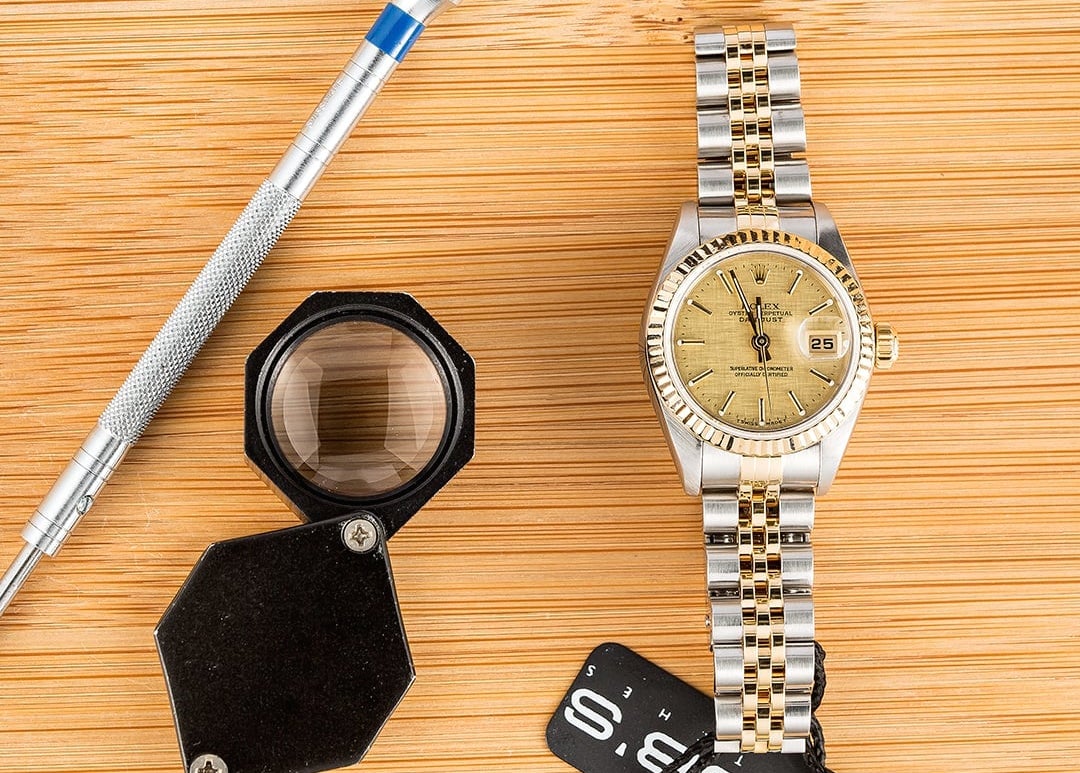
A defining aesthetic characteristic is the distinctive engine-turned steel bezel characterized by decorative notched ridges imparting a sportier character than formal fluting, while still catching and reflecting light. Another hallmark is the variety of factory dials, including rare treatments such as Linen with a textured finish evoking the cross-hatched fabric; Tapestry with vertical ridged grooves and Buckley with painted Roman numerals.
Placing eleventh in the ranking with an AOV just topping 24% and a value of $14,255, the Submariner ref. 1680 flexes its vintage blue-chip muscles. Produced from 1967 to approximately 1979, the Rolex 1680 was a milestone watch marking the Submariner’s pivot from a utilitarian underwater tool watch to a luxury sport watch with the addition of a date window magnified by the signature Cyclops lens.
Today’s collectors seek original, unpolished cases with prominent chamfers on the lugs; faded bezel inserts (“ghost bezels”) with the original black anodized aluminum inserts faded to grey, blue, or silver due to UV exposure and seawater; and a natural creamy patina of the original tritium luminous material on the dial plots and hands that shifts over time from white to a warm, creamy shade.
Market Spotlight: The Datejust 31 ref. 6827 Outlier

With its remarkable 68.42% value increase, the Datejust 31 ref. 6827 requires a more nuanced examination. In the interest of transparency, it is critical to note that vintage references naturally trade in smaller volumes from a lower base price, so an influx of aggressive buyers willing to pay higher prices can dramatically swing growth percentages. The spike in ref. 6827’s AOV from $4,945 to $8,328 represents genuine, aggressive demand, but it also reflects the high volatility typical of lower-volume, historic models.
The Rolex 6827 was introduced in the late 1970s and produced until the early 1980s, pioneering the “midsize” category (31mm) that bridged the gap between smaller traditional women’s watches and the standard 36 mm men’s Datejust.
Celebrated for its vintage proportions and classic styling, this reference primarily features a case in 18-karat yellow gold (sometimes designated with a “/8” at the end of the reference number), though two-tone steel and gold Rolesor models also existed. Most standard versions are fitted with an 18-karat gold fluted bezel, and early iterations had scratch-resistant acrylic crystals fitted with the Cyclops lens over the date window. Under the dial beats the automatic Caliber 2030 movement that does not feature the quick-set date function.
This reference is highly liquid on the secondary market due to modern sizing preferences for smaller cases and more wearable everyday watches.
What This Means for Rolex Buyers and Sellers Right Now
For buyers, the current climate underscores the shift away from the wild speculation that peaked in 2022 with the market becoming more focused on genuine collectors who aren’t chasing steel sport grail models to flip. Instead, value is found in neo-vintage dress pieces, mid-size sports options, and precious-metal Lady-Datejust references that are actively experiencing enhanced appreciation and collectability, while retaining approachable entry price points under $10,000.
For sellers, the data indicates an opportunity window to monetize appreciating models that were historically considered slow-moving or low-premium. The market is currently showing heightened profit margins for vintage mid-size Datejusts and vintage Lady-Datejust models. Liquidating these models in today’s high-demand marketplace allows sellers to capitalize on this historically elevated pricing floor.
Frequently Asked Questions
Final Thoughts
The 2026 data makes one thing clear: the Rolex market has moved past the speculative excess that peaked in 2022 toward a more discerning collector base that prizes historic character, wearable proportions, and genuine scarcity over hyped grail watches. For buyers, real opportunity still exists below $10,000, particularly in neo-vintage Lady-Datejust models and mid-size Datejusts that pair Rolex craftsmanship with classic, unisex appeal. For sellers, it’s a moment to monetize pieces once considered slow-moving but now commanding historically elevated prices, keeping in mind that thin trading volumes can amplify percentage swings in vintage references. The underlying trend, however, is unmistakable: in 2026, Rolex value is being rewarded by those who appreciate where the brand has been, not just where the hype is headed.
The post Which Rolex Models Increased Most in Value in 2026 (So Far) appeared first on Bob's Watches.