Bob's Watches Bob's Watches
This Rolex Datejust 41 buying guide covers every current reference, what each configuration costs at current retail and on the pre-owned market, and what to inspect before you buy. The Rolex Datejust 41 is the 41mm version of the brand’s best-selling model, produced since 2016 with the in-house Caliber 3235.
Key Takeaways
- The Datejust 41 replaced the Datejust II in 2016 and restored the collection’s classic proportions at 41mm.
- Every Datejust 41 reference runs the Caliber 3235 with a 70-hour power reserve and Superlative Chronometer certification.
- The main buying decision is configuration: smooth or fluted bezel, Oyster or Jubilee bracelet, and steel or two-tone Rolesor.
- Current retail starts at $8,950, while pre-owned Datejust 41s at Bob’s Watches sold for a median of about $14,900 over the past 12 months, with steel models from roughly $9,700.
The right Datejust 41 depends on how you plan to wear it, which configuration fits your budget, and which market you buy from. The place to start is the question most buyers ask first: how it performs as an everyday watch.
Is the Rolex Datejust 41 a Good Daily Watch?
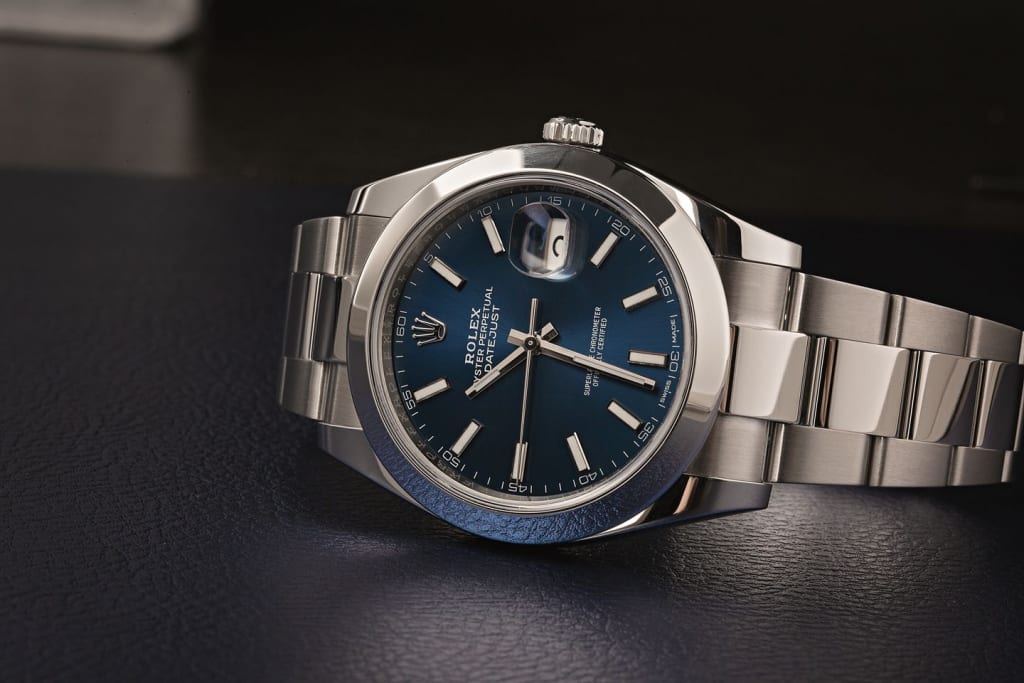
The Rolex Datejust 41 is one of the most practical luxury watches for daily wear, combining a 41mm case that wears flat on the wrist, 100 meters of water resistance, and a 70-hour power reserve from the Caliber 3235 movement. Its main daily-wear drawback is that the polished case sides and bezel show light scratches from desk wear.
That balance defines the ownership experience. The case sits low and slides under a shirt cuff, the screw-down crown and Rolex Oyster case shrug off rain and hand washing, and the movement keeps running through a full weekend off the wrist. The trade-offs are cosmetic rather than mechanical, and they are worth understanding before you choose a configuration.
Pros of the Datejust 41
- The flat case profile and short, tapered lugs make the Datejust 41 comfortable on a wide range of wrists despite its 41mm diameter.
- The watch moves between a suit, a polo shirt, and weekend wear without looking out of place in any of them.
- Superlative Chronometer certification holds the Caliber 3235 to a rated accuracy of -2/+2 seconds per day after casing.
- The Easylink extension built into the clasp adjusts the bracelet by 5mm without tools, which matters when wrists swell in summer heat.
- The Datejust 41 is a credible one-watch collection, which is why it appears so often in Rolex Datejust 41 reviews as a first serious purchase.
Cons of the Datejust 41
- The polished case sides, polished bezel options, and polished Jubilee center links are prone to showing fine scratches from daily desk contact.
- Popular dial configurations can be difficult to find at authorized dealers and often involve a waitlist.
- Wearers with slimmer wrists may find the 41mm case more presence than they want; the Datejust 36 offers the same design in a smaller footprint.
- The date is the only complication, which some buyers at this price level consider simple.
Rolex Datejust 41 Specifications and the Caliber 3235
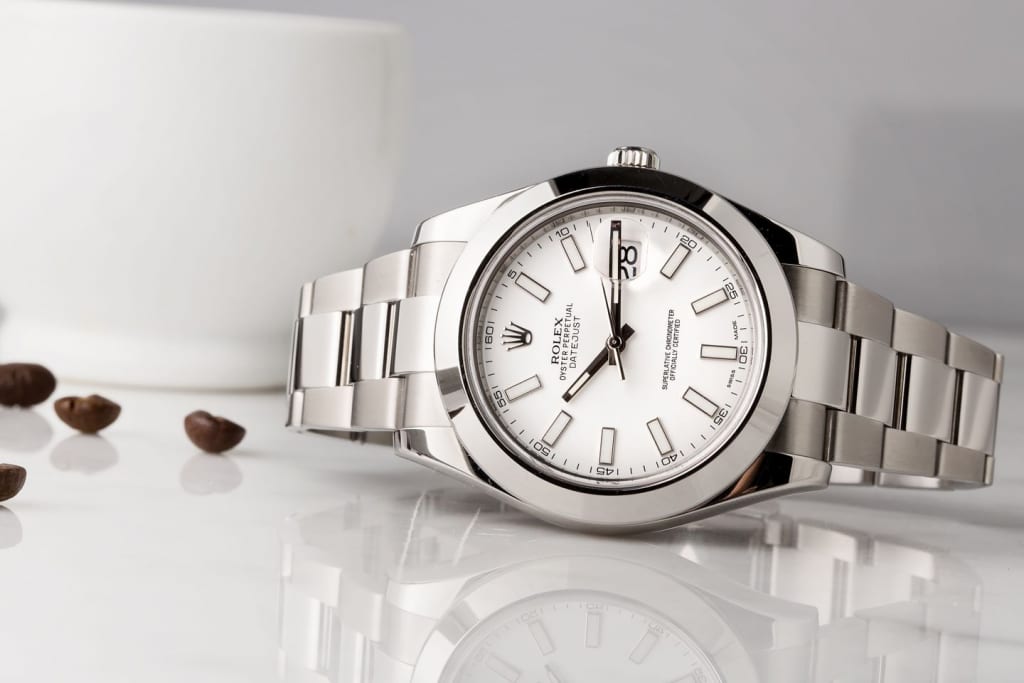
The Rolex Datejust 41 measures 41mm across, runs the in-house Caliber 3235, and carries Superlative Chronometer certification of -2/+2 seconds per day. Every reference in the family shares the same core platform, so the specifications below apply whether you choose full Oystersteel or a two-tone Rolesor model.
| Specification | Detail |
| Case diameter | 41mm |
| Case metal | Oystersteel or steel-and-gold Rolesor |
| Movement | Rolex Caliber 3235, self-winding |
| Power reserve | Approximately 70 hours |
| Certified accuracy | -2/+2 seconds per day (Superlative Chronometer) |
| Water resistance | 100 meters |
| Crystal | Sapphire with Cyclops date magnifier |
| Bracelet | Oyster or Jubilee with Easylink 5mm extension |
The Caliber 3235 Movement
The Rolex Caliber 3235 is a self-winding mechanical movement that debuted at Baselworld 2015 in the Pearlmaster 39 and has powered the Datejust 41 since the model’s 2016 launch. It replaced the previous generation of Rolex time-and-date movements with an architecture covered by 14 patents, and it is the single strongest technical argument for the Datejust 41 over its predecessors.
The Caliber 3235’s Chronergy escapement is approximately 15 percent more efficient than a traditional Swiss lever escapement, which is how the movement reaches its 70-hour power reserve, a substantial improvement over the roughly 48 hours of the earlier Caliber 3135 generation. The movement also carries a blue Parachrom hairspring that resists magnetism and temperature variation, along with Paraflex shock absorbers that protect the balance during everyday knocks. The date changes instantaneously at midnight and can be set rapidly through the crown at any time of day.
Rolex Datejust 41 Reference Numbers, Bezels, Bracelets, and Dials
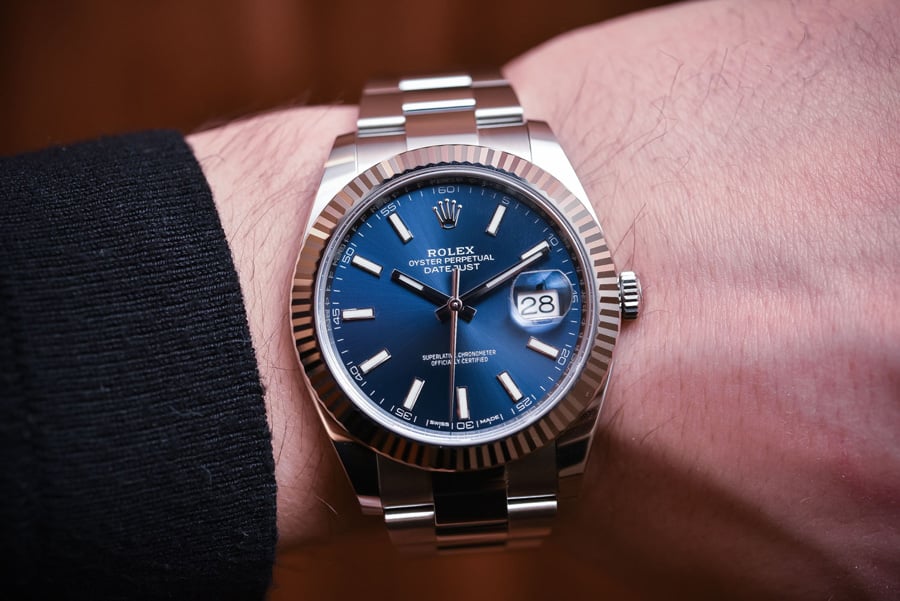
The Rolex Datejust 41 is produced in six core reference families, defined by case metal and bezel style. Rolex introduced the two-tone Rolesor references in 2016 and added the full Oystersteel models in 2017, and all six references remain active on the pre-owned market. Rolesor is Rolex’s trademarked term for combining Oystersteel and 18k gold in a single watch.
| Reference | Metal | Bezel |
| 126300 | Oystersteel | Smooth |
| 126334 | Oystersteel + 18k white gold (White Rolesor) | Fluted |
| 126333 | Yellow Rolesor | Fluted |
| 126303 | Yellow Rolesor | Smooth |
| 126331 | Everose Rolesor | Fluted |
| 126301 | Everose Rolesor | Smooth |
Every reference is available with either bracelet and a rotating menu of dials, which means the same reference number can produce very different watches. The three decisions below determine the character of the one on your wrist.
Smooth vs. Fluted Bezel
The bezel choice sets the entire tone of a Datejust 41. The smooth bezel on the 126300, 126303, and 126301 reads sportier and more understated, and its brushed-adjacent simplicity hides everyday wear better than any other part of the watch. The fluted bezel, cut from solid 18k gold on the 126334, 126333, and 126331, is the signature Datejust look, catching light from every angle and dressing the watch up considerably.
The 126334 pairs that fluted 18k white gold bezel with an Oystersteel case and bracelet, a combination Rolex calls White Rolesor. The result is a monochromatic watch that keeps the classic Datejust identity without introducing a visible second metal color, which explains why it sits at the top of the family’s demand ranking in Bob’s own sales data.
Oyster vs. Jubilee Bracelet
The bracelet decision is comfort and formality. The Jubilee is a five-link bracelet Rolex designed in 1945 specifically for the launch of the original Datejust, and its smaller links drape around the wrist with a fluid, dressy feel. The three-link Oyster bracelet is flatter, sportier, and visually more substantial, and it pulls the Datejust 41 toward the character of Rolex’s tool watches.
Both bracelets close with a folding Oysterclasp that conceals the Easylink 5mm extension, so neither gives up practicality. Try both on the same watch head if you can; the difference in feel is larger than photographs suggest.
Dial Options
- Sunburst dials in bright blue, bright black, silver, slate, and white form the core of the range and are the safest choices for a one-watch collection.
- The mint green dial is among the hardest configurations to source at retail and carries a premium on the pre-owned market.
- The Wimbledon dial, a slate face with green Roman numerals, has become one of the most recognizable modern Datejust configurations.
- Motif and diamond-set dials appear across the Rolesor references and push the watch firmly toward dress territory.
- Discontinued dial colors from earlier production years survive on the pre-owned market, which is the only place to find them.
Datejust 41 vs. Datejust II vs. Datejust 36

The Datejust 41 differs from the discontinued Datejust II in proportions and movement, and from the Datejust 36 in case size alone. Rolex introduced the original Datejust in 1945 to mark the company’s 40th anniversary, and it was the first self-winding chronometer wristwatch to display the date through a window on the dial. Rolex released the 41mm Datejust II in 2009, then replaced it with the Datejust 41 in 2016, restoring the collection’s classic slimmer-lug proportions at the larger diameter.
| Model | Case Size | Movement |
| Datejust 36 (current) | 36mm | Caliber 3235 |
| Datejust II (2009-2016) | 41mm | Caliber 3136 |
| Datejust 41 (2016-present) | 41mm | Caliber 3235 |
The Datejust 36 is the traditionalist’s answer, identical in design language and now sharing the Caliber 3235, in a case that suits smaller wrists and vintage-leaning tastes. The Datejust II is the comparison that matters more for pre-owned buyers, because the two 41mm generations are easy to confuse and are priced differently.
How to Tell a Datejust II from a Datejust 41
The reference number settles the question immediately: Datejust II watches carry 116300-series references, while every Datejust 41 carries a 126300-series reference. Visually, the Datejust II wears broader, with a wider bezel, thicker lugs, and larger dial furniture, while the Datejust 41 uses slimmer lugs and a narrower bezel that echo the original 36mm proportions. Mechanically, the Datejust II runs the older Caliber 3136, not the 3235.
Pre-owned listings elsewhere sometimes label a Datejust II as a Datejust 41, so confirm the reference before you buy. The distinction also creates an opportunity: the pre-owned Datejust II sold at Bob’s Watches for a median of about $10,600 over the past 12 months, below a comparable Datejust 41, which makes it a legitimate value alternative for buyers who want 41mm proportions at a lower price, provided the watch is correctly identified. For a full walkthrough of every size and generation in the family, see our Rolex Datejust buying guide for more details about the full collection.
Rolex Datejust 41 Prices: Current Retail vs. Pre-Owned

Rolex Datejust 41 pricing splits into two markets: current retail through authorized dealers and the pre-owned market. The two use different numbers and different rules, and comparing them accurately is the core of a smart purchase.
At current retail, the all-steel 126300 starts at $8,950, with Rolesor references priced higher at $16,800. Retail pricing buys a factory-fresh watch with a full five-year warranty, but availability is the constraint: popular dials, including mint green and the Wimbledon configuration, frequently involve an authorized dealer waitlist.
The pre-owned market trades on sold prices rather than list prices. Based on 12 months of Bob’s Watches sales data through mid-2026, pre-owned Rolex Datejust 41 models sold for a median of about $14,900, with most examples between roughly $10,100 and $17,100. The smooth-bezel steel 126300 is the most accessible entry, with a median sold price of about $11,000 and a typical range of $9,700 to $13,100. The White Rolesor 126334 sold for a median of about $15,400, roughly a $4,000 premium for the white gold fluted bezel. Aftermarket diamond-set examples trade above these ranges and are excluded from them, and you can compare these figures against current pre-owned Rolex prices across the rest of the catalog.
| Reference | Median Sold Price | Typical Range |
| 126300 | About $11,000 | $9,700 – $13,100 |
| 126334 | About $15,400 | $13,900 – $17,100 |
| 126333 | About $16,000 | $14,400 – $17,500 |
| 126331 | About $17,000 | $15,300 – $17,700 |
Bob’s Watches sold data, July 2025 – July 2026, pre-owned market.
Demand within the family is concentrated. The 126334 is the most in-demand Datejust 41 at Bob’s, accounting for roughly 36 percent of the model’s sales over the past year, with the steel 126300 close behind at roughly 33 percent and the Yellow Rolesor 126333 at roughly 20 percent. Median sold prices across the family rose roughly 7 to 8 percent between the second half of 2025 and the first half of 2026, with the steel 126300 climbing fastest. Those figures describe the past 12 months of the market, not a projection of where it goes next.
How to Buy a Pre-Owned Datejust 41: Authentication Checklist
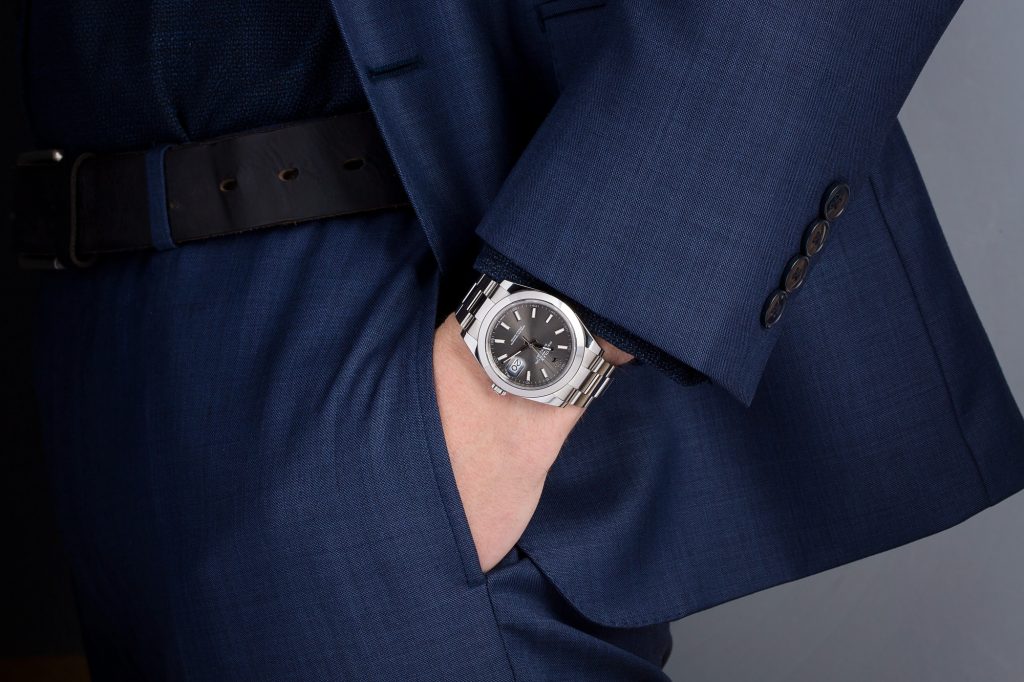
A pre-owned Rolex Datejust 41 should be verified on five points before purchase: reference number, serial number, movement behavior, papers, and condition. The checks below reflect what Bob’s Watches inspects when a Datejust 41 arrives for intake, and each one takes only minutes.
- Confirm the reference number is engraved between the lugs at the 12 o’clock side of the case, visible with the bracelet end link removed, and match it to the listing. A 126300-series number confirms a genuine Datejust 41 rather than a Datejust II.
- Check the serial number engraved on the rehaut, the inner bezel ring, at the 6 o’clock position. Every Datejust 41 uses a random-format serial, since production began in 2016, so a dated serial format is an immediate red flag. You can look up a Rolex serial numbers to confirm what the format should tell you.
- Ask for the original warranty card and match its reference and serial to the watch. A card that matches adds meaningful value; a card that does not match is worse than no card at all.
- Observe the date change. The Caliber 3235 flips the date instantaneously at midnight; a date that creeps slowly over several minutes indicates a different movement or a problem.
- Assess the case and bracelet. Sharp lug edges and crisp bezel definition indicate light or careful polishing, while rounded, softened lines suggest the case has been over-polished. Check the bracelet for stretch and confirm the clasp closes with a firm, even snap.
- Buy from a seller that guarantees authenticity in writing and stands behind the watch after the sale.
A watch that passes all six checks is a sound purchase. A watch that fails any one of them deserves either a price adjustment or a pass.
Who the Datejust 41 Is For
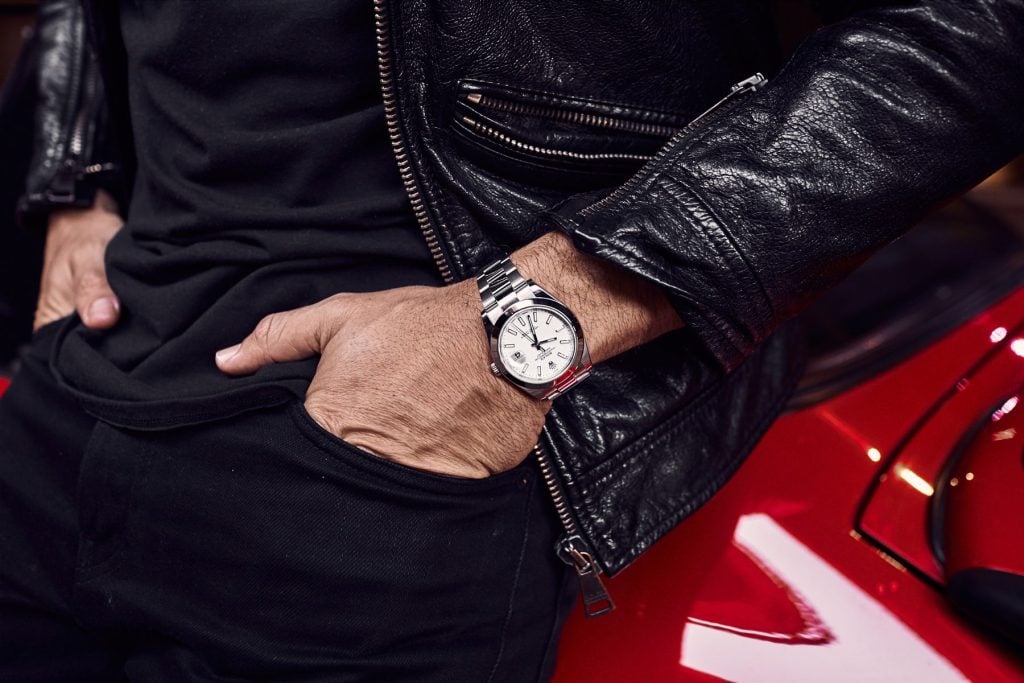
The Rolex Datejust 41 suits first-time luxury buyers and experienced collectors equally, because one configuration decision covers dress, office, and casual wear. First-time buyers get a watch that never needs justifying and never falls out of step with the rest of a wardrobe. Collectors get a platform with enough reference, bezel, bracelet, and dial permutations to reward a very specific search.
That range is exactly what Carol Altieri, COO of Bob’s Watches, points to: “The versatility of the Datejust 41, from its range of materials to its impeccable craftsmanship, makes it an excellent choice for both seasoned collectors and those entering the world of luxury watches.“
On value, the Datejust 41 is generally considered one of the steadier holders among steel and Rolesor Rolex models, and certain references can hold value well over time. Performance is tied to real factors: condition, configuration demand, and the presence of the original box and papers. No model guarantees a profit, and the Datejust 41 should be bought first as a watch to wear rather than as a store of value.
Choosing the Right Rolex Datejust 41

The decision path is short once the options are laid out. Choose the size first, since the Datejust 36 exists for anyone who finds 41mm too large. Then choose the bezel, which sets the watch’s formality; then the bracelet, which sets its feel; then the dial, which sets its personality. Finally choose the market: current retail delivers a factory-new watch at the cost of limited availability on desirable configurations, while the pre-owned market delivers immediate availability across the full range of references and discontinued dials at market-driven prices.
Frequently Asked Question
The post Rolex Datejust 41 Buying Guide: References, Prices & Tips appeared first on Bob's Watches.