Bob's Watches Bob's Watches
A polished Rolex has had a thin layer of metal buffed away to remove scratches, while an unpolished Rolex retains its original factory lines, bevels, and finishes. Collectors generally pay more for unpolished examples, especially vintage references, because original metal can never be restored. Condition separates the market for pre-owned Rolex watches more than almost any other factor.
Key Takeaways
- Polishing removes metal permanently, and a case can never be un-polished.
- Unpolished vintage Rolex watches generally command higher prices from collectors than polished examples of the same reference.
- A light, professional polish on a modern daily-wear Rolex is usually acceptable, while over-polishing harms any watch.
- Sharp lug bevels, crisp case lines, and defined brushing transitions indicate a Rolex has not been polished.
- Do not polish a Rolex before selling it; let the buyer or dealer evaluate it as-is.
- Bob’s Watches sold-price data shows wide value ranges within single vintage references, driven heavily by condition and originality.
The right decision depends on what the watch is and what you plan to do with it. The sections below cover when polishing makes sense, how professionals identify a polished case, and what twelve months of sold-price data reveal about the value of originality.
Should You Polish a Rolex?
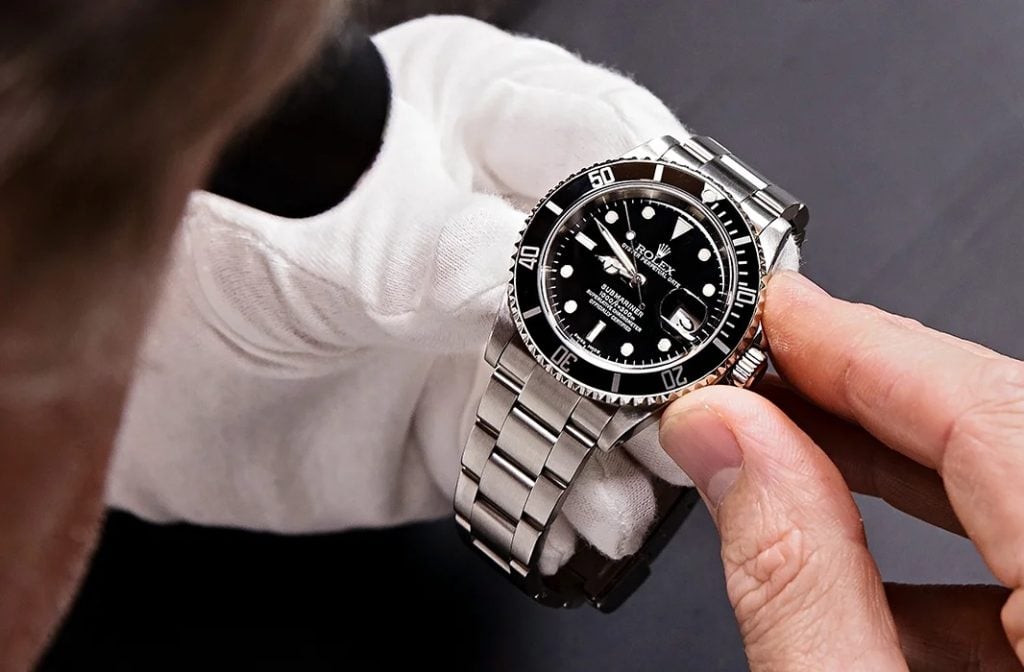
In most cases, you should not polish a collectible, vintage, or resale-focused Rolex. Polishing removes a small layer of metal with every pass, and a poor polish can soften the lugs, crown guards, bevels, and case lines that define the watch’s original shape. Once that geometry changes, no service can bring it back.
For a modern Rolex you plan to keep and wear, the calculus is different. A light, professional polish during routine service can keep the watch looking sharp without meaningfully changing its shape, provided the work is done by a trained refinisher. Two rules cover most owners:
- Keeping and wearing a modern Rolex: a professional polish at service time is a reasonable personal choice.
- Vintage, collectible, or selling soon: leave the watch alone.
“Sellers polish their watch thinking it will bring a better offer, and it almost always does the opposite. We want to see the watch exactly as it lived. Send it to us unpolished, and if it’s a piece that should be refinished, we’ll make that call after the sale.”
Carol Altieri, COO of Bob’s watches
Is It Bad to Polish a Rolex?
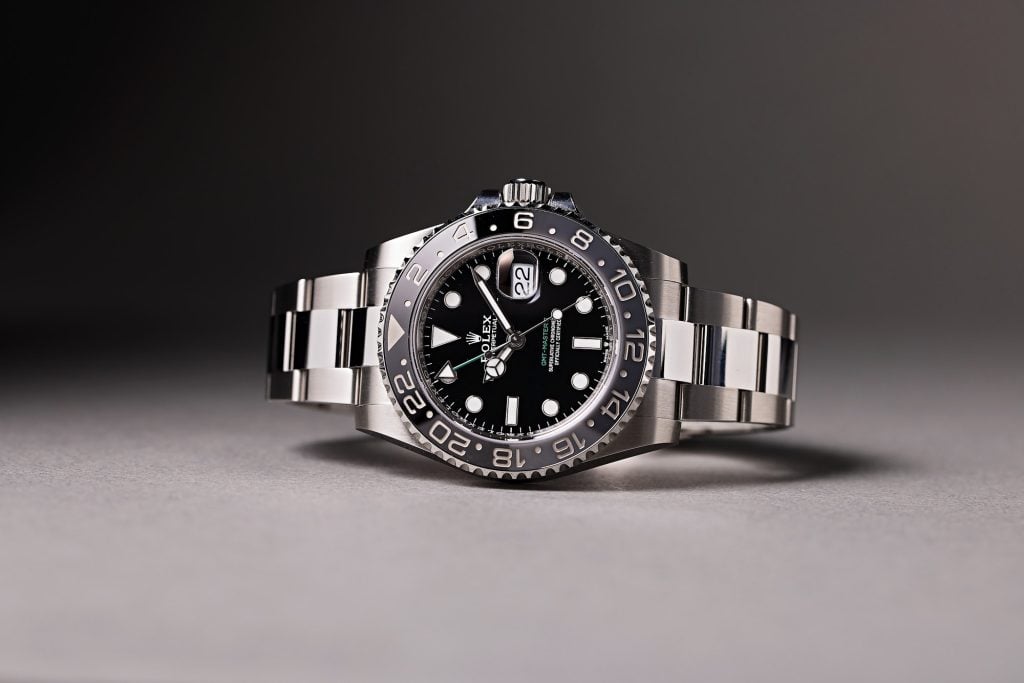
Polishing a Rolex is not automatically bad, but it carries permanent risk. The outcome depends on the watch, the frequency, and the person holding the polishing wheel.
Polishing becomes a problem under specific conditions:
- The watch is vintage or collectible, where originality carries a premium.
- The case has been polished before, compounding metal loss with each session.
- The work is done by an inexperienced hand, leaving uneven surfaces or blurred lines.
- Heavy refinishing is used to chase a factory-fresh look on a decades-old case.
A single light polish, performed professionally on a modern daily-wear Rolex, generally falls on the acceptable side of that line. The core risk never changes: metal comes off, and the case moves one step further from its original shape.
Polished vs. Unpolished Rolex: Key Differences

Polished and unpolished Rolex watches differ in case geometry, collector appeal, and market value. The table below summarizes how the two conditions compare.
| Factor | Unpolished | Polished |
| Case shape | Original factory geometry with sharp transitions | Softened; over-polishing rounds the lugs and lines |
| Collector appeal | Strongest, especially for vintage references | Depends on quality; over-polished is weakest |
| Appearance | Shows honest wear | Cleaner look; can appear unnatural if overdone |
| Value impact | Often a premium for vintage pieces | Neutral to negative depending on execution |
| Best for | Collectors and sellers | Owners who want a cleaner daily watch |
Chamfers, also called bevels, are the angled edges Rolex machines along the lugs of a Rolex, and they are usually the first detail lost to a polishing wheel. Brushing is the fine satin finish applied to surfaces such as lug tops and bracelet links, while high polish is the mirror finish found on case flanks and center links of certain models. The crisp transition between those two finishes is a hallmark of an untouched case.
What Is an Over-Polished Rolex?

An over-polished Rolex is a watch that has lost its original case geometry because too much metal was removed during refinishing. Over-polishing is not the same thing as polishing. A case can be lightly and skillfully polished while keeping close to its factory shape, but an over-polished case has crossed a line that cannot be uncrossed.
The signs are consistent across references. Lugs turn thin, rounded, or asymmetrical, a look collectors describe as melted. Transitions between brushed and polished surfaces blur into one another. Crown guards lose their profile, chamfers fade or disappear, and the case flanks take on a soft contour instead of flat, defined planes.
What Polishing Physically Removes from the Case
Every polish removes a measurable layer of stainless steel or gold from the case and bracelet. Rolex finishes each watch with a deliberate mix of brushed and high-polish surfaces, and its edges are machined to tight tolerances, which is why refinishing demands real skill. According to Rolex, in-house polishers complete a three-year apprenticeship followed by roughly five years of on-the-job experience before mastering the craft.
Rolex steel cases are made from 904L stainless steel, an alloy the brand has marketed as Oystersteel since 2018. 904L contains higher levels of chromium, molybdenum, nickel, and copper than the 316L steel used across most of the watch industry, which gives it greater corrosion resistance and a brighter surface when polished.
Modern Rolex watches also resist the wear that once made polishing feel necessary. Cerachrom bezel inserts shrug off the scratches and fading that plagued aluminum inserts, sapphire crystal long ago replaced acrylic, and Chromalight lume ages far more gracefully than early luminous compounds. A current-production Rolex will carry less wear in thirty years than a vintage reference carries today, which weakens the case for polishing it at all.
How to Tell If a Rolex Has Been Polished

A polished Rolex reveals itself through its edges, transitions, and proportions. Professional buyers grade a case in a set sequence, and the same inspection works for any owner with good light and a loupe.
- Check lug thickness and symmetry. Lugs should look substantial and match each other from every angle.
- Examine the bevels. On vintage references, the chamfer running along the lug edge should remain flat, angled, and clearly defined.
- Look at the lug holes. Drilled lug holes should have sharp, precisely cut edges, while polishing rounds them over.
- Study the crown guards. Their profile should be crisp, never softened or uneven.
- Follow the finish transitions. The line where brushing meets high polish should be clean, not smeared.
- Inspect the bracelet edges. Link edges should feel defined rather than rounded.
- Check the clasp coronet. The crown emblem on the clasp should retain deep, crisp detail.
- Look for refinishing marks. Uneven brushing, swirl marks, or wavy reflections point to amateur work.
- Assess overall edge character. Rounded case edges on a watch that should have flat planes signal metal loss.
- Question a vintage case that looks factory fresh. A decades-old watch with zero wear and glassy surfaces has usually been refinished.
Honest Wear vs. Poor Refinishing
Honest wear is the accumulation of small scratches, scuffs, and dings a watch collects through normal use while the underlying case shape stays intact. Collectors read honest wear as evidence of originality. Light scratches sitting on top of sharp geometry are a reassuring sign, not a defect.
Poor refinishing shows the opposite pattern. Dents with smoothed, softened edges suggest someone polished over damage instead of addressing it. This isn’t a situation where you need to learn how to clean your Rolex. Surfaces that look clean but ripple under raking light, or brushing that runs in slightly different directions across a single surface, point to a case worked on by an unskilled hand.
Why a Never-Polished Vintage Rolex Is Rare
A never-polished vintage Rolex is a genuine rarity because most owners serviced their watches for decades, and polishing was a standard part of service. A Submariner or GMT-Master worn through the 1960s and 1970s almost certainly visited a service bench several times, and each visit likely included time on a polishing wheel.
The realistic goal for most buyers is not an untouched case but a skillfully maintained one: light, competent polishing, crisp edges, and a silhouette close to original. Those examples deliver most of the collector appeal of a virgin case at a far more attainable price.
How Polishing Affects Rolex Value: What Our Sold Data Shows
Condition and originality are among the strongest drivers of price variation within a single vintage Rolex reference. Bob’s Watches sold data from the trailing twelve months shows how wide the spread can run between examples of the same watch.
| Reference | Sold Range (Trailing 12 Months) | Average Sold Price |
| Submariner ref. 5513 | About $9,500 to $22,500 | About $13,900 |
| Submariner ref. 1680 | About $10,000 to $35,000 | About $17,400 |
| GMT-Master ref. 1675 | About $9,100 to over $120,000 | About $19,800 |
| Submariner ref. 126610 | About $14,600 to $46,500 | About $16,600 |
Variant and configuration drive part of every range. The top of the ref. 1675 spread reflects rare early variants as well as condition, and full sets with box and papers command more than head-only examples. Within a common variant, case condition and originality separate the bottom of the range from the top. A crisp, lightly polished ref. 5513 and a rounded, over-polished one are different products to a collector, and sold prices reflect it. The current-production ref. 126610 tells the other half of the story: most modern examples sell in a narrow band around the average, with the high end reflecting special configurations rather than condition swings.
Demand concentrates exactly where condition literacy matters most. The Submariner watch is the most traded Rolex family at Bob’s Watches, representing roughly one in six Rolex sales over the period, with the Datejust 36 close behind at roughly one in seven. Vintage examples of these references can hold value well, and certain references may appreciate, but no model guarantees a profit. Scarcity, condition, demand, provenance, and box and papers determine where any individual watch lands.
Why Collectors Pay a Premium for Originality
Original case geometry is a physical link to a reference’s production era, and collectors pay for that link. Rolex introduced the waterproof Oyster case in 1926, and every Submariner case descends from that design. The Rolex Submariner is a dive watch introduced in 1953, and ref. 5513 entered production in 1989 and stayed in the catalog for nearly three decades. A 5513 with intact chamfers and full lugs still carries the exact shape those production years gave it. A polished one carries an approximation.
That premium ties directly to scarcity, because every polishing decision is one-way and original examples grow scarcer each year. Condition, demand, provenance, and completeness with box and papers do the rest of the work in setting a price. For a deeper look at evaluating older references, see our vintage Rolex buying guide.
Should You Polish a Rolex Before Selling It?

You should usually not polish a Rolex before selling it. A buyer or dealer wants to evaluate the watch in its current condition, and a pre-sale polish removes information along with the metal. If the polish is executed poorly, or the watch turns out to be a collectible reference that should never have touched a wheel, the offer drops.
The economics rarely work either:
- A pre-sale polish costs money and rarely raises the offer by more than it cost.
- Polishing the wrong vintage watch can take hundreds or even thousands of dollars off its resale price.
- Any appropriate refinishing can be handled by the buyer after purchase, with nothing lost by waiting.
Bob’s Watches evaluates every watch as-is and advises sellers against pre-sale polishing. Owners who sell Rolex watches to a professional buyer benefit from presenting the case exactly as it is, because the specialist grading it would rather see honest wear than fresh refinishing.
Caring for a Rolex Without Losing Its Value
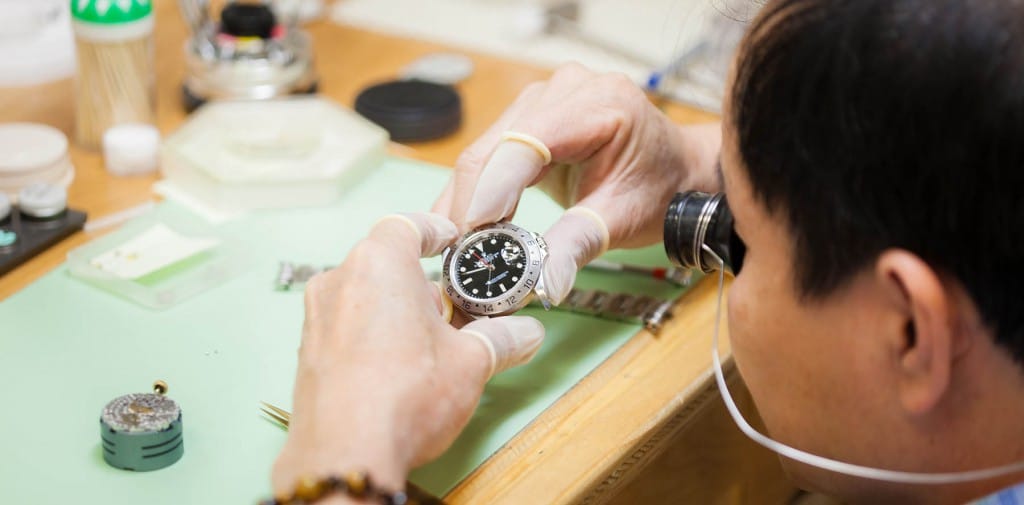
Preserving a Rolex’s value comes down to restraint. Keep originality intact on vintage and collectible pieces, treat polishing on a modern wearer as a deliberate, professional, and infrequent choice, and when in doubt, wait. A watch can always be polished later. It can never be un-polished. The safe way to polish a Rolex is to have it evaluated first and refinished by a qualified professional only when the watch and the situation genuinely call for it.
Bob’s Watches grades every purchase and trade-in on originality and condition, and its specialists can tell you whether a specific reference should ever see a polishing wheel. Checking current pre-owned Rolex prices before any refinishing decision is a useful habit, because the market keeps repeating the same lesson: original condition is the asset, and polishing spends it.
Frequently Asked Questions
The post Polished vs. Unpolished Rolex Watches: Should You Polish Your Watch? appeared first on Bob's Watches.