Bob's Watches Bob's Watches
The best automatic watch for most first-time luxury buyers is a pre-owned Rolex Datejust 36, which sold for a median of about $7,000 at Bob’s Watches between January 2025 and October 2026; between $1,000 and $3,000, buy the Longines Spirit, and past $3,000, the Tudor Black Bay 58. This guide ranks eight automatic watches from $2,500 to about $14,000 by certified accuracy, long-term serviceability, and how each reference holds up when it comes back across our counter years later. Every price is either current retail, or the median of what the watch actually sold for at Bob’s Watches, and I never blend the two.
Key Takeaways
- A five-digit Rolex Datejust 36 is the first luxury automatic I recommend to almost everyone, because it sells for about $7,000 pre-owned and, maintained properly, can stay in use for generations.
- A certified luxury automatic is tested to run within a few seconds a day when new, and a modern Rolex within two, which is as close to perfect as a mechanical watch gets.
- A well-maintained automatic can remain in use for generations; regular service and the availability of parts are what keep that true.
- Retail prices here are current as of October 2026; pre-owned prices are medians from completed Bob’s Watches sales, not asking prices.
Bob’s Watches has been buying and selling automatics for more than a decade, and most of what we’ve learned has come from watching what happens to them after the sale: which ones come back in for service and are still going strong, which ones get traded up from, and which of these pre-owned luxury watches people never let go of.
What Makes an Automatic Watch Worth Buying

An automatic is a watch you might live with your entire life. It’s powered by the motion of your arm. It doesn’t rely on a battery, and a well-maintained one can be serviced for generations, as long as replacement parts remain available. That’s why the automatics that come through our vintage department from the 60s are still on wrists.
How a self-winding movement works
Inside an automatic (self-winding) watch, a weighted rotor spins on a bearing as your wrist moves. That rotor winds the mainspring, which stores the energy. A regulating assembly (the escapement) then releases that energy in very small, regular increments to drive the hands. If you take the watch off, the mainspring will keep it running for a certain number of hours (this is the power reserve on most modern mechanical watches, somewhere between 38 and 80 hours). If you leave it in a drawer past that point, it will stop. You set it by giving the crown a few turns, and it starts again.
Automatic vs. quartz vs. manual-wind
| Type | How it is powered | Who it suits |
| Automatic | A rotor winds the mainspring as you wear it. | Someone who wants a mechanical watch for daily wear without a daily routine |
| Manual-wind | You wind the mainspring by hand, usually every morning | Someone who enjoys the ritual, or wants a thinner case |
| Quartz | A battery drives a quartz crystal oscillator. | Someone who values accuracy and convenience over owning and maintaining a mechanical movement |
The case for the automatic is about the mechanism itself and the tradition of maintaining it, rather than accuracy. A quartz module is typically replaced when it fails rather than repaired, whereas a mechanical movement is cleaned, oiled, and put back into service for another 10 years. A certified automatic from Rolex, OMEGA, or Tudor is tested to keep time within a few seconds a day when new (a used example should be timed to confirm it still does), which is more than accurate enough for anyone who isn’t actually launching a rocket. I go into what ‘accurate’ means at each level in the accuracy and service section below.
Best Automatic Watches From $1,000 to $3,000
This is the tier where we have the same discussion almost every week. Should you go with a $2,500 new Swiss automatic or stretch to a pre-owned luxury piece at $3,500? My answer is usually to stretch, if the extra money is there. The step from $2,500 at retail to a pre-owned Tudor Black Bay 58 at around $3,300 is far smaller than people imagine, and the watch you end up with is in a completely different bracket. It has an in-house chronometer movement, and an established pre-owned reference like it is generally easier to resell than a new watch at that price point, though resale proceeds always depend on condition, demand, and timing. The three below are the ones I would recommend if your budget is set. All three references trade actively through our pre-owned inventory. Retail prices are as of October 2026.
Longines Spirit

The Longines Spirit in 40mm (ref L3.810.4.53.6) is my pick for the best automatic in this bracket and one of the very best values in Swiss watchmaking at any price. It’s the L888.4 automatic with a silicon balance spring and approximately 72 hours of reserve, and every Spirit is a COSC-certified chronometer (a rare thing under $3k). Current retail is $2,550. What I love is that Longines (a brand with a very real aviation heritage) has produced a pilot’s watch that doesn’t advertise it in any way. The only indication of its provenance is the five applied stars on the dial. On the wrist, it has the feel of a watch from a much higher tier, and when they come across our counter pre-owned, they are usually in better condition than their age would suggest, which tells you the owners have treated them with respect. The one compromise is a case that is thicker than the dial suggests; try it under a cuff.
Oris Aquis Date

The Oris Aquis Date in 41.5mm is the dive watch I point people to when they want something that is not a Submariner lookalike. Oris is independent, which is important to some buyers, and the Aquis has its own design language: a ceramic bezel insert, a curved case, and a bracelet that integrates into the lugs. The standard model uses the Oris 733 automatic, based on a Sellita SW200, with about 38 hours of reserve; the Caliber 400 versions with a five-day reserve and a ten-year warranty cost more. Current retail for the 733 version is about $2,500. My opinion: the Aquis is the better everyday watch than most dive watches twice its price because it is comfortable, and comfort decides whether a watch gets worn. The trade-offs are the 733’s short reserve and lugs that take only Oris straps and bracelets.
Best Automatic Watches From $3,000 to $8,000: The First Pre-Owned Tier
Here is where I stop talking about retail, because for a first luxury automatic, the secondary market is where the sensible money goes. A watch worn for a few years and properly inspected is the same watch, at a price that reflects what people actually pay rather than what a catalog says. The three below are the pre-owned luxury automatics I recommend most often in this range, and the prices are not estimates. They are the median of what each one sold for at Bob’s Watches between January 2025 and October 2026, rounded to the nearest hundred.
| Watch (reference) | Median sold price at Bob’s, Jan 2025 to Oct 2026 | Why it makes the list |
| Tudor Black Bay 58 (79030N / 79030B) | About $3,300 | My pick for an in-house chronometer movement at this price |
| Omega Seamaster Diver 300M (210.30.42.20.01.001) | About $4,900 | METAS-certified accuracy and magnetic resistance for the money |
| Rolex Datejust 36 (16234) | About $7,000 | The first luxury automatic I recommend to almost everyone |
Pre-owned prices shown are medians of completed Bob’s Watches sales for the specified references between January 2025 and October 2026. Individual selling prices vary by configuration, condition, and completeness.
Tudor Black Bay 58

The Tudor Black Bay 58, reference 79030N in black or 79030B in blue, is a 39mm dive watch with Tudor’s in-house MT5402 automatic, a COSC-certified chronometer with roughly 70 hours of reserve. At about $3,300 pre-owned, it is the cheapest way into a manufacture movement with a chronometer certificate from a brand owned by Rolex, and I think it is the strongest automatic under $5,000, on the strength of the movement, the certificate, and the size. Before they buy one, buyers ask me whether it wears too small. It does not. The 39mm case and slim profile make it work for most wrists. There is no date, and the rivet-style bracelet, charming as it is, lacks the on-the-fly adjustment of newer Tudor clasps. What I check on a pre-owned example is the bezel action, which should click cleanly with no play, and the rivet-style bracelet for stretch between the links. Our pre-owned Tudor inventory turns over quickly, and the 58 is usually the reason.
OMEGA Seamaster Diver 300M

The current Seamaster Diver 300M, reference 210.30.42.20.01.001, is a 42mm diver with the Omega 8800, a Master Chronometer certified by METAS to run within 0 to +5 seconds a day and to shrug off magnetic fields that would stop most other watches. At about $4,900 pre-owned, it is, in my opinion, the most technically advanced watch in this table, and the one I would hand to an engineer. The ceramic dial with its laser-engraved waves and the ceramic bezel are highly scratch-resistant in normal wear, so pre-owned examples often look new. It is a 42mm watch with real presence, and it wears better than the numbers suggest because of the curved lugs; try one on, and you will see what I mean.
Rolex Datejust 36, reference 16234

This is my answer to the first luxury automatic question, and it has been for years. The 16234 is a Rolex Datejust 36 watch in steel with a white gold fluted bezel, made from the late 1980s into the mid-2000s, running the Rolex caliber 3135, a movement with a reputation among watchmakers as a benchmark for reliability. At Bob’s Watches, it sold for a median of about $7,000 between January 2025 and October 2026. For that money, you get a watch recognized anywhere, that fits under a cuff, takes a Jubilee or Oyster bracelet, and should remain serviceable for decades, parts availability permitting. The compromises are those of any 20-plus-year-old watch: service costs, an older caliber, and condition that varies from one example to the next.
Best Automatic Watches From $8,000 to $15,000: The Rolex Sports Tier
Above $8,000, every watch I recommend is a Rolex sports model, and the question changes from which brand to which reference. These three are the ones that come across our counter most often and leave it fastest, and each is a different answer to the same question: no bezel and no date, no bezel and a modern caliber, or the dive watch everything else is measured against. As above, the prices are medians of completed Bob’s Watches sales between January 2025 and October 2026, rounded to the nearest hundred.
| Watch (reference) | Median sold price at Bob’s, Jan 2025 to Oct 2026 | Why it makes the list |
| Rolex Explorer 39 (214270) | About $8,400 | Arguably the most wearable Rolex sports watch |
| Rolex Oyster Perpetual 41 (124300) | About $10,300 | A recent Rolex with the fewest compromises (replaced by the 134300 in 2025) |
| Rolex Submariner (124060) | About $14,000 | The reference everyone else is measured against |
Individual selling prices vary by configuration, year, condition, and completeness; see the methodology note above.
Rolex Explorer 39, reference 214270
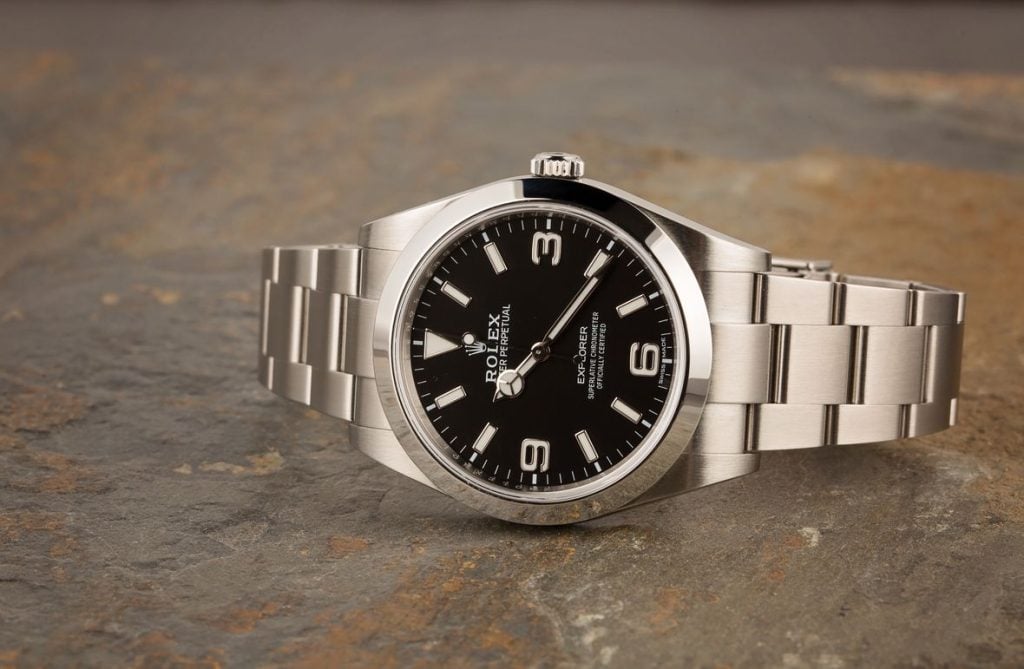
The 214270 was the Rolex Explorer watch from 2010 to 2021: 39mm, with the caliber 3132 and a black dial with 3, 6, and 9 numerals that define the model. It sold for a median of about $8,400 at Bob’s over the same period. I call it the most wearable Rolex sports watch because it has no bezel, no date, and no complications to think about; it’s a steel watch that does one thing perfectly. The later versions, from 2016 on, have longer hands and fully lumed numerals, and those are the ones I would seek out. Check that the lume on the hands matches the dial; mismatched lume usually means a hand replacement at service, which is fine, but you should know.
Rolex Oyster Perpetual 41, reference 124300

The Oyster Perpetual 41 is the plainest watch Rolex makes, and that is the point. Caliber 3230, 70 hours of reserve, Superlative Chronometer accuracy of plus or minus two seconds a day, and nothing else. It sold for a median of about $10,300 pre-owned. The colored dials from 2020 drove a lot of the attention, but I’d buy the black and silver dials because they will look right in twenty years. This is the pre-owned Rolex I recommend to people who want a recent reference without the wait and don’t need a date. Rolex replaced the 124300 with the 134300 in 2025, so this is now the discontinued version of a watch that is otherwise still current.
Rolex Submariner, reference 124060
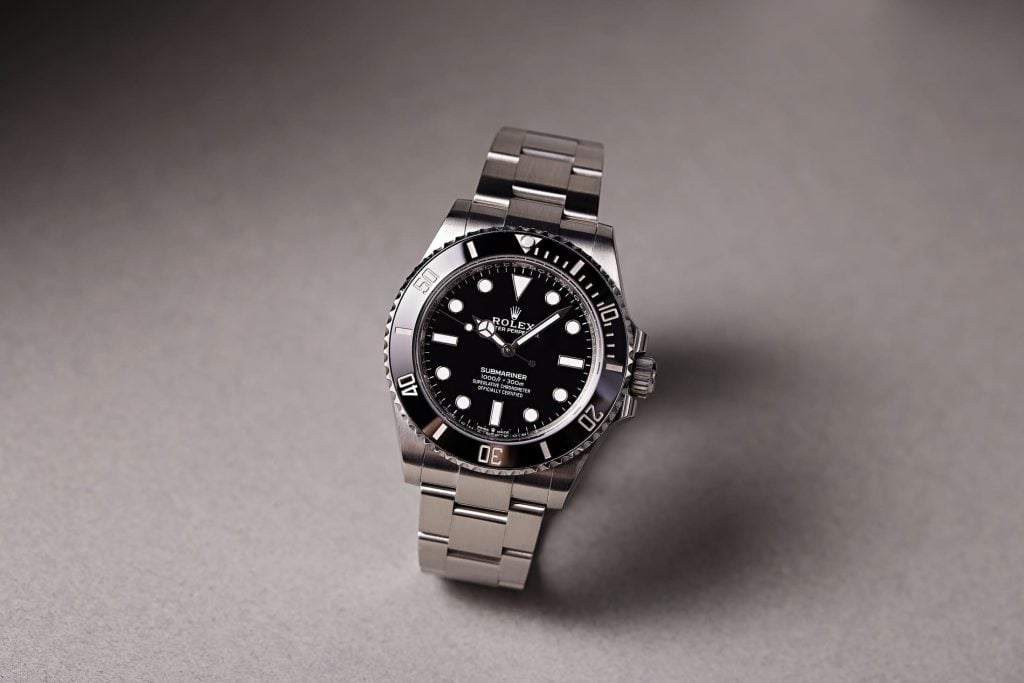
The no-date Submariner, 41mm, caliber 3230, ceramic bezel, sold for a median of about $14,000 at Bob’s between January 2025 and October 2026. I put it last on this list on purpose. To my eye it is the definitive dive watch, the reference every other watch here is measured against, and the one to buy if you intend to buy once. If you know you want it, buy it and never look back; if you would rather get there in two steps, start with the Datejust. The 124060 has no date window and no cyclops, which I prefer, and current prices for Submariner watches in our inventory sit on either side of that median depending on year and papers.
The Best Automatic Watch Brands, From What Comes Across My Counter
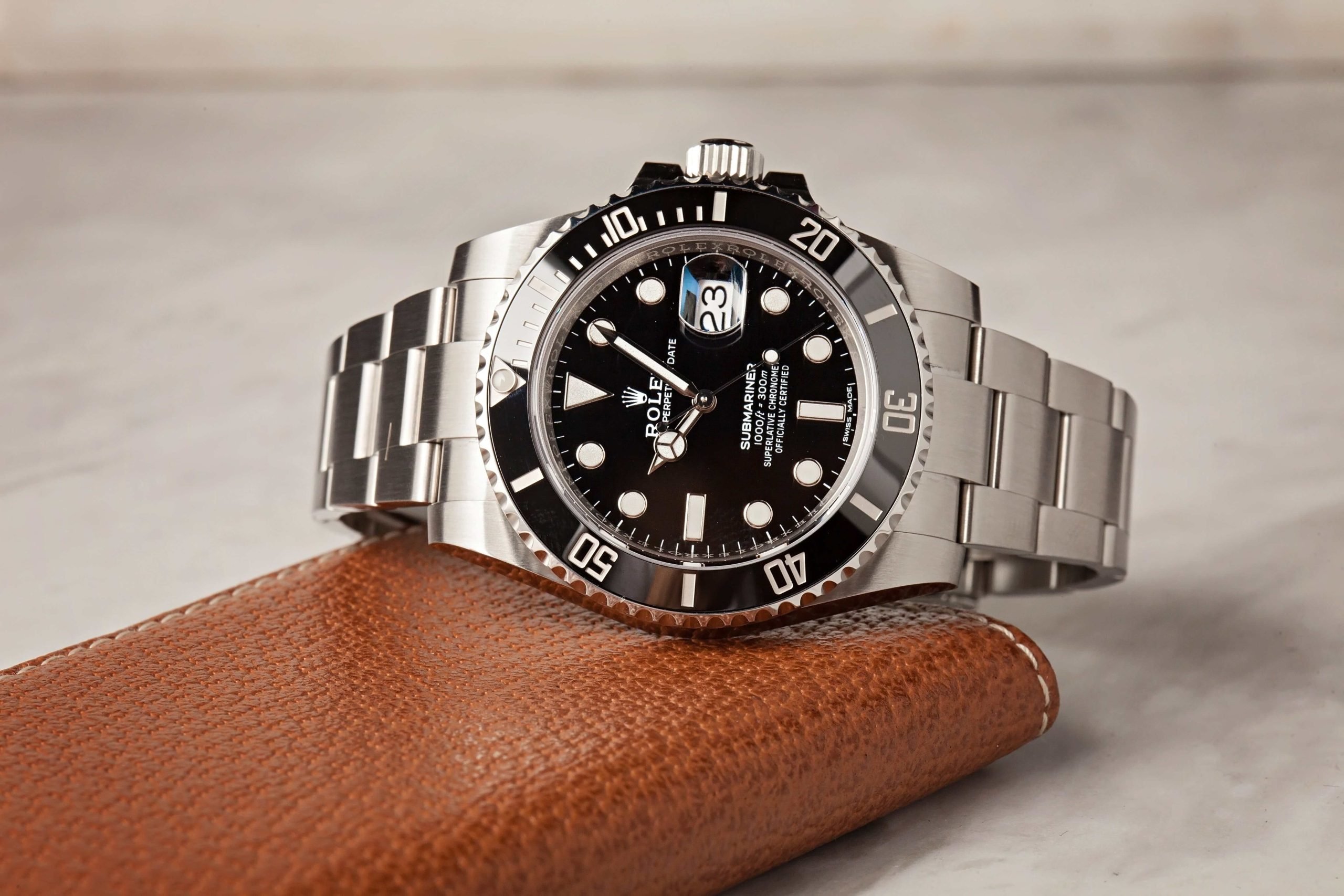
I judge an automatic watch brand by one thing: how its watches look and run when they come back to us years later. The brands below are the ones whose automatics, in my experience, hold up.
- Rolex. The calibers 3135, 3230, and 3235 are among the most reliable automatic movements we handle, and a Rolex serviced on schedule can stay in use for generations.
- Omega. The Master Chronometer movements (8800, 8900 and their siblings) are among the most accurate automatics in regular production, certified by METAS to 0 to +5 seconds a day, and the co-axial escapement runs longer between services than the brand gets credit for.
- Tudor. The in-house MT54 series movements turned Tudor from a Rolex sibling into a brand with its own argument; the Black Bay 58 is the proof.
- Grand Seiko. The Spring Drive calibers are mainspring-powered and automatically wound, but electronically regulated rather than driven by a conventional escapement, which makes them the most accurate mainspring-powered movements in production; the finishing is better than the price implies.
- Longines. The L888 series and the chronometer-rated Spirit line make Longines one of the strongest Swiss brands under $3,000.
- Oris. Independent, honest, and built around movements- Sellita-based and in-house- that most independent watchmakers can service.
- Breitling. The in-house B01 chronograph and the modern Superocean show a brand that has quietly become serious about movements again.
- Cartier. Better known for shape than movements, the modern 1847 MC automatic in the Santos and Tank is a dependable caliber in some of the best-looking cases in the business.
Which Automatic Watch to Buy First (and What to Step Up To)

The best automatic watch for most first-time buyers is a pre-owned Rolex Datejust 36. I get there the same way every time, in four steps, and I would rather teach you the steps than hand you a list.
- Set the budget tier first, not the brand. Decide what your budget is and stick with it. The most common regret we see is buying a watch in one tier while already planning to replace it with one from another. Choose the tier you can be happy in, and buy the best watch there.
- Pick the size and style you will wear every day. Try the watch on. A 36mm Datejust and a 42mm Seamaster are both great watches, and they suit different wrists and different lives. The watch you wear is the right watch; the one that sits in a box because it is too big was a mistake at any price.
- Buy the movement with the service history you can verify; for a new watch, that means a brand with a service network. For a pre-owned watch, it means a seller who inspected the movement and will tell you when it was last serviced. A pretty case on a tired movement is the most expensive watch you can buy.
- Decide whether you are buying to keep or to step up from. If you are buying to keep, buy the best watch in your tier and stop. If you are stepping up, buy a popular reference that is easy to resell, which at Bob’s is most often the Tudor Black Bay 58 under $5,000 and the Datejust above it. Popular references can be easier to resell than less-established models, but resale proceeds depend on condition, demand, timing, and the difference between retail and dealer buy prices. No watch is guaranteed to retain its purchase price. When the time comes, you can sell your watch to get credit for the next one.
Joe Alessandrini, our CFO at Bob’s Watches, has seen a lot automatics during his time at Bob’s, and he puts this better than I do:
“The automatic that holds up best is almost always the one with the least to go wrong. A five-digit Datejust on a caliber 3135 can take decades of daily wear, and after a proper service it should run within its original specification. When someone asks me for a first automatic they will still own in twenty years, that is where I start, and I have never had to apologize for it.”
Our own sales data points the same way. The Datejust 36, the Oyster Perpetual and the Submariner are consistently among the fastest-selling automatics in our inventory. I do not say that to sell you a Datejust as an investment, because no watch guarantees a profit. I say it because a watch that other people consistently want is easier to sell or trade in when you step up, bearing in mind that trade-in and resale prices are typically lower than retail purchase prices, and that is a sensible quality in a first luxury automatic.
Accuracy, Everyday Wear and Service: What to Expect

The worry I hear most from first-time buyers is that an automatic will lose time, and the second is that it will stop when they take it off. Both are true, and neither matters once you know what to expect.
How accurate is an automatic watch?
Accuracy depends on the tier, and the tier is defined by certification, not by price. An uncertified workhorse movement is typically rated by its maker somewhere between a few seconds and half a minute of drift per day, and a well-regulated example often does much better. A chronometer certified under the COSC chronometer standard is tested to run between -4 and +6 seconds a day; the Longines Spirit and the Tudor Black Bay 58 carry that certificate. OMEGA’s Master Chronometer certification, tested by METAS, tightens that to 0 to +5 seconds a day and adds magnetic resistance. Rolex’s Superlative Chronometer standard is -2 to +2 seconds a day after casing. Grand Seiko’s Spring Drive, which regulates a mainspring electronically rather than with a conventional escapement, is rated by Grand Seiko to about one second a day for its standard calibers, and to ±20 seconds a year for the 9RB2 U.F.A. caliber. My rule of thumb: if a watch is within ten seconds a day, it is working as designed, and if it is within two, you paid for a Rolex or an Omega.
Is an automatic watch good for everyday wear?
An automatic is well suited to daily wear, because your wrist keeps it wound. The best everyday automatic watch is whichever one you will put on without thinking; for me, that is the Datejust 36, and for many of our customers, it is the Black Bay 58 or the Seamaster. If you rotate between several watches, a 70-hour reserve like the Rolex 3230s means a watch left on the dresser from Friday to Monday is still running. A winder is a convenience, not a necessity.
What our watchmakers check on a pre-owned automatic
Before listing a pre-owned watch, our team evaluates its authenticity, condition, and performance. The specific testing and service performed depends on the watch and its condition. Whoever the seller, these are the checks worth asking about on any used automatic:
- Timing on a machine, in several positions, to confirm the rate and the amplitude; low amplitude is the early sign of a movement that needs service.
- The rotor, by ear and by feel; a rotor that rattles or scrapes against the case back has a worn bearing.
- The crown and stem, for smooth winding and a clean click through the setting positions.
- The gaskets and case back seal, with a pressure test where water resistance is being relied on.
- The bezel and bracelet, for play and stretch, because wear there tells you how the watch was treated.
- The service history, where one exists, and if there is none, whether the watch was serviced before sale or the price reflects that it may need one.
On service intervals: brands generally recommend a service every five to ten years, with Rolex at the longer end of that range for its modern calibers. I tell customers to budget for a service roughly every seven years on a daily-wear automatic and to stop worrying about it between services. A watch that keeps time and winds smoothly is usually fine between scheduled services, but good timekeeping is not proof that the lubricants are still doing their job, so don’t push the interval indefinitely.
Best Automatic Watches: Final Recommendations

If you skipped to the end, here is the whole article in one chart. At a glance, with the strongest reason to buy and the main compromise for each. Specifications are from manufacturer pages and should be re-checked at publication.
| Watch (reference) | Approx. price | Case | Reserve | Strongest reason to buy | Key compromise |
| Longines Spirit (L3.810.4.53.6) | $2,550 retail | 40mm | ~72 hr | COSC chronometer, silicon hairspring | Thicker than it looks |
| Oris Aquis Date (733) | ~$2,500 retail | 41.5mm | ~38 hr | Comfortable, distinctive diver | Short reserve; proprietary lugs |
| Tudor Black Bay 58 (79030N/B) | ~$3,300 median | 39mm | ~70 hr | In-house COSC chronometer | No date; rivet bracelet clasp |
| Omega Seamaster 300M (210.30.42.20.01.001) | ~$4,900 median | 42mm | 55 hr | METAS Master Chronometer | Real 42mm presence |
| Rolex Datejust 36 (16234) | ~$7,000 median | 36mm | ~48 hr | Benchmark reliability, versatile | Older caliber; service costs |
| Rolex Explorer 39 (214270) | ~$8,400 median | 39mm | ~48 hr | No bezel, no date, no fuss | Pre-2016 short hands; no date |
| Rolex Oyster Perpetual 41 (124300) | ~$10,300 median | 41mm | 70 hr | Recent caliber, minimal dial | Discontinued 2025; no date |
| Rolex Submariner (124060) | ~$14,000 median | 41mm | 70 hr | The reference dive watch | Highest price; resale varies by year and papers |
At Bob’s Watches, every pre-owned watch is evaluated for authenticity, condition, and performance before it is listed, and the prices quoted are medians of what they actually sold for, not what we hoped to get. That is the only way I know how to recommend a watch: by what happens after it leaves the shop.
Frequently Asked Questions
{“@context”:”https://schema.org”,”@type”:”FAQPage”,”mainEntity”:[{“@type”:”Question”,”name”:”Are automatic watches worth it over quartz?”,”acceptedAnswer”:{“@type”:”Answer”,”text”:”It depends on what you value. Automatic watches appeal to buyers who enjoy mechanical engineering and the tradition of servicing a movement over time. Quartz watches generally offer better accuracy and convenience, and quality examples can also last for decades. A certified automatic keeps time to within a few seconds a day, runs without a battery, and can be serviced rather than replaced, and the Rolex, Tudor and Omega references above have well-established pre-owned demand. If those things matter to you, an automatic is worth it.”}},{“@type”:”Question”,”name”:”How long does an automatic watch last?”,”acceptedAnswer”:{“@type”:”Answer”,”text”:”A well-maintained automatic watch can remain in use for generations; the oldest automatics we handle in our vintage department are from the 1950s, and many still keep acceptable time. A service every five to ten years, depending on the brand and how the watch is worn, is what keeps that true, and long-term serviceability also depends on condition and the availability of replacement parts.”}},{“@type”:”Question”,”name”:”Do automatic watches hold their value?”,”acceptedAnswer”:{“@type”:”Answer”,”text”:”Certain references from certain brands have historically held their value, and some have appreciated, with Rolex sports and Datejust models the clearest examples, though past performance is no guarantee and no watch is guaranteed to retain its purchase price. What supports value is scarcity, condition, demand, and a complete set with box and papers, and buying pre-owned at a market price rather than at retail narrows the gap between what you pay and what you could later sell for, bearing in mind that selling and trade-in prices typically differ from retail purchase prices. Buy the watch because you want to wear it and treat anything else as a bonus.”}},{“@type”:”Question”,”name”:”What is the most accurate automatic watch movement?”,”acceptedAnswer”:{“@type”:”Answer”,”text”:”Among watches you can buy today, Grand Seiko’s Spring Drive is the most accurate: it is mainspring-powered with automatic winding but electronically regulated rather than using a conventional escapement, and it is rated to about one second a day for standard calibers and ±20 seconds a year for the 9RB2 U.F.A. caliber. It is followed among conventional automatics by Rolex’s Superlative Chronometer calibers at plus or minus two seconds a day and Omega’s Master Chronometer calibers at 0 to +5. Any COSC-certified chronometer, including the Longines Spirit and the Tudor Black Bay 58, is accurate enough that you will not notice the drift between settings.”}}]}
The post Best Automatic Watches: What I Would Buy at Every Budget (2026) appeared first on Bob's Watches.