Bob's Watches Bob's Watches
People compare Longines and Rolex because these two brands represent the full arc of a watch collector’s journey. Longines offers the kind of historical pedigree and Swiss craftsmanship that collectors genuinely respect, making it one of the best entry points into luxury watchmaking. Rolex, on the other hand, sits at the top of the mountain, representing the pinnacle of brand prestige and financial value retention that many collectors eventually strive to reach. The two get mentioned together not because they are equals in market positioning today, but because one so often leads to the other.
Key Takeaways
- The Collector’s Journey: Buyers compare these two because Longines is a highly respected starting point in luxury watches, while Rolex is the ultimate destination for many enthusiasts.
- Historical Overlap: Both brands have deep roots in early 20th-century aviation, diving, and sports timing, and they actually competed in many of the same arenas for decades.
- Value vs. Prestige: Longines wins on immediate accessibility and retail value. Rolex dominates in secondary market value retention and global status.
- Iconic Alternatives: Longines produces direct, highly capable alternatives to several of Rolex’s most famous steel sports models at a fraction of the cost.
Understanding why the market puts these two side by side helps buyers make the right choice for where they are in their collecting journey. Whether you are just getting started or ready to step up, the reasons behind this comparison reveal a lot about what really matters in the luxury watch world.
The Root of the Comparison: Shared History and Market Evolution

In the mid-20th century, Longines and Rolex were much closer in market positioning than most people realize today. Longines, founded in 1832 in Saint-Imier, Switzerland, and Rolex, founded in 1905 by Hans Wilsdorf in London, were both producing serious tool watches for explorers, aviators, and military personnel. Longines was supplying reliable chronometers to pilots as early as the 1920s and even filed a patent in 1911 for the first pocket watch displaying two time zones. Rolex, meanwhile, was earning its reputation through achievements like the waterproof Oyster case and associations with record-setting expeditions.
Their paths began to diverge in the latter half of the 20th century. Rolex leaned heavily into exclusivity, controlled production, and aggressive brand positioning, eventually becoming one of the most recognizable luxury symbols on the planet. Longines, after joining the Swatch Group, shifted toward accessible luxury, leveraging its deep archive and heritage to produce beautifully crafted tool watches at more approachable price points. Vintage watch experts often point out that early Longines chronographs from the 1930s and 1940s can rival early Rolex models in both quality and collectibility, illustrating just how close these two brands once were.
Build Quality and Movement Capabilities
The comparison between Longines and Rolex persists because Longines offers genuinely solid build quality that holds its own in daily wear. The brand equips its modern collections with exclusive calibers featuring silicon balance springs, which resist magnetism and improve long-term accuracy. Longines movements deliver 72-hour power reserves across most of their current lineup, and COSC-certified models in the Spirit collection meet strict chronometer standards. For the price, the level of engineering is hard to beat.
Rolex, however, takes the technical crown. Every modern Rolex movement is manufactured entirely in-house and meets not only COSC standards but also Rolex’s own Superlative Chronometer certification, which demands tighter tolerances. The five-year warranty, proprietary 904L Oystersteel, and Rolex’s global service network add up to a package that justifies the higher investment for buyers who prioritize finishing and long-term durability.
| Feature | Rolex | Longines |
| Movement Type | 100% in-house, Superlative Chronometer certified | Exclusive Longines calibers (ETA-based), select models COSC certified |
| Materials | 904L Oystersteel, Cerachrom ceramic, proprietary alloys | 316L/904L stainless steel, ceramic bezel inserts, sapphire crystal |
| Warranty | 5 years | 5 years |
| Accuracy | -2/+2 seconds per day (Superlative Chronometer) | -4/+6 seconds per day (COSC-certified models) |
| Power Reserve | 70 hours (current calibers) | 72 hours (current calibers) |
Head-to-Head: The Models That Drive the Debate
The Longines vs Rolex comparison stays alive in large part because Longines produces watches that directly answer the design language of some of Rolex’s most iconic and hardest-to-get models. These are not cheap imitations. They are well-built, historically grounded alternatives that deliver real functionality at a significantly lower price. Below are the three matchups that collectors talk about most.
Rolex Submariner vs Longines HydroConquest

The Rolex Submariner is one of the most famous watches ever made. Introduced in 1953, it set the standard for dive watches and has become a global symbol of success and reliability. The current Submariner Date (ref. 126610LN) features a 41mm 904L Oystersteel case, 300 meters of water resistance, the in-house Caliber 3235 with a 70-hour power reserve, and a Cerachrom ceramic bezel. With a retail price of around $10,250 and secondary market prices regularly exceeding $14,000, the Submariner is not easy to acquire.
The Longines HydroConquest, fully redesigned for 2026, offers a compelling alternative for buyers who want a capable diver without the Rolex price tag. The new generation comes in 39mm and 42mm sizes with a slimmer profile, ceramic bezel inserts in five colors, and the Longines Caliber L888.5 with a 72-hour power reserve and silicon balance spring. Water resistance matches the Submariner at 300 meters. At a retail price of $2,200 to $2,400, the HydroConquest delivers a lot of watch for the money.
- Winner for Pure Value: Longines HydroConquest. You get 300-meter water resistance, a modern automatic movement, and a ceramic bezel for roughly one-fifth the retail cost of a Submariner.
- Winner for Prestige and Resale: Rolex Submariner. No other dive watch on the planet matches its brand recognition or ability to hold (and often increase) its value over time.
Rolex Explorer vs Longines Conquest
The Rolex Explorer is the ultimate minimalist sports watch. Its clean dial, robust Oyster case, and understated design have made it a go-to choice for collectors who want one watch that works everywhere. With a current retail price approaching $9,000, the Explorer is a serious investment, and like most Rolex sport models, it frequently trades above retail on the secondary market.
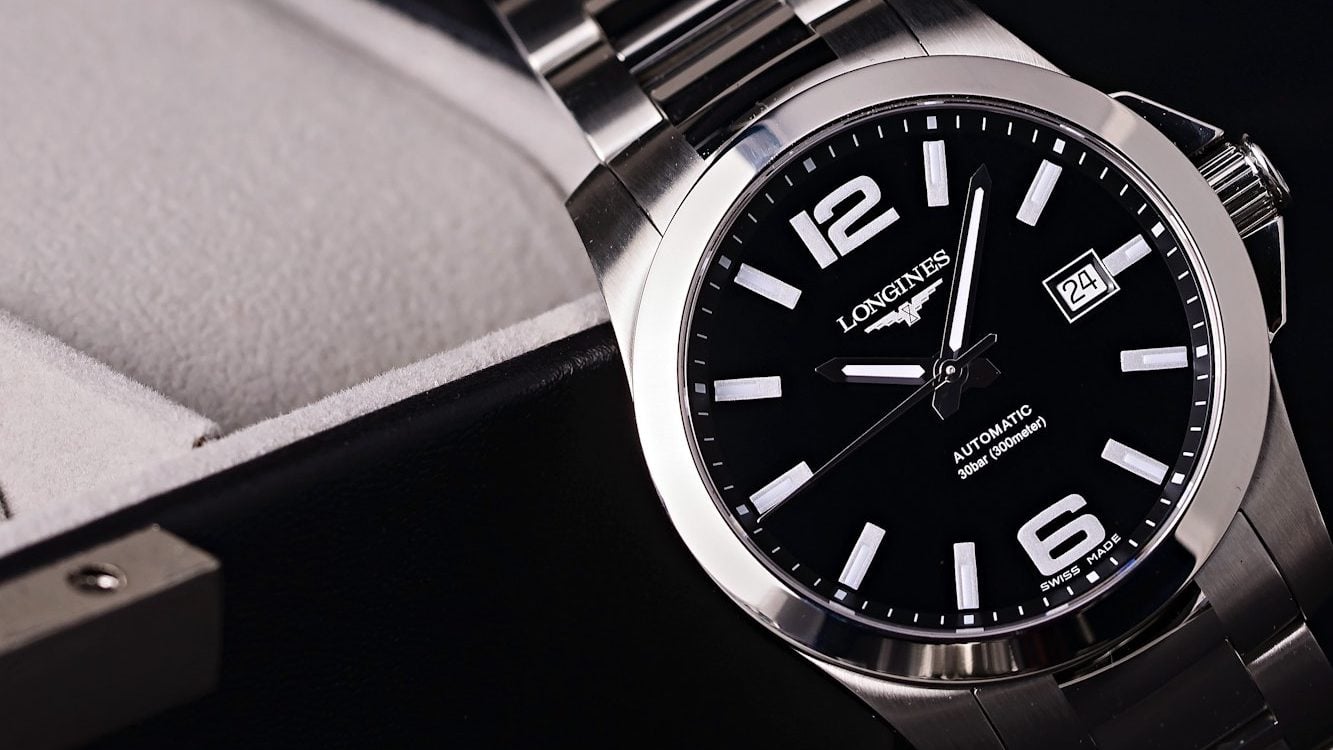
The Longines Conquest, with roots going back to 1954 when it became the first Longines collection to have its name officially registered, serves as an approachable alternative. Available in a range of sizes and configurations, the Conquest offers clean, highly legible dials, solid cases, and versatile styling suitable for everyday wear. Starting at well under $2,000 for many automatic models, the Conquest appeals to buyers who want a sportier, modern watch from a heritage Swiss brand without the exclusivity barriers that come with Rolex.
- Winner for Everyday Versatility on a Budget: Longines Conquest. A beautiful, reliable Swiss watch with deep heritage, perfect for a one-watch collection at a comfortable price.
- Winner for Long-Term Investment and Finishing: Rolex Explorer. Superior case finishing, a fully in-house movement, and value retention that few watches can match.
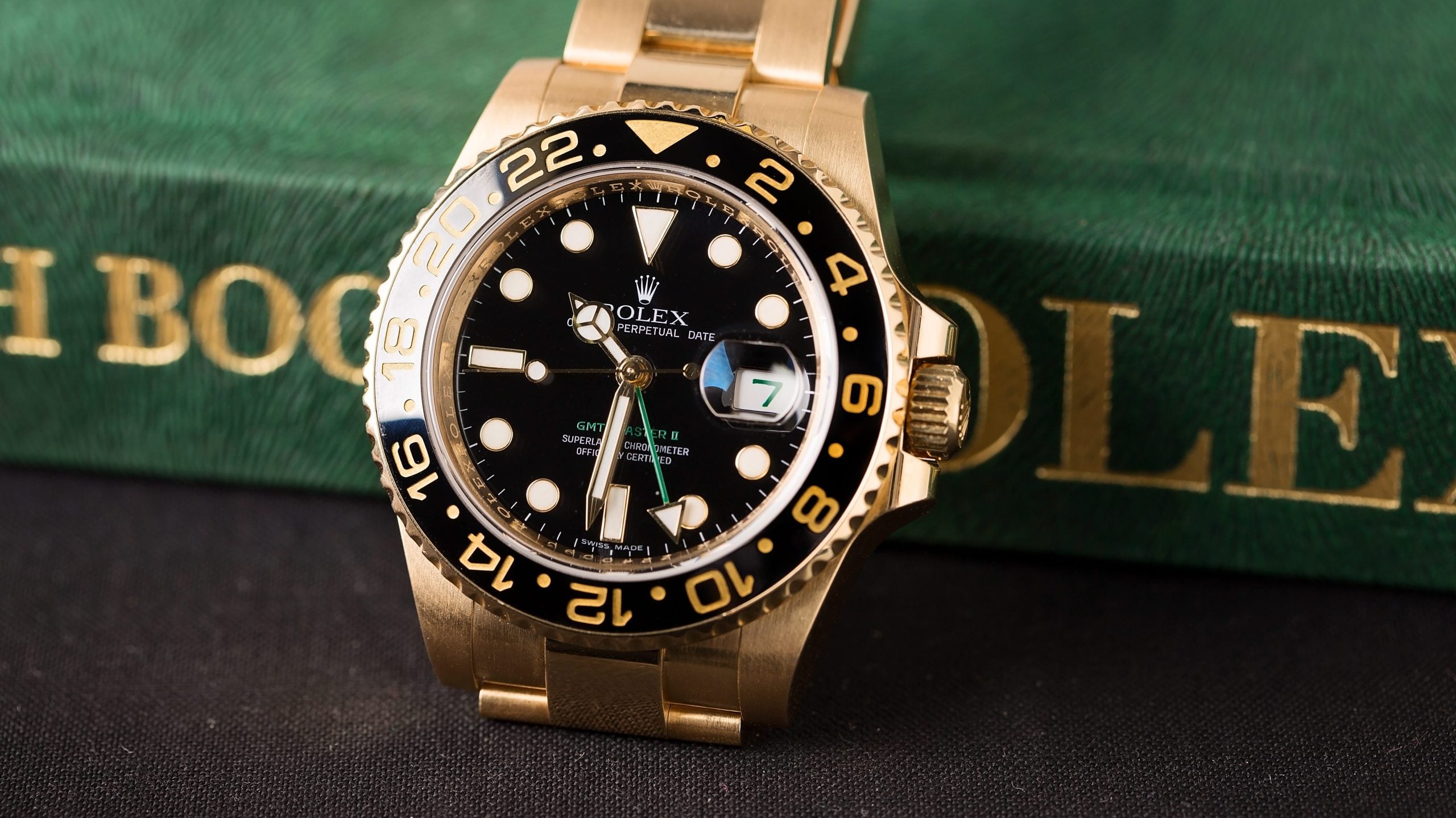
Rolex GMT-Master II vs Longines Spirit Zulu Time

The Rolex GMT-Master II is the gold standard for travel watches. Originally developed for Pan Am pilots in 1954, it displays two time zones simultaneously and has spawned some of the most collectible references in the watch world, including the legendary “Pepsi” and “Batman” bezels. Current steel models retail for around $10,750 but sell on the secondary market for roughly $19,000 or more, depending on the reference.
The Longines Spirit Zulu Time is the brand’s answer for travelers who want true GMT functionality without the Rolex premium. Named after Longines’ first dual-time-zone wristwatch from 1925, the Spirit Zulu Time features a COSC-certified caliber with a 72-hour power reserve, a bidirectional ceramic bezel, and genuine “flyer” GMT capability that lets you jump the local hour hand independently. Available in 39mm and 42mm sizes, with retail prices starting around $3,450 on bracelet, it delivers serious travel watch credentials backed by a century of Longines aviation heritage.
- Winner for GMT Functionality Per Dollar: Longines Spirit Zulu Time. True flyer GMT mechanics, COSC certification, and a ceramic bezel for roughly one-third the retail price of a GMT-Master II.
- Winner for Collectibility and Status: Rolex GMT-Master II. Few watches in history carry the same cultural weight or secondary market demand.
- Winner for Heritage Storytelling: This one is close. Rolex has the Pan Am connection. Longines has a documented GMT history dating back to 1925, with patents and production records to prove it.
Value Retention: Why the Trajectory Diverges

People compare these two brands financially because the contrast is so dramatic. Rolex operates in a market where demand consistently outpaces supply. Sport models routinely sell above their retail price on the secondary market, and certain discontinued references appreciate year after year. For many buyers, a Rolex is not just a watch but a wealth-preserving asset. Data from secondary market tracking shows that popular Rolex references like the Submariner and GMT-Master II have seen significant long-term appreciation, even after market corrections.
Longines occupies a very different financial lane. Their dive watches are widely available through authorized dealers, meaning there is no artificial scarcity driving up prices. A Longines will typically depreciate from its retail price once purchased, much like most watches in its segment. This is not a criticism. It simply means Longines is a purchase driven by pure enjoyment, craftsmanship, and heritage rather than financial speculation. For collectors who want to wear and enjoy a beautifully made Swiss watch without worrying about market fluctuations, that is actually a very freeing position to be in.
Final Verdict: Navigating Your Watch Journey

Longines and Rolex are compared because they serve two different but equally important roles in the watch world. Longines is the accessible workhorse with nearly 200 years of Swiss heritage, offering watches that punch well above their price in build quality, movement capability, and historical significance. Rolex is the ultimate achievement in luxury branding, finishing, and value retention, a watch that signals arrival in a way few other possessions can.
Neither choice is wrong. A collector enjoying a Longines HydroConquest or Spirit Zulu Time today is wearing a watch with real substance and a story worth telling. And when that same collector is ready to step into the next chapter, to acquire the status and craftsmanship that only a Rolex can deliver, Bob’s Watches is the premier destination to find the perfect Rolex to elevate their collection.
The post Longines vs Rolex: Why People Often Compare Them appeared first on Bob's Watches.