Bob's Watches Bob's Watches
The IWC Ingenieur is worth considering if you want a luxury sports watch with distinctive design, strong engineering heritage, and options ranging from vintage antimagnetic models to the modern integrated-bracelet Ingenieur Automatic 40. The colelction iwas designed by Gerald Genta, and buying one comes down to four decisions: modern or vintage, case size, material, and where you purchase. This guide covers the full picture: the model’s history, every current reference with real market prices, the vintage SL generations, where to buy, and what to check before you commit.
Key Takeaways
- The IWC Ingenieur is a luxury sports watch built around antimagnetic engineering, first released in 1955 and redesigned by Gerald Genta in 1976.
- The current lineup includes the Automatic 35, Automatic 40, Automatic 42, and a Perpetual Calendar, offered in steel, titanium, gold, and ceramic.
- As of 2026, steel models can be purchased for roughly $10,000 and $15,000 pre-owned.
- The 35 and 40 differ in more than size; they use different movements, power reserves, casebacks, and only the 40 carries the soft iron antimagnetic cage.
- Vintage Ingenieur SL references from 1976 to 2001 were produced in smaller numbers than the Royal Oak 5402, which makes them a genuine collector opportunity.
Below, we walk through the Ingenieur’s history, break down each current model with specs and pricing, compare the vintage generations, and close with a practical checklist so you know exactly what to verify before you buy.
What Is the IWC Ingenieur?

The IWC Ingenieur is a luxury sports watch line from IWC, launched in 1955 with reference 666 as an antimagnetic watch for engineers, scientists, and technicians. Its defining feature was a soft iron inner case that shields the movement from magnetic fields. In 1976, designer Gerald Genta reimagined it as the Ingenieur SL, giving it an integrated bracelet, a bezel with five functional screws, and a textured grid dial often called the graph paper dial. IWC Schaffhausen relaunched the line in 2023 with a design drawn directly from Genta’s original drawings, a project reviewed and approved by his widow, Evelyne Genta.
In today’s market, the Ingenieur occupies a distinct position. It comes from the same designer behind the Audemars Piguet Royal Oak and the Patek Philippe Nautilus, yet it sells for a fraction of their prices and without multi year waiting lists. For buyers who want authentic Genta design with genuine engineering history behind it, the Ingenieur is the most attainable entry into that small club of integrated bracelet icons.
A Brief History of the IWC Ingenieur (1955 to Today)

The history of IWC Ingenieur spans seven decades and several distinct design eras, and knowing them matters because each era represents a different buying opportunity today. The table below maps the key milestones and what each one means for a buyer in 2026.
| Era | Key References | What Happened | Why It Matters to Buyers |
| 1955 | 666, 666A, 666AD | Original antimagnetic engineer’s watch with caliber 85x and a soft iron inner case, released around the same time as the Rolex Milgauss | Classic 36.5 mm vintage pieces, wearable and historically significant |
| 1976 | 1832 “Jumbo” | Gerald Genta redesign creates the Ingenieur SL: 40 mm case, integrated bracelet, bezel with five screws | Fewer than 1,000 produced, the most collectible Ingenieur of all |
| 1983 to 1989 | 3505, 3506 “Skinny” | Slimmer 34 mm SL models with ETA based movements | Accessible vintage entry with the same Genta design language |
| 1989 to 1992 | 3508 “500,000 A/m” | Niobium zirconium hairspring, tested to withstand fields of 3.7 million A/m, a record at the time | A technical landmark that reportedly cost IWC money on every piece sold |
| 1993 to 2001 | 3521, 3522 | Chronometer certified SL powered by the Jaeger LeCoultre caliber 889 | The last vintage SL, often overlooked and priced accordingly |
| 2005 to 2017 | IW3227, AMG, chronographs | Larger cases and Mercedes AMG partnerships, including the Formula 1 sponsorship era | Divisive designs, but the best value entry into Ingenieur ownership today |
| 2023 | IW3289 Automatic 40 | Full relaunch faithful to Genta’s original design | The foundation of the current collection |
| 2025 | Automatic 35, 42 mm, Perpetual Calendar | Watches and Wonders expansion adds sizes, 18k 5N gold, black ceramic, and the first Ingenieur perpetual calendar | The lineup now covers wrists and budgets from steel to high complication |
| 2026 | F1 limited editions | Limited releases tied to Formula 1 continue, trading above retail | Hype pieces with premiums, buy carefully |
This history of IWC creates three distinct buying lanes: current production models from 2023 onward, discontinued models from the 2005 to 2017 era, and vintage SL references from 1976 to 2001. Each lane has its own price range, risk profile, and reward, and the rest of this guide addresses all three.
The Current IWC Ingenieur Lineup (2023 to 2026)
The modern collection is built around three case sizes and one complication, with materials ranging from stainless steel IWC Ingenieur watches to ceramic and gold. The table below summarizes the core specs, and the sections that follow cover each model in detail.
| Model | Reference Family | Size / Thickness | Material | Movement | Power Reserve | Caseback | Soft Iron Cage | Approx. Retail (2026) |
| Automatic 40 | IW3289 | 40 mm / 10.7 mm | Steel or titanium | Caliber 32111 | 120 hours | Solid | Yes | $11,700 to $15,000 |
| Automatic 35 | IW3249 | 35 mm / 9.4 mm | Steel or 18k 5N gold | Caliber 47110 | 42 hours | Sapphire | No | $12,900 |
| Automatic 42 | IW3389 | 42 mm | Titanium or ceramic | Caliber 32111 | 120 hours | Solid | Yes | $16,200 |
| Perpetual Calendar | IW3446 | 41 mm | Steel | Caliber 82600 | 60 hours | Sapphire | No | $38,000+ |
IWC Ingenieur Automatic 40
The Automatic 40 is the model that brought the Ingenieur back in 2023, and it remains the heart of the collection. It follows Genta’s 1976 design most closely, from the case proportions to the grid dial, and it is the only current size that keeps the traditional soft iron inner case.
- References include IW328901 (black dial), IW328902 (silver), IW328903 (aqua green), IW328904 (titanium with grey dial), and IW328907 (blue)
- 40 mm case, about 10.7 mm thick, with 100 meters of water resistance
- In-house caliber 32111 with a power reserve of 120 hours, or five full days
- Solid caseback housing the soft iron cage, the direct link to the watch’s antimagnetic origins
- Integrated H-link bracelet with a butterfly clasp
- Retail as of 2026: about $12,900 in steel, $16,200 in titanium, and $55,600 in gold.
IWC Ingenieur Automatic 35
Added in 2025, the Automatic 35 answers years of requests for a smaller Ingenieur. It suits slimmer wrists and buyers who prefer classic proportions, and IWC positions it as a unisex watch rather than a ladies’ model.
- References include IW324901 (steel, silver dial), IW324906 (steel, black dial), and IW324903 (18k 5N gold)
- 35 mm case at just 9.4 mm thick, noticeably slimmer on the wrist than the 40
- Caliber 47110 with a 42 hour power reserve
- Sapphire display caseback, which means no soft iron cage on this size
- Retail as of 2026: about $47,500 in gold
IWC Ingenieur Automatic 42 and Ceramic
The 42 mm models give the Ingenieur a bolder presence and showcase IWC’s strength in advanced case materials. The black ceramic version in particular stands apart from anything else in the integrated bracelet category.
- 42 mm case offered in titanium and black ceramic
- Same caliber 32111 with the 120 hour reserve found in the Automatic 40
- Ceramic construction is scratch resistant and light on the wrist
- Retail as of 2026: roughly $21,600 to $23,800
IWC Ingenieur Perpetual Calendar and Gold Models
The 2025 expansion pushed the Ingenieur into high end territory for the first time since its relaunch. The perpetual calendar is a clear statement that IWC intends this line to compete at every level, not just in steel sports watches.
- The Ingenieur Perpetual Calendar displays day, date, month, moon phase, and a four digit year
- Retail sits near $40,800 – $44,000, with pre-owned examples appearing in the low $30,000 range
- The Automatic 40 in 18k 5N gold (IW328702) is a boutique exclusive priced above $50,000
- Gold and ceramic references are produced in smaller quantities and can be harder to find
IWC Ingenieur 35 vs 40: Which Size Should You Buy?
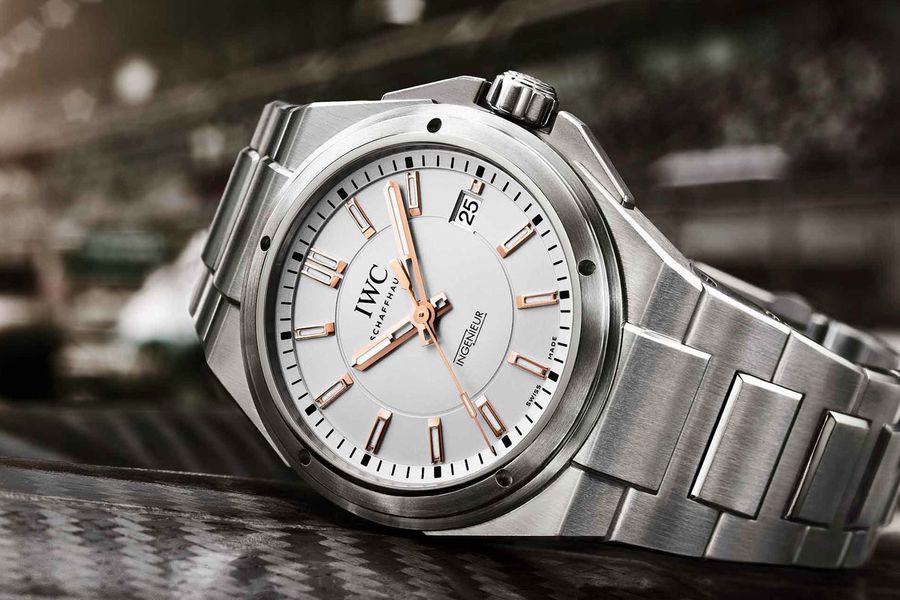
The choice between the Automatic 35 and Automatic 40 is the biggest decision facing most modern Ingenieur buyers, and it involves more than case diameter. The two sizes use different movements with different power reserves, and only one of them keeps the antimagnetic cage that defines the model’s history.
| Feature | Automatic 35 | Automatic 40 |
| Case diameter | 35 mm | 40 mm |
| Thickness | 9.4 mm | 10.7 mm |
| Movement | Caliber 47110 | Caliber 32111 |
| Power reserve | 42 hours | 120 hours |
| Caseback | Sapphire display | Solid |
| Soft iron cage | No | Yes |
| Materials | Steel, 18k 5N gold | Steel, titanium |
| Retail (steel, 2026) | About $11,000 to $12,000 | About $11,700 to $12,900 |
| Best suited to | Wrists under 6.5 inches, slim profile preference | Medium to larger wrists, heritage purists |
Choose the Automatic 35 if:
- You have a wrist under about 6.5 inches or simply prefer watches below 36 mm
- You want the slimmest possible profile that slides under a shirt cuff
- You value a display caseback and enjoy seeing the movement
- You wear the watch daily, which makes the shorter power reserve a non issue
- You want the only current path to a gold Ingenieur under 40 mm
Choose the Automatic 40 if:
- You want the five day power reserve for rotation with other watches
- The soft iron cage and its connection to the original 1955 concept matter to you
- You prefer the titanium option, which is lighter and unique to this size
- Your wrist is medium to large and you want the design closest to Genta’s 1976 original
- You want the widest choice of dial colors, including the popular aqua and blue
One final note applies to both: integrated bracelets wear larger than the diameter suggests, so try both sizes on before deciding.
Vintage IWC Ingenieur SL: References and What to Look For (1976 to 2001)
The vintage Ingenieur SL is one of the more compelling opportunities in collecting today. Experts estimate that total automatic SL production across all generations came to fewer than 6,000 pieces, which makes the family rarer than the Royal Oak 5402, yet prices remain a fraction of what comparable Genta designs command.
| Generation | Nickname | Key References | Years | Size | Movement | Typical Price (2026) |
| First SL | Jumbo | 1832, 9232 | 1976 to 1983 | 40 mm | Caliber 8541ES | $15,000+ |
| Quartz SL | Jumbo Quartz | 3003, 3303 | 1977 to 1983 | 40 mm | Quartz calibers | $3,000 to $7,500 |
| Second SL | Skinny | 3505, 3515 | 1983 to 1985 | 34 mm | ETA based automatic | $4,000 to $7,000 |
| Third SL | Skinny 2.0 | 3506, 3516 | 1985 to 1989 | 34 mm | ETA based automatic | $5,000 to $9,000 |
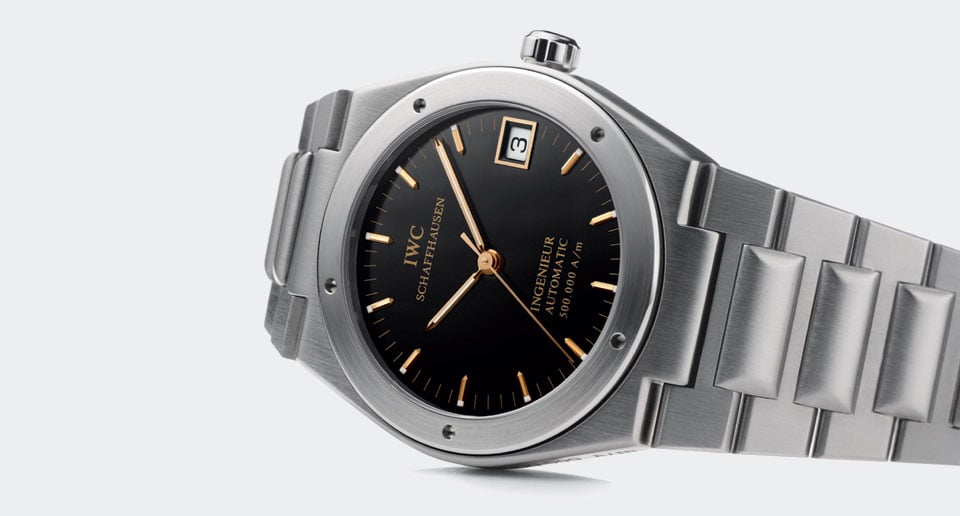
| Fourth SL | 500,000 A/m | 3508, 3518 | 1989 to 1992 | 34 mm | Modified caliber 2892 with niobium zirconium hairspring | $5,000 to $8,000 |
| Fifth SL | Chronometer | 3521, 3522 | 1993 to 2001 | 34 mm | Jaeger LeCoultre 889 | $5,000 to $8,000 |
A few collecting notes shape value across all of these. The graph paper dial is the most desirable dial style, and original, untouched examples carry meaningful premiums. Bracelet condition matters more than most buyers expect, since replacement links are difficult to source and a short or stretched bracelet limits who can wear the watch. The Jumbo remains the crown jewel because of its tiny production run, but online communities have increasingly pointed collectors toward the 3521 and the 500,000 A/m as undervalued alternatives with strong stories of their own.
Before buying any vintage SL, verify the following:
- The dial is original, with the correct graph paper texture and the proper Swiss or Swiss Made signature for the reference
- Case edges remain crisp and unpolished, since heavy polishing softens the Genta geometry that defines the watch
- The movement matches the reference, such as the caliber 8541ES in the Jumbo or the JLC 889 in the 3521
- Service history is documented, because parts for the 8541ES in particular are scarce
- Reference 3508 carries its “500.000 A/m” engraving on the case flank
IWC Ingenieur Prices: Retail, Pre-Owned, and Vintage (2026)
As of 2026, a steel IWC Ingenieur Automatic 40 retails for about $12,900, pre-owned examples trade around $9,000 to $15,000, and vintage Ingenieur SL references range from roughly $4,000 for quartz models to $15,000 or more for the automatic Jumbo. The table below breaks down the full market.
Two patterns stand out in the current market. First, the pre-owned discount on current steel models is modest, usually 10 to 20 percent below retail, because demand has stayed strong since the 2023 relaunch. That is a healthy sign for owners, since the Ingenieur holds its value better than most of IWC’s catalog. Limited editions tied to Formula 1 have traded above retail, though premiums on hype releases tend to soften over time.
Second, the discontinued 2005 to 2017 models remain the most affordable path into Ingenieur ownership. These watches offer in-house or high grade movements, robust cases, and the Ingenieur name for $4,500 to $8,500. They lack the pure Genta look of the SL and the current collection, which is exactly why they cost less. Meanwhile, vintage SL prices have climbed steadily as collectors rediscover the family, and clean, original examples are getting harder to find each year.
7 Things to Check Before Buying an IWC Ingenieur
Whether you are buying at retail or pre-owned, a short checklist prevents most expensive mistakes. These seven points cover the issues that come up most often in real transactions.
- Verify the exact reference number. Model names repeat across eras, so “Ingenieur Automatic 40” alone is not enough. The reference, such as IW328901 versus IW323902, determines the movement, size, era, and value of the watch in front of you.
- Confirm box, papers, and warranty status. Full sets sell faster and command premiums on resale. IWC also offers a registered warranty extension of up to eight years on current models, and remaining coverage transfers real value to you as the buyer.
- Try the size on your wrist. Integrated bracelet watches wear larger than their diameter suggests, and the 35 has more presence than the number implies. Note that current models do not accept standard straps, so the bracelet is a permanent part of the ownership experience.
- Understand the movement you are getting. The caliber 32111 in the 40 delivers a 120 hour reserve, while the 47110 in the 35 runs 42 hours. On vintage pieces, know whether you are buying an ETA base, a JLC caliber, or the harder to service 8541ES.
- Check which antimagnetic protection is actually present. Only the Automatic 40 and 42 carry the soft iron cage behind their solid casebacks. The 35’s display back trades that feature away, which matters to some buyers and not at all to others.
- Inspect condition and polishing on pre-owned and vintage pieces. Crisp case bevels, honest bracelet stretch, and an original dial drive vintage value more than any other factor. Overpolished cases lose the sharp geometry that makes the Genta design work.
- Buy through the right channel for your risk tolerance. Retail offers certainty at full price, while the pre-owned market offers value with varying levels of protection. The next section breaks down each option.
Where to Buy an IWC Ingenieur
Availability on the Ingenieur is reasonable compared to other integrated bracelet sports watches. Steel models can usually be found without a waiting list, while gold, ceramic, and limited editions take more effort. Your choice of channel affects price, warranty, and risk.
| Channel | Typical Price vs. Retail | Warranty | Best For | Watch Outs |
| IWC boutique or official site | Full retail | Full factory, extendable to 8 years | Current models, gold and ceramic exclusives | No negotiation, limited stock on popular dials |
| Authorized dealer | Full retail, occasional flexibility | Full factory warranty | Building a relationship for future allocations | Popular references may require patience |
| Trusted pre-owned dealer | 10 to 20 percent below retail on current steel | Dealer guarantee, often with remaining factory coverage | Best overall value on modern models, authenticated vintage | Verify authentication standards and return policy |
| Online marketplaces | Varies widely | Depends on seller | Rare references and specific dial hunting | Private sellers carry the highest risk |
| Auctions | Market driven | None | Vintage Jumbo and rare SL references | Fees add 20 to 25 percent, condition varies |
For current production models, the decision is mostly about price versus convenience. For vintage SL references, authentication is the priority, because redialed watches, swapped movements, and incorrect bracelets circulate in the market. Buying vintage from a source that stands behind authenticity, offers a return window, and documents the watch thoroughly is worth far more than saving a few hundred dollars on a listing with no protection.
Is the IWC Ingenieur a Good Investment?

The honest answer is that the Ingenieur holds value well but should not be purchased as a financial instrument. Current steel models trade 10 to 20 percent below retail on the secondary market, which is normal for watches in active production and stronger than most of IWC’s other lines. Since the 2023 relaunch, the overall price trend has pointed upward, supported by steady demand, the Genta design story, and IWC’s continued investment in the collection.
Certain corners of the market have outperformed. Formula 1 limited editions have sold above retail, titanium models move quickly, and the aqua dial developed a following almost immediately. On the vintage side, SL references have appreciated as collectors recognize how few were made relative to the Royal Oak and Nautilus, and top quality Jumbos have led that climb. Condition and originality decide everything at the vintage level, so two examples of the same reference can be thousands of dollars apart.
The practical takeaway is simple. Buy the Ingenieur you want to wear, choose it carefully using the checklist above, and treat any appreciation as a bonus rather than the goal. Watches bought purely as investments tend to disappoint, while watches bought well rarely do.
IWC Ingenieur Alternatives Worth Considering
The Ingenieur competes in the integrated bracelet sports watch category, one of the most active segments in the market. If you are cross shopping, these are the watches most often weighed against it.
| Watch | Price Range (2026) | How It Compares |
| Audemars Piguet Royal Oak | $35,000+ | The original Genta icon, three to five times the price with long waiting lists |
| Patek Philippe Nautilus | $80,000+ | Genta design at the top of the market, extremely difficult to obtain |
| Girard-Perregaux Laureato | $12,000 to $16,000 | The closest direct rival in price and 1970s pedigree |
| Vacheron Constantin Overseas | $25,000+ | A step up in price with strong finishing and a quick change strap system |
| Tissot PRX Powermatic 80 | Under $1,000 | The budget take on the integrated bracelet look |
| Rolex Milgauss (discontinued) | $10,000 to $14,000 pre-owned | The Ingenieur’s historic antimagnetic rival, no longer in production |
Is the IWC Ingenieur Worth Buying? Our Final Take

For most buyers, yes. The Ingenieur delivers authentic Gerald Genta design, a genuine engineering story dating back to 1955, and modern specs that hold up against anything in its class, all without the pricing or waiting lists attached to the Royal Oak and Nautilus. The decision framework is straightforward: pick your era first, whether current production, the discontinued 2000s models, or vintage SL. Then settle on size, material, and the buying channel that matches your budget and risk tolerance.
Match the watch to your wrist and your habits rather than to market chatter. The Automatic 40 offers the complete heritage package with the soft iron cage and five day reserve. The Automatic 35 is the answer for smaller wrists and anyone who prefers slim, classic proportions. The vintage SL rewards collectors willing to do their homework with rarity that the market is only beginning to price in. Whichever direction fits you, browse our pre-owned collection to compare references side by side, or reach out and we will help you find the right Ingenieur for your wrist.
IWC Ingenieur Buying Guide FAQs
The post IWC Ingenieur Buying Guide: Models, Prices & What to Know appeared first on Bob's Watches.