Bob's Watches Bob's Watches
To use a GMT watch, set the 24-hour hand to your home time zone, then use either the independently adjustable hour hand or the rotating bezel to display a second time zone. Some might refer to these models as pilot watches or travel watches since they are good for tracking multiple time zones. Reading it means looking at two dials at once, because the standard hour and minute hands tell you local time while the GMT hand points to a 24-hour scale that shows the time somewhere else. Everything else about the complication follows from that single idea.
Key Takeaways
- The GMT hand is a fourth hand geared to circle the dial once every 24 hours instead of twice.
- A true, or flyer, GMT has a jumping local hour hand. A caller, or office, GMT has a jumping 24-hour hand.
- Which type you own determines how you set the watch, so identify it before anything else.
- The rotating bezel adds a third time zone by changing what the GMT hand reads against.
- The 24-hour scale removes AM and PM guesswork in your second zone.
- GMT was retired as the world’s official standard in 1972, but the name stayed on the watch.
Most owners never touch the complication, and the reason usually comes down to one gap: nobody explained that GMT watches come in two mechanically different flavors that are set in opposite orders. The sections below fix that, starting with what is actually happening on the dial.
What Is a GMT Watch and What Does the GMT Hand Do?
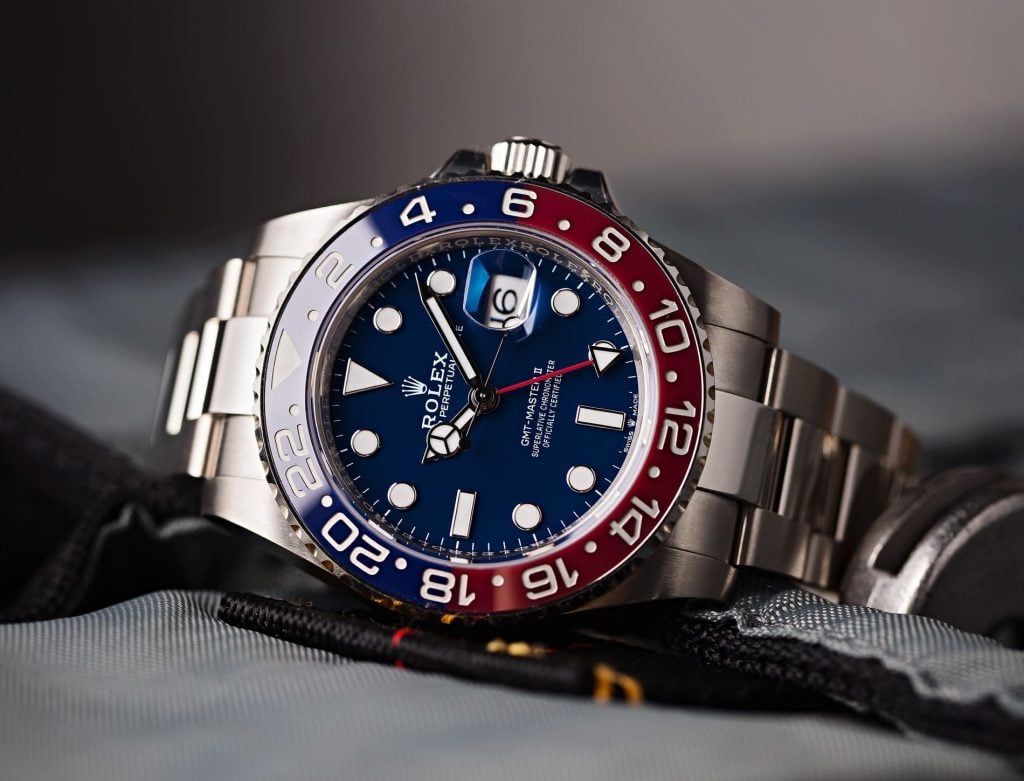
A GMT watch displays two or more time zones at the same time using an extra hour hand that makes one full rotation every 24 hours. That hand is usually tipped with an arrow and finished in a contrasting color, which is why so many GMT models are recognized by a flash of red, blue, or green pointing at nothing in particular until you understand the scale behind it.
The 24-hour geometry is the whole point. A normal hour hand passes every number twice a day, so 6 could mean morning or evening. A hand that circles once per day can only point at one hour, which means the time it shows in your second zone is never ambiguous. Rolex introduced this idea commercially in 1954 with the Rolex GMT-Master, built at the request of Pan American World Airways for pilots crossing several zones in a single shift. Seventy years later the layout has barely changed, which says something about how well it was solved the first time. I wrote a full article on what is a GMT Watch that you can read for more details.
Anatomy of a GMT watch
| Component | What it shows | Where you will find it |
|---|---|---|
| 12-hour hands | Local time | Center of the dial |
| 24-hour GMT hand | Second time zone | Center, arrow tip |
| 24-hour scale | Reference for the GMT hand | Bezel, rehaut, or printed dial |
| Rotating bezel | Optional third time zone | Bidirectional, 24 clicks |
| Minute hand | Shared by every zone | Center |
How to Read a GMT Watch Face
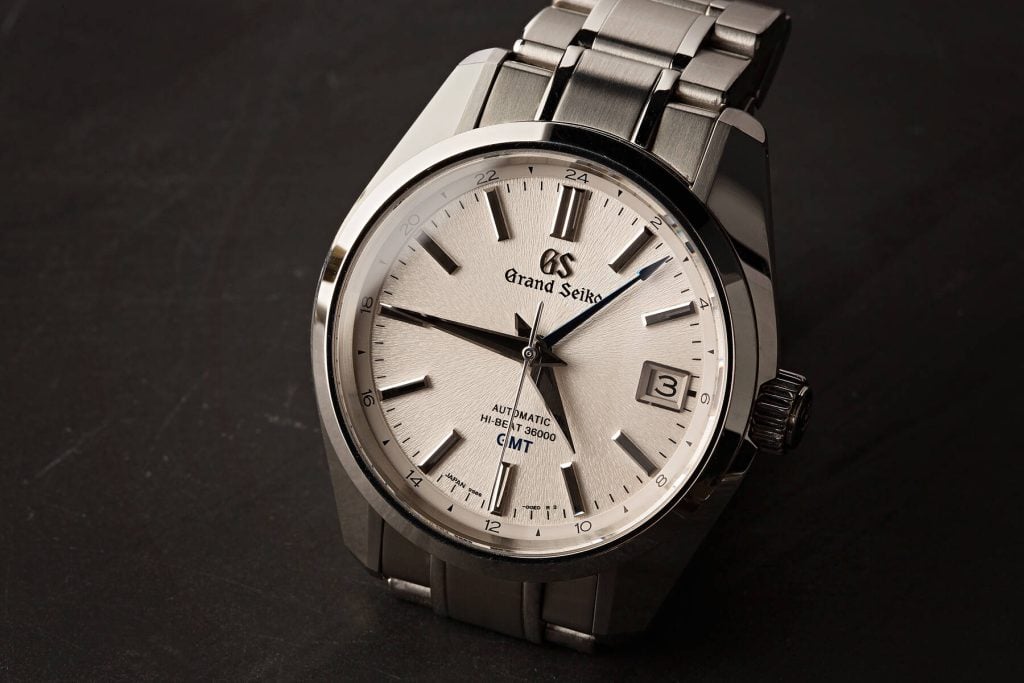
Read local time from the hour and minute hands exactly as you would on any watch, then read the GMT hand against the 24-hour scale to get your second zone. The two readings are independent, and once you separate them in your head the dial stops looking crowded.
Here is the order that works:
- Read local time from the standard hour and minute hands.
- Find the number the GMT arrow is pointing to on the 24-hour scale.
- Convert it if you need to. On a 24-hour clock, 18 is 6:00 PM and 6 is 6:00 AM.
- Take the minutes from the minute hand, which serves every zone on the watch.
Example: the hour and minute hands read 3:10. The GMT arrow points at 23 on the bezel. Your second time zone is 11:10 PM. Nothing needs to be added or subtracted, because the offset is already built into where the hand sits.
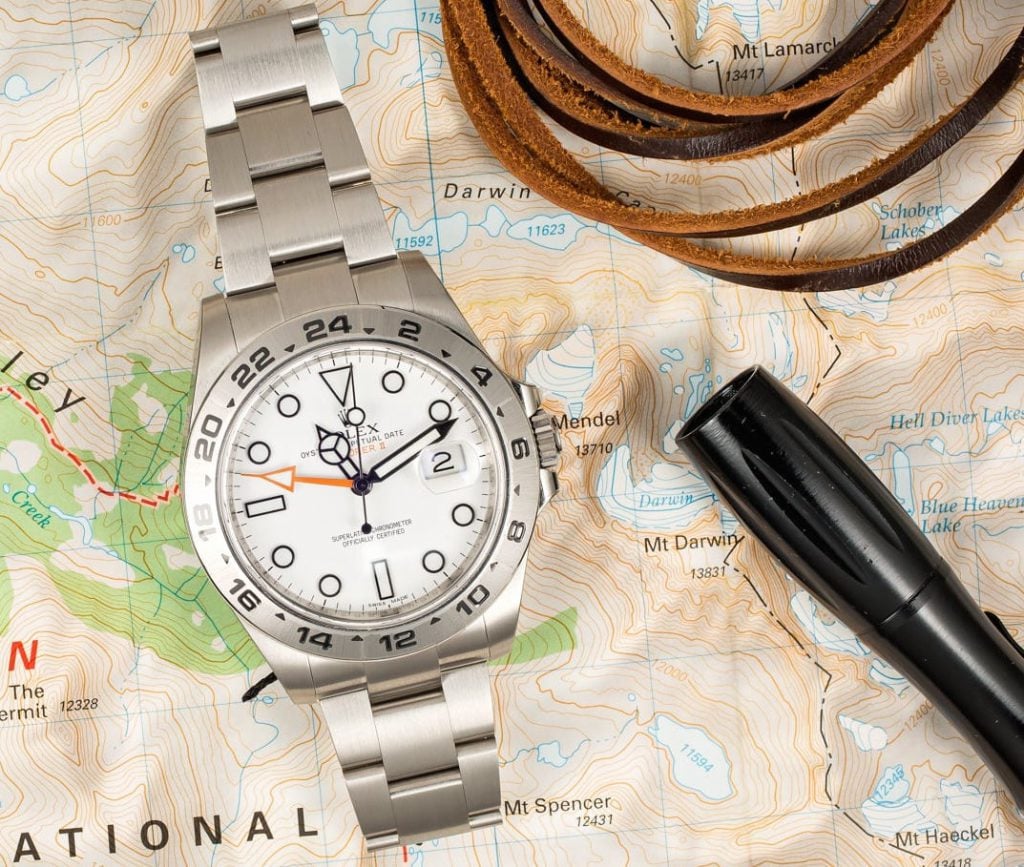
Not every GMT puts the scale in the same place. Some of the best GMT Watches like the Rolex Explorer II print the 24-hour markings on a fixed bezel, and others place them on the rehaut, the sloped inner ring between the dial and the crystal, or directly on the dial itself. A fixed scale locks you to two time zones. A rotating scale opens the door to a third, which is covered further down.
True GMT vs. Caller GMT: Which One Do You Own?
A true GMT, also called a flyer or traveler GMT, has a local hour hand that jumps forward and back in one hour steps. A caller GMT, also called an office GMT, keeps the local hands fixed and lets the 24-hour hand jump instead. Both show two time zones. They just disagree about which hand should be the one you move.
That disagreement matters more than the spec sheet suggests, because it decides whether the watch is convenient when you land or convenient when you are calling someone who landed.
| True / Flyer GMT | Caller / Office GMT | |
|---|---|---|
| Hand that jumps | Local 12-hour hand | 24-hour GMT hand |
| Adjusts in | One hour steps, seconds keep running | One hour steps |
| Best for | Frequent travelers | Tracking a distant zone from home |
| When you set it | On arrival, in seconds | Once, then leave it alone |
| Movement examples | Rolex 3285, Tudor MT5652, Miyota 9075 | ETA 2893-2, Sellita SW330, Soprod C125 |
| Typical tier | Mid to luxury | Entry to mid |
How to Identify Which Type You Have
Unscrew the crown if your watch has one, pull it to the middle position, and turn it. Watch which hand responds. If the local hour hand steps around the dial one hour at a time while everything else holds still, you own a true GMT. If the 24-hour hand is the one moving, you own a caller.
The final crown position behaves the same on both. Pulling all the way out stops the seconds hand and moves the local hands and the GMT hand together as a set. That position is for establishing your reference time. The middle position is where the two designs part ways, and it is the only test you need.
How to Set a True (Flyer) GMT Watch
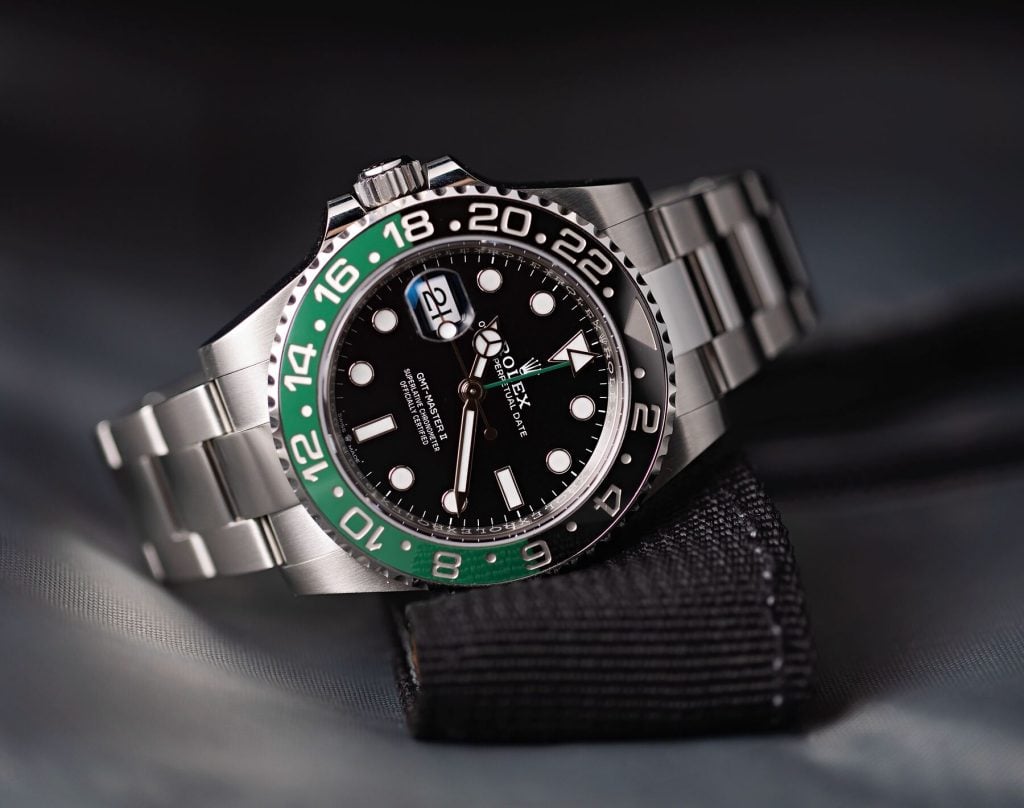
On a true GMT you build the watch from home time outward. Set the 24-hour hand to your home zone first, lock in the minutes, then jump the local hour hand to wherever you happen to be standing.
- Crown fully out. Turn until the 24-hour GMT hand sits on your home time. The local hands travel along with it, which is expected. Ignore them for now.
- Still fully out, set the minutes precisely against a reference such as a phone or an official time service. The seconds hand is stopped, so you can release the crown on the exact second.
- Crown to the middle position. Jump the local hour hand forward or back to your current local time. The GMT hand, the minutes, and the seconds all stay where they are.
- Push the crown in and screw it down if the model calls for it.
- On your next arrival, repeat step three only. The whole reset takes about five seconds and the watch never loses a beat.
One detail worth knowing: on most true GMTs the date is driven by the local hour hand, so it advances or reverses on its own as the hand crosses midnight. There is usually no separate quickset, and there does not need to be. Fly east far enough and the date sorts itself out.
How to Set a Caller (Office) GMT Watch

A caller GMT reverses the order. Set your local time the conventional way first, then move the 24-hour hand on its own to whatever zone you want to keep an eye on.
- Crown fully out. Set local time using the hour and minute hands. Mind AM and PM by running the hands past 12 and watching whether the date advances.
- Crown to the middle position. Turn until the 24-hour hand reaches your second zone. It jumps in one hour steps without disturbing local time. Most calibers put the date quickset in this same position, usually by turning the crown the opposite direction.
- Confirm the offset makes sense. If it is 10:00 AM in New York and you want London, the GMT hand should land on 15.
- Push the crown in and secure it.
The tradeoff is straightforward. A caller is the better instrument for someone who stays put and tracks a fixed distant zone, whether that is family abroad, a trading session, or a team eight hours ahead. Set it once and it is correct until daylight saving moves. It is the weaker instrument for travel, because every arrival forces you to stop the seconds and reset local time by hand, and your watch loses its accuracy to the second every time you land.
How to Use the GMT Bezel for a Third Time Zone

Rotating the bezel changes what the GMT hand reads against, which lets you display a third time zone without touching the crown. The hand does not move. The scale underneath it does, and the difference is read as an offset.
- Start with the bezel at its home position, with 24 aligned to 12 o’clock. In this position the GMT hand shows the zone you set it to.
- Work out the offset between that zone and the third zone you want.
- Rotate the bezel counterclockwise by that many hours to see a zone that is ahead. Rotate clockwise to see a zone that is behind.
- Read the GMT arrow against the repositioned scale.
Worked example: your GMT hand is set to London and currently reads 14, so it is 2:00 PM there. You want Tokyo, which is nine hours ahead. Rotate the bezel nine clicks counterclockwise. The arrow now reads 23, which is 11:00 PM in Tokyo.
Common bezel positions from a London reference
| Third time zone | Offset from London | Bezel rotation |
|---|---|---|
| Los Angeles | 8 hours behind | 8 clicks clockwise |
| New York | 5 hours behind | 5 clicks clockwise |
| Dubai | 4 hours ahead | 4 clicks counterclockwise |
| Tokyo | 9 hours ahead | 9 clicks counterclockwise |
| Sydney | 10 hours ahead | 10 clicks counterclockwise |
Offsets shown are for standard time. Daylight saving shifts them by an hour in the regions that observe it.
There is a catch that many guides skip. The moment you rotate the bezel away from 24, the scale stops showing the zone you originally set the GMT hand to. You have traded the second zone for a third, not added one, unless your watch also carries a fixed 24-hour scale on the rehaut. Watches with both give you a genuine three zone reading. Everything else is a swap.
When to Wear a GMT Watch and What It Is Actually For

A GMT watch is for anyone who needs to know the time in two places at once, and it is durable enough to wear every day while doing it. The complication was built for pilots, but the people using it now are mostly on the ground.
- International travel. Keep home on the GMT hand and let the main hands follow you.
- Remote work. Caller GMTs are ideal for anyone whose colleagues are six or nine hours away.
- Financial markets. Track an exchange’s session without doing math before coffee.
- Aviation, military, and radio. Zulu time is UTC read on a 24-hour clock, which is exactly what the GMT hand gives you.
- Everyday wear. Most GMT models carry 100 meters of water resistance, a steel bracelet, and a legible dial, which makes them among the most practical sports watches ever built.
- Quick context. A glance tells you whether it is business hours somewhere before you send the message.
You do not need one, and that is worth saying plainly. What makes the GMT unusual among complications is that it is both useful and readable, which is a pairing that perpetual calendars and minute repeaters never quite manage. It also works fine if you only care about one time zone. Park the GMT hand on local time and it becomes a day and night indicator, telling you at a glance whether the 8 on your dial means breakfast or dinner.
Common GMT Watch Mistakes and Troubleshooting
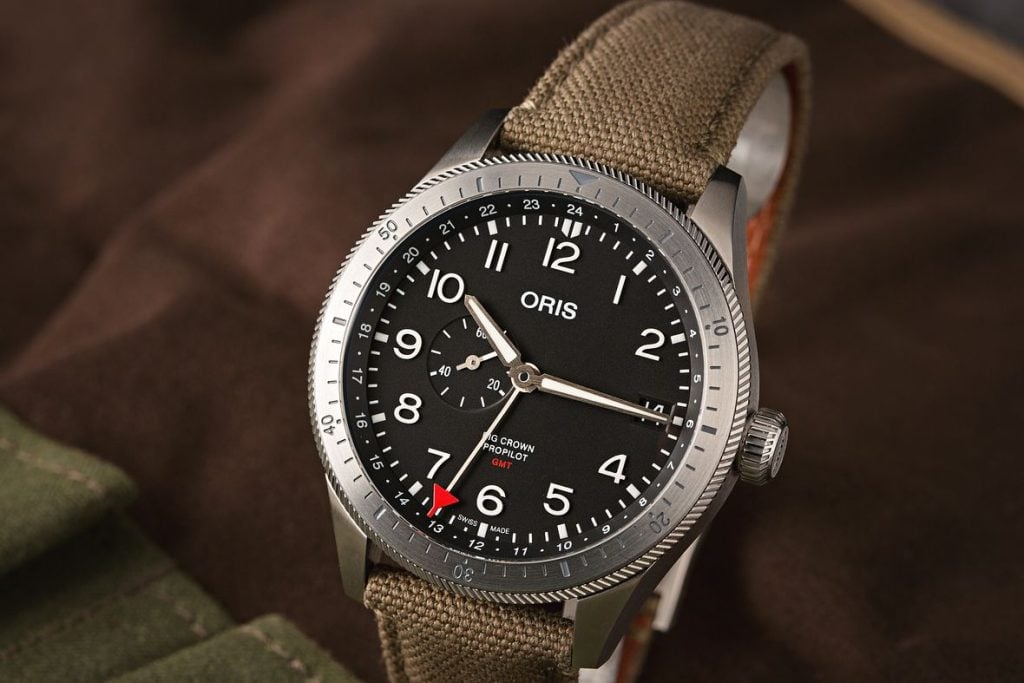
Nearly every GMT problem traces back to one of two things: the watch is set 12 hours off, or the owner is expecting the wrong hand to jump. Both are quick to diagnose.
- The GMT hand is 12 hours off. Local time was set in the wrong half of the day. Run the hour hand forward 12 hours and confirm the date advances at midnight rather than noon.
- The date changes at midday. Same cause, same fix. The local hands are inverted.
- Nothing jumps in the middle crown position. You are likely testing for flyer behavior on a caller, or the reverse. Run the identification check above.
- The bezel will not line back up with 24. Bidirectional bezels can sit one click off. Count clicks back to the pip rather than eyeballing it.
- You forget which zone the GMT hand holds. Pick a rule and never break it. Home time lives on the 24-hour hand, permanently.
- The date resists a quickset. Avoid quicksetting between roughly 9:00 PM and 3:00 AM, when the date change gears are already engaged. Move the hands to mid afternoon first.
GMT vs. UTC vs. Zulu Time: Why the Name Stuck

Greenwich Mean Time was replaced as the world’s official time standard by Coordinated Universal Time in 1972, but the watch complication kept the old name. Part of that is history, and part of it is that Rolex named the Rolex GMT-Master first and the industry followed. The function itself never changed.
The distinction is technical rather than practical. GMT is based on the sun’s position at the Royal Observatory in Greenwich, London, which makes it an astronomical measure. UTC is kept by atomic clocks and adjusted with occasional leap seconds so it never drifts far from solar time. The two stay within a second of each other, which is well beyond what a mechanical watch can resolve. GMT still exists as the United Kingdom’s winter time zone, and Zulu is simply the aviation and military phonetic for UTC, which is why a 24-hour hand is standard equipment in a cockpit.
| Term | What it is | Still used for |
|---|---|---|
| GMT | Solar time at Greenwich | UK winter time, watch complications |
| UTC | Atomic time standard | Global civil timekeeping since 1972 |
| Zulu | Phonetic name for UTC | Aviation, military, radio |
Getting the Most Out of Your Second Time Zone
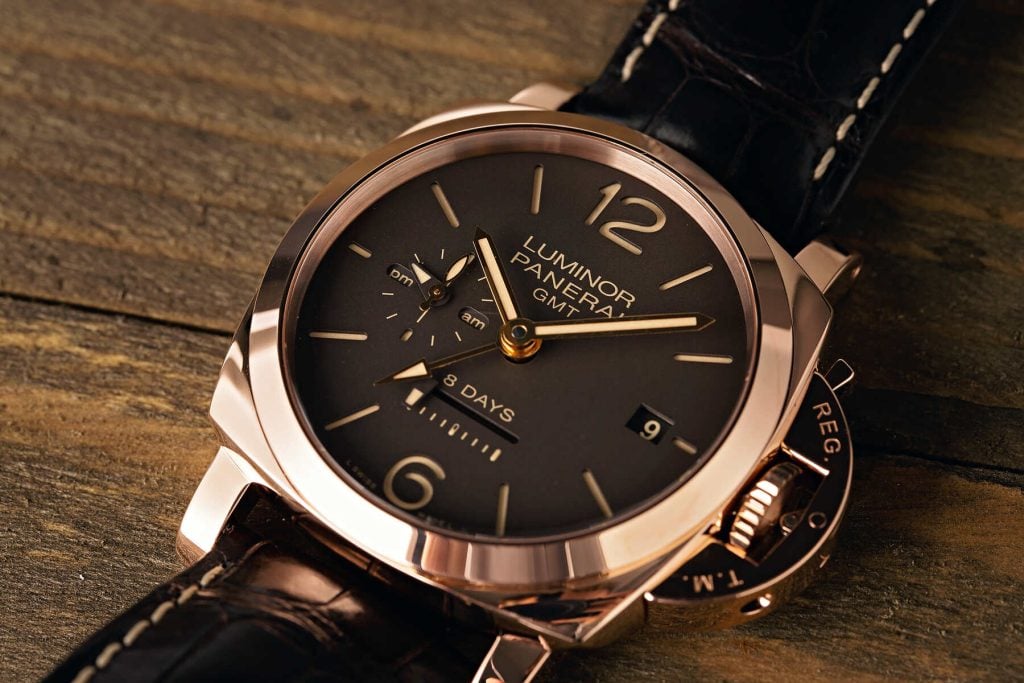
The mechanics come down to one sentence: the 12-hour hands are for here, the 24-hour hand is for there, and the bezel is for a third place if you want one. The only real decision is knowing whether your watch jumps the local hand or the GMT hand, because every setting instruction flows from that answer. Once you have identified your type, the process takes under a minute and you will not need to look it up again.
What separates a GMT that gets used from one that just looks good is whether the second zone is set to something you actually care about. Pick a zone tonight, home if you travel, wherever the people you call are if you do not, and leave it there. The complication earns its place the first time you glance down instead of doing arithmetic, and after that the habit takes care of itself.
Frequently Asked Questions
The post How to Use a GMT Watch: A Complete Guide to Setting, Reading, and Tracking Time Zones appeared first on Bob's Watches.