Bob's Watches Bob's Watches
Gold is always a sure bet. Right? Especially in this day and age of somewhat unpredictable currencies and markets, gold is always considered the – ahem – gold standard.
Surprisingly the price of gold has taken something of a dip in the mid-summer of 2026 (unlike the temperatures). The World Gold Council has labeled the gold market “volatile” in 2026, with prices ranging between peak highs of $5,500 early in 2026 and lows down to $4,000 per ounce in mid-summer. This big swing is being attributed mainly to geopolitical tensions (including, and probably mainly due to, the U.S.-Iran conflict).
While this volatility has caused a lot of sudden navigating on financial markets, one bankable thing has remained consistent: Rolex (and other high-end Swiss watch brands) raising the prices for its gold Rolex watches.
The Morgan Stanley numbers
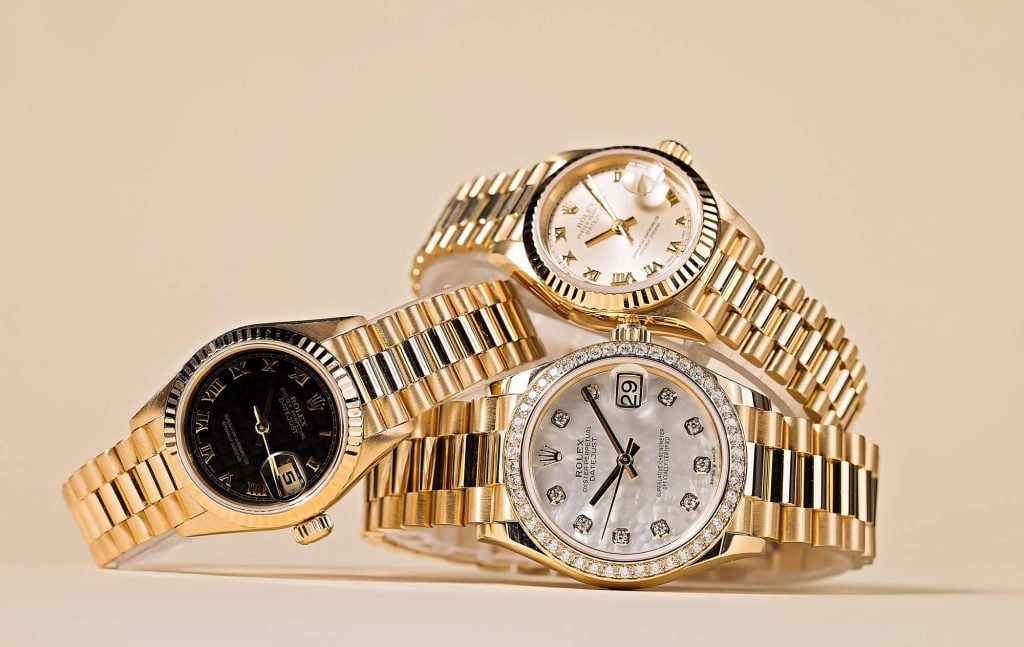
According to almost every polling institute, including the Morgan Stanley Watch Industry Report 2026, which was released in February 2026, Rolex is undisputedly the most sought-after watch brand on the market today with a share of about 33 percent of total Swiss watch market value (and the top four – Rolex, Cartier, Audemars Piguet, and OMEGA – combined take up 55 percent, more than half the sales of all luxury watches!). But what the report also brings to light is that today Swiss brands overall are making fewer watches but selling them for more money.
Rolex is an independent company not owned by a group and not listed on any market; it is owned by a trust foundation in Geneva. It therefore has the luxury of playing the long game in any strategy – in other words, Rolex has the freedom to do what it deems correct for itself in the long run since it answers to no one. And its immense popularity culled over decades using clever marketing means that clients and potential clients will go along with price increases (within reason).
The Morgan Stanley numbers tell us one more thing that is perhaps also very important to keep in mind: in 2025, timepieces priced above CHF 50,000 represented about 37 percent of the value of exported watches (though, frankly put, only about 1.5 percent of exported watches) but delivered a whopping 89 percent of the growth, suggesting a trend of upscaling.
Sure, there are a few outliers. But most of Rolex’s production is well under the CHF 50,000 line. So how does it continue to grow?
Generally, Rolex does not produce watches in the category above CHF 50,000; Morgan Stanley estimates an average Rolex price of around CHF 14,000 for watches sold at a volume of about 1,150,000 units – but a price average that has gone up year on year by about six percent despite volume being down by approximately two percent. This marks the second year running in which Rolex decreased the number of watches manufactured according to the financial services firm headquartered in New York City.
My observation as the answer to continued growth despite market conditions such as the price of gold? Periodic price increases at “acceptable” moments in time and light upscaling. A 2026 example of upscaling is the latest version of the Rolex Oyster Perpetual Cosmograph Daytona, which in 2026 appeared for the very first time with an enamel dial and a Rolesium case – a stainless-steel case with platinum elements (a rare combination of metals at Rolex and elsewhere). Both platinum and enamel are more expensive materials than generally found on the Rolex Daytona.
Rolex raises gold watch prices
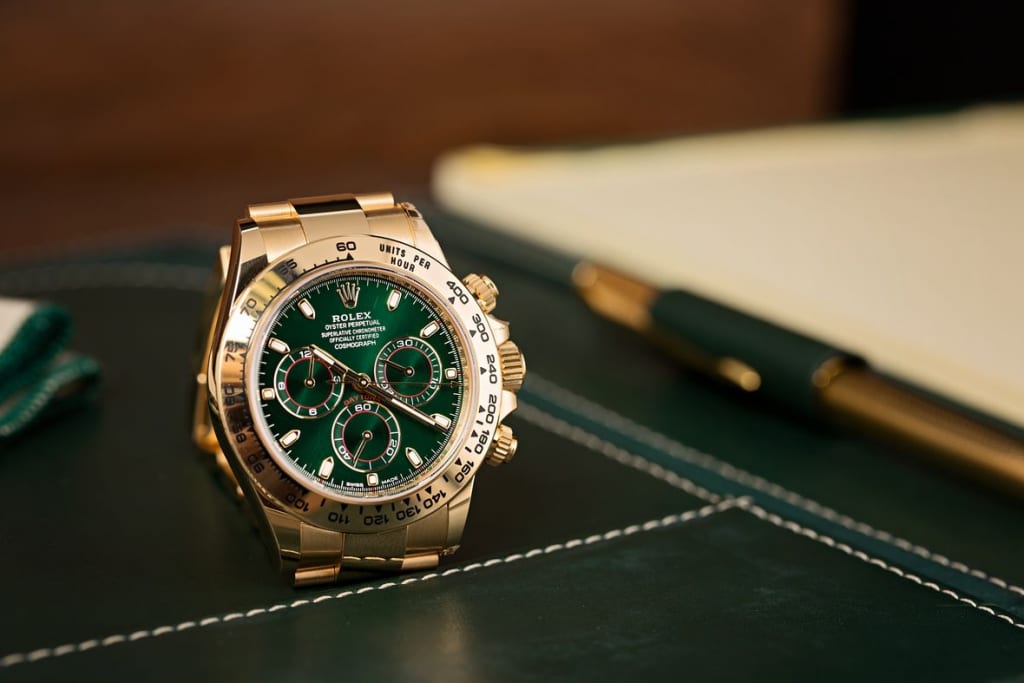
Rolex raised the prices of its gold watches globally by about five percent in June, which also means that it raised timepiece prices for a second time in some markets after having already done so in January 2026 – a move that may have been prompted out of turn in certain markets by ever-changing tariff situations.
The January price increase was an average of 6.2 percent and took place in Germany, Hong Kong, Japan, the UK, and the United States – which means that those markets have now seen a total 10 percent increase in 2026.
Seeing that the price of gold has almost doubled since 2024, price increases overall for gold watches do make sense since manufacturers will also have to pay double for the gold they use in their watch cases.
But some models have increased more than others. According to information from Data&Data as reported by Reuters, the white gold Rolex Daytona currently sells for $59,100 in the United States, a price that is 14 percent higher this year than last and 33 percent higher than in 2024. It is important to note that the Oyster Perpetual Cosmograph Daytona is Rolex’s most popular model, though it is often more sought after in a stainless-steel case than it is in a gold case. As the stainless-steel variation is more often than not a Rolex waitlist item, some potential customers may instead choose to buy an available white gold variation since the metal color is similar. The price increases here make sense for a brand trying to make more profit from fewer watches.
The price of a gold Rolex watch

Let’s face it: the price of a Rolex watch – whether stainless steel or precious metal – does not match the sum of its parts in terms of pricing.
It is a known fact that demand for Rolex watches – especially the Daytona model – far outstrips available supply. The Rolex Cosmograph Daytona is perhaps currently the most desirable watch in the world.
So the price of gold at any given time has little to no bearing on either Rolex prices or pre-owned Rolex prices; these prices are determined by desirability. People with enough money will just continue to buy them based on the model, reference, condition, scarcity, demand, degree of desire, and overall market conditions.
And the pre-owned marketplace is very often the only place where such Rolexes are immediately available.
The post Gold Prices Are Down. So Why Are Gold Rolex Prices Still So High? appeared first on Bob's Watches.