Bob's Watches Bob's Watches
Replacement parts can lower the value of a vintage or highly collectible Rolex watches anywhere from 10% to more than 50%. On a modern, everyday Rolex, genuine service parts usually protect that value and keep the watch running at its full functional worth. The gap between those two outcomes comes down to a single idea that shapes the entire luxury watch market: originality. A collectible Rolex is judged by how closely it matches the way it left the factory, while a daily wearer is judged mostly by how well it keeps time.
Key Takeaways
- Original factory parts carry the most weight. The closer a Rolex stays to its factory configuration, the more it holds on the secondary market.
- The dial matters most. Changing it can erase 20% to 50% or more of a collectible Rolex’s value.
- The rules change with age. A genuine service part keeps a modern Rolex healthy, while the same swap can sink a vintage piece.
- Keep your old parts. If a vintage component has to be replaced, hold onto the original to protect long term value.
- Documentation guards equity. Service records, the box, and the papers tell a buyer the full story and help a watch avoid “frankenwatch” suspicion.
This guide breaks down which parts move the needle, how much each one can cost you, and how to service your Rolex without quietly draining its worth. We will also look at how the 2026 secondary market treats Rolex against other heavily traded brands, and why a fully original watch is worth more today than it has been in years.
The Golden Rule of Rolex Value: Originality vs. Functionality
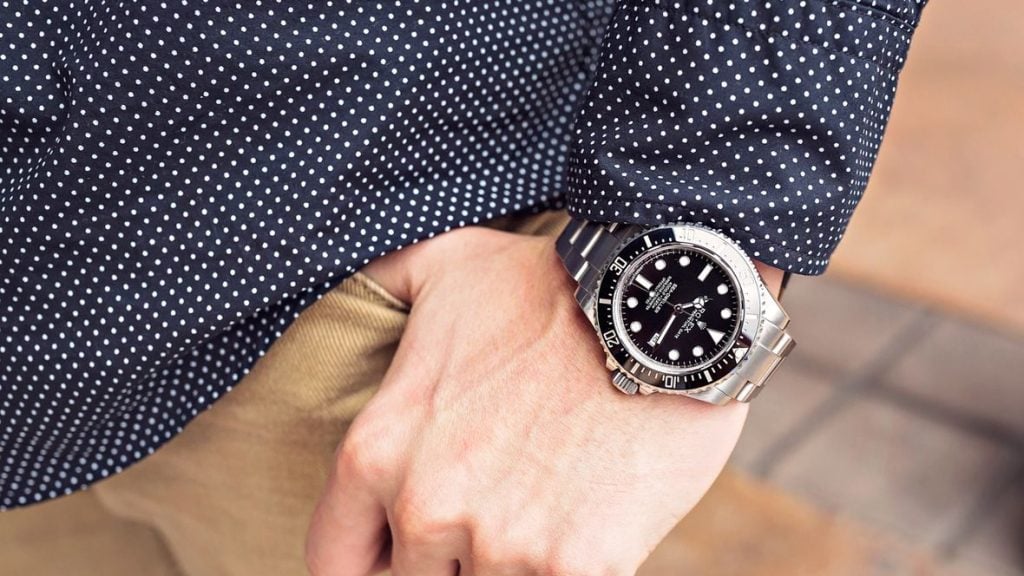
Serious collectors treat a Rolex less like a tool and more like a piece of fine art. Every dial, hand, and bezel that left the factory is part of the watch’s record, and the market rewards owners who keep that record intact. Swapping out an original dial is a lot like repainting one corner of an old master canvas. The watch may look cleaner, but the thing that made it special is gone, and so is a large slice of its value. This is why a flawless, untouched watch with honest age almost always outperforms a similar reference that has been refreshed with newer components.
The current market really splits into two kinds of buyers, and each one values parts differently.
- The collector pays a premium for factory original components and treats authenticity as the whole point. For this buyer, a single replaced part can be a dealbreaker.
- The daily wearer wants a watch that runs flawlessly within COSC tolerances and looks sharp on the wrist. This buyer is comfortable with a genuine service hand or a fresh crystal, because performance matters more than provenance.
Knowing which buyer you are, and which buyer you might one day sell to, is the foundation of every smart servicing decision. The same repair that barely registers on a modern sports model can be a costly mistake on a vintage one.
Component Breakdown: Which Replacement Parts Hurt Value Most?

Not all parts are created equal. Some sit at the heart of a watch’s identity, while others are simple wear items that nobody expects to last forever. The table below maps each major component to its typical value impact and the reason behind it, so you can see at a glance where the real risk lives before any work order is signed.
| Rolex Component | Potential Value Impact | Risk Factor | Why It Affects Value |
| Aftermarket dial | 50% to 80% loss | High | Destroys authenticity and pushes the watch toward “frankenwatch” status. |
| Period correct service dial | 20% to 40% loss | High | Better than aftermarket, but wipes away the original tritium or radium patina. |
| Bezel insert (vintage) | 15% to 30% loss | Medium | Original faded “ghost” bezels carry significant premiums. |
| Replacement hands | 10% to 20% loss | Medium | A glow mismatch between new hands and an aged dial breaks the look. |
| Polished or laser welded case | 15% to 40% loss | Medium | Softens the crisp factory bevels and reduces lug thickness. |
| Bracelet or clasp link | 10% to 20% loss | Low | Acceptable for normal wear, as long as the part is genuine Rolex. |
| Internal movement parts | 0% to 10% loss | Low | Functional value stays intact when Rolex fits genuine parts during service. |
Dials: The Face of Value
So, does a Rolex lose value if you change the dial? In almost every case, yes. Rolex dials can account for 60% to 70% of a vintage watch’s value, which makes it the single most important surface on the entire piece. There are three tiers to understand. An aftermarket dial causes catastrophic loss, because it signals that the watch has been altered with parts Rolex never made. A genuine Rolex service dial is far better, but it still trades away the original patina, so the loss is moderate. The factory original dial, aged and untouched, sits at the top and commands the highest value of all.
Bezel Inserts, Hands, and the “Glow Mismatch”
Vintage sports models like the Submariner and Rolex GMT-Master live and die by their small details. A faded original bezel insert, the kind collectors call a “ghost” bezel, can add a real premium, so replacing it with a sharp modern insert often costs more than it returns. Hands tell a similar story. When fresh Luminova hands are set against an old, creamy tritium dial, the two materials glow and age differently. That “glow mismatch” is one of the first things an appraiser notices, and modern image recognition tools flag it just as quickly. The result is a watch that instantly reads as altered.
Bracelets, Crystals, and Crowns
Wear items, such as Rolex bracelets, sit at the bottom of the risk list, which is good news for everyday owners. Acrylic crystals, spring bars, and crowns are designed to be replaced over a long ownership, and doing so has very little effect on value. The one rule that still applies is genuineness. As long as the replacement is a genuine Rolex part fitted during an authorized service, a fresh crystal or a new crown keeps the watch healthy without raising any concerns at resale.
Aftermarket vs. Genuine Rolex Service Parts (RSC)
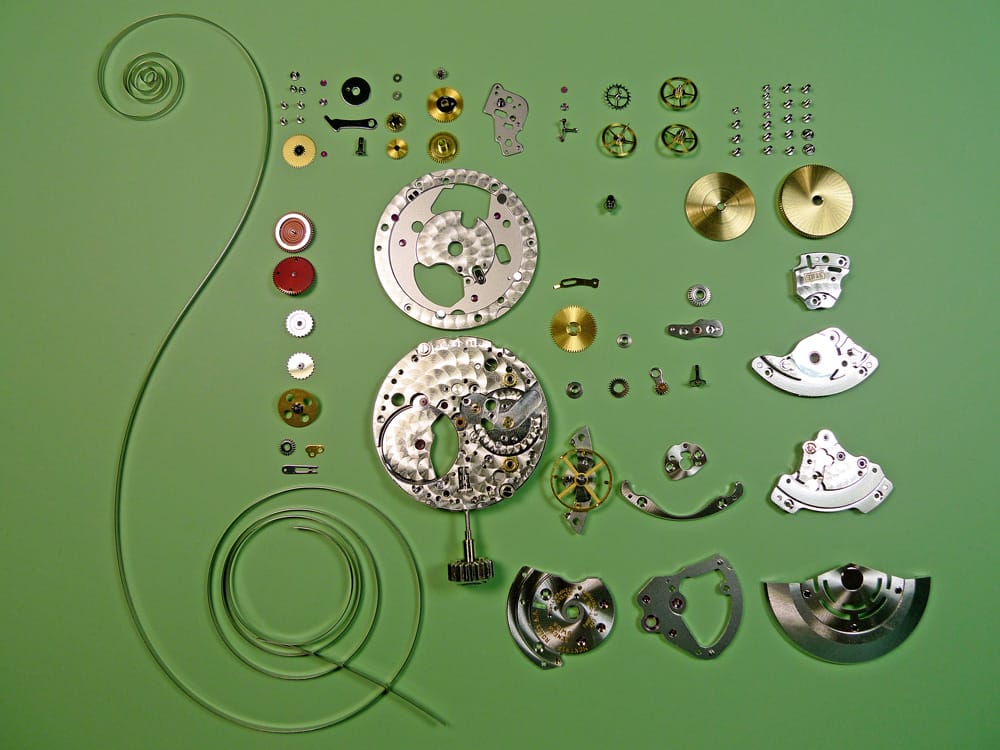
The single most important distinction in this entire topic is the difference between aftermarket parts and genuine service parts. Getting this wrong can cost an owner thousands of dollars, while getting it right keeps a watch both reliable and valuable.
- Aftermarket parts are made by third party companies with no connection to Rolex. Custom diamond bezels, colored dials, and non standard bracelets all fall into this category. Beyond the hit to resale value, there is a practical penalty: a Rolex Service Center will refuse to work on a watch that contains aftermarket internal or structural parts until the owner pays to return it to factory specification.
- Genuine service parts are authentic components manufactured by Rolex to replace worn pieces during normal maintenance. They are built to original tolerances and fitted by trained watchmakers, which is why they preserve both performance and value.
This is also where the valuation split between modern and vintage becomes clear. A modern Rolex, such as a ceramic Rolex Datejust 41, can receive genuine service parts and hold its value with no issue at all, because the market expects routine maintenance on a watch built to be worn. A vintage 1970s Submariner is a different animal. The moment an original component is swapped for a modern service equivalent, the watch loses the originality that collectors are paying for, and the value drops accordingly.
The Luxury Landscape: How Rolex Secondary Value Compares to Competitors
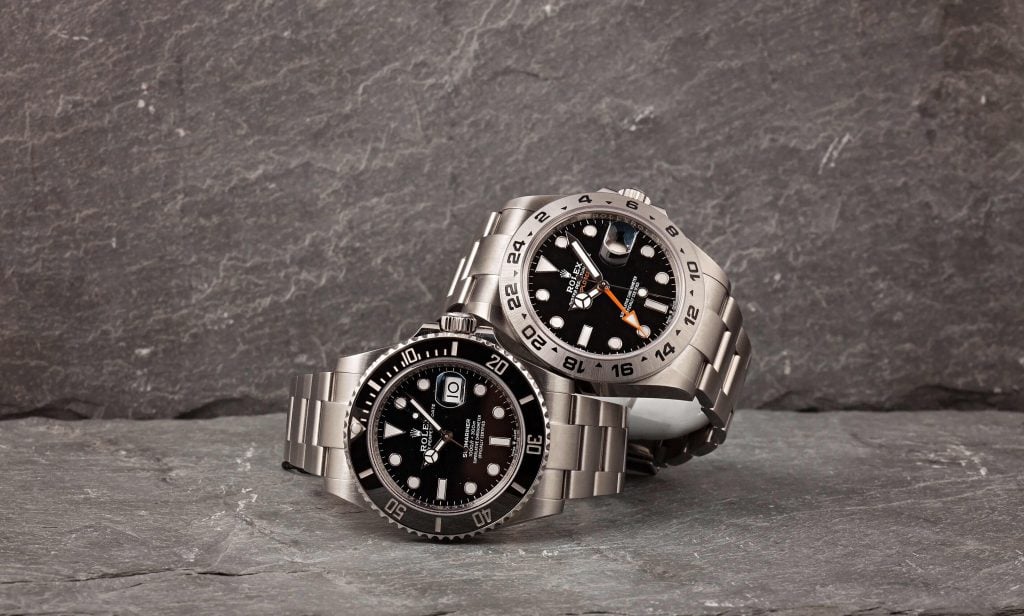
Rolex does not exist in a vacuum, and the way the wider market behaves helps explain why originality carries so much weight. Versatile sports families like the Tudor Black Bay and the OMEGA Seamaster have driven huge volumes of secondary market transactions, accounting for a large share of everyday consumer activity. Their appeal rests heavily on daily utility, so their values stay closely tied to how well they perform as wearable, dependable watches. For these brands, a routine service rarely shakes a buyer’s confidence.
Contrast that with hyper sensitive collector pieces such as the Audemars Piguet Royal Oak Offshore and vintage Rolex sports models. Here, a single non factory component can wipe out thousands of dollars in equity overnight. According to dealers and seasoned collectors who track these trends, the premium for unpolished, fully original examples has only grown, partly because counterfeit and aftermarket parts have become harder to spot. Rolex sits on its own pedestal in this landscape, where authenticity drives investment yield far more directly than raw daily wear performance does. The lesson is consistent across every report: with the most collectible Rolex references, originality is the asset.
How to Service a Rolex Without Destroying Its Value
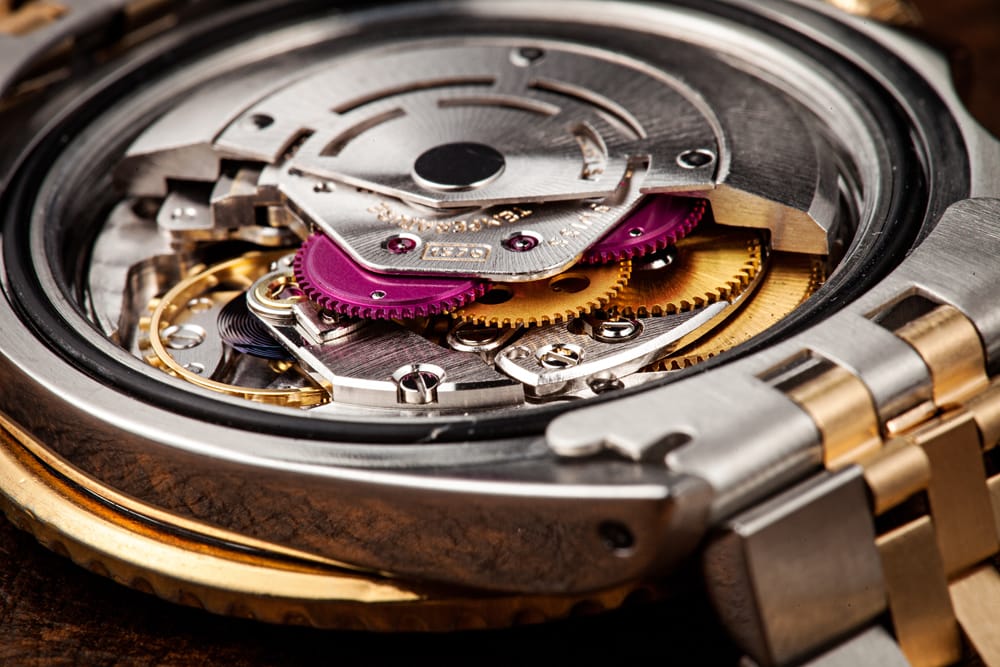
Servicing a Rolex is essential, since the Rolex movement needs care to keep running for decades. The goal is to maintain mechanical health without sacrificing the originality that holds value. These three steps cover the entire process, from choosing a watchmaker to protecting your old parts.
- Choose the right watchmaker. For a modern watch, especially one still under warranty, an Authorized Rolex Service Center is the safe choice. For a vintage piece, a specialized independent watchmaker is often the better path, because you can give clear instructions. Write “DO NOT POLISH” and “DO NOT REPLACE DIAL OR HANDS” directly on the work order so there is no confusion about what stays original.
- Require a detailed manifest. Ask for written confirmation of exactly which internal gears, gaskets, or seals were changed during the service. A clear record protects you at resale and proves the work was done correctly.
- Retain the original replaced parts. If a vintage component has to be swapped to keep the watch alive, demand that the watchmaker return the old pieces to you, even in a small bag. Keeping the original dial or hands alongside the watch preserves a large portion of its secondary market value, since a future collector can return the piece to its true configuration.
Navigating the Market: Authentication and Documentation
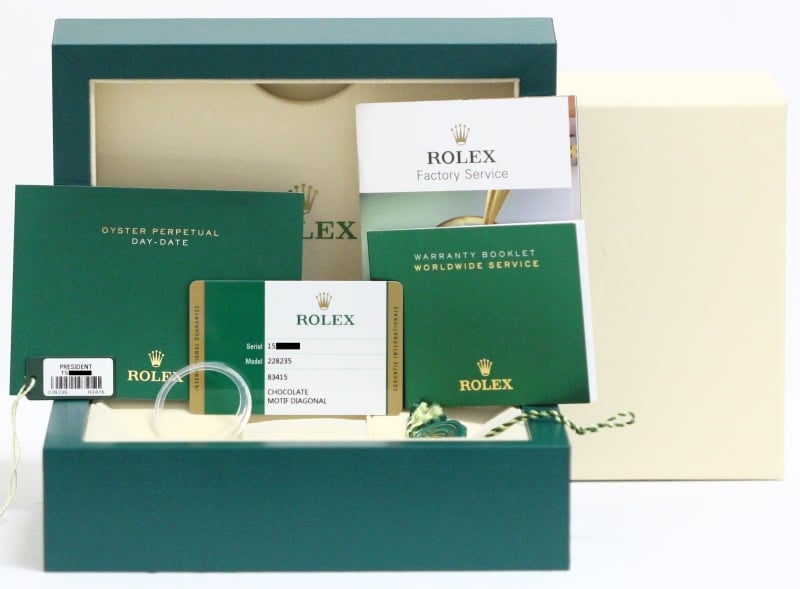
A watch’s paper trail can be almost as valuable as the watch itself. Box and papers, paired with honest service records, give a buyer confidence that nothing has been hidden. A Rolex that comes with a service receipt from a reputable watchmaker, clearly detailing a routine movement overhaul, is far easier to sell than one with a vague or mysterious history. Some buyers might ask their sales rep, “is it worth buying a Rolex without box and papers.” Gaps in the record are exactly what raise the “frankenwatch” red flags that careful buyers learn to fear.
Always treat documentation as part of the asset. A clean, well recorded service history protects both the value and the story of your timepiece, and it is the simplest defense against doubt at resale.
Verification has also become more advanced. In 2026, leading secondary platforms use macroscopic imaging to inspect dials, hands, and engravings at a level the human eye cannot match, which makes unauthorized modifications easier to catch than ever. For owners, the takeaway is straightforward. The cleaner and more documented your watch is, the smoother and more profitable the eventual sale.
Securing the Equity in Your Timepiece

A Rolex is engineered to last lifetimes, and routine mechanical servicing is what keeps that promise alive. Its secondary market value, though, is a more delicate thing. That value rests on component purity, and it can shift quickly the moment an original part is replaced with something newer. Treating your Rolex as both a tool and a long term asset is the mindset that keeps it whole.
Before you let any watchmaker swap a part, weigh modern performance against historical preservation. A fresh crystal or a genuine service hand may be the right call on a daily wearer, while a vintage piece often deserves a far lighter touch. In the luxury watch world, a flawless, untouched patina is frequently worth more than a shiny, modernized replacement. Protect the originality, and you protect the equity.
Frequently Asked Questions
The post Do Replacement Parts Affect a Rolex’s Value? appeared first on Bob's Watches.