Bob's Watches Bob's Watches
The best Rolex investments in 2026, based on our own transaction data over the last 12 months are the GMT-Master II 126710BLRO “Pepsi” (median selling price up 19%), the 26mm Lady-Datejust 179174 (up 36%), the vintage GMT-Master 1675 (the strongest gainer we tracked), the yellow gold Day-Date 36 ref. 18238 (up 15%), and, under $10,000, the Explorer 214270 (up 12%). The consensus picks still hold value, the Submariner and ceramic Daytona each gained 6-7% in our data, but they were not where the growth was for our Rolex collection this year. Every number in this article comes from our own sales, not from an aggregator or a guess.
Key Takeaways
- Pepsi-bezel GMT-Masters led our sales data over the twelve months ending July 31, 2026: the steel ceramic 126710BLRO, discontinued by Rolex in April 2026, fixing its supply, rose about 19 percent, and the vintage GMT-Master 1675 posted the largest median price increase of any reference we sold, up roughly 48 percent.
- Classic and ladies’ models were the year’s quiet outperformers: the 26mm Lady-Datejust 179174 rose about 36 percent, and the Datejust 31 family posted the strongest growth of any Rolex line we sell at roughly 28 percent.
- Solid gold strengthened across the board, with the yellow gold Day-Date 36 ref. 18238 up about 15 percent and the Day-Date 36 family up roughly 16 percent.
- The consensus investment picks held value but trailed the market: the Submariner family gained about 3 percent, the no-date 124060LN about 6 percent, and the current ceramic Daytona 126500LN about 7 percent, while the discontinued Daytona 116500LN was flat.
Bob’s Market Data Summary
| Rolex Model / Reference | Market Data | Demand & Verdict |
| GMT-Master II “Pepsi” 126710BLRO | ~$23,300 (up 19%) | Very high: Best all-around buy |
| Vintage GMT-Master 1675 | ~$16,000 (up 48%) | High: Strongest gainer; buy condition first |
| Lady-Datejust 26 179174 | ~$8,500 (up 36%) | High: Best value momentum |
| Day-Date 36 18238 | ~$22,000 (up 15%) | Steady: Gold is back |
| Datejust 41 126300 | ~$11,000 (up 11%) | Very high: Most dependable pick |
| Explorer 39 214270 | ~$8,800 (up 12%) | Steady: Best under $10k |
| Explorer II 16570 | ~$9,600 (up 10%) | High: Sleeper under $10k |
| Submariner No-Date 124060LN | ~$14,000 (up 6%) | Very high: Slow, steady, liquid |
| Cosmograph Daytona 126500LN | ~$31,900 (up 7%) | High: Buy the current ref, not the 116500LN |
What Our Sales Data Shows
Most “best Rolex investment” articles are written from list prices and vibes. This one isn’t. I aggregated every pre-owned Rolex transaction at Bob’s Watches from July 1, 2025 through July 31, 2026, several thousand watches, and compared median selling prices in the first half of that window against the second half, reference by reference. Three things stood out to me.

First, Pepsi bezels led the market. The modern GMT-Master II 126710BLRO climbed from a median of roughly $21,400 to $25,400 over the year, a 19% move on one of our deepest transaction samples. Its vintage grandfather, the GMT-Master 1675, moved even harder: median prices for these specific Rolex Pepsi models went from about $13,500 to nearly $20,000. I’ll caveat that vintage sample sizes are smaller and condition drives huge spreads, but the direction is unmistakable, and it matches what our buying desk is seeing on the sourcing side.
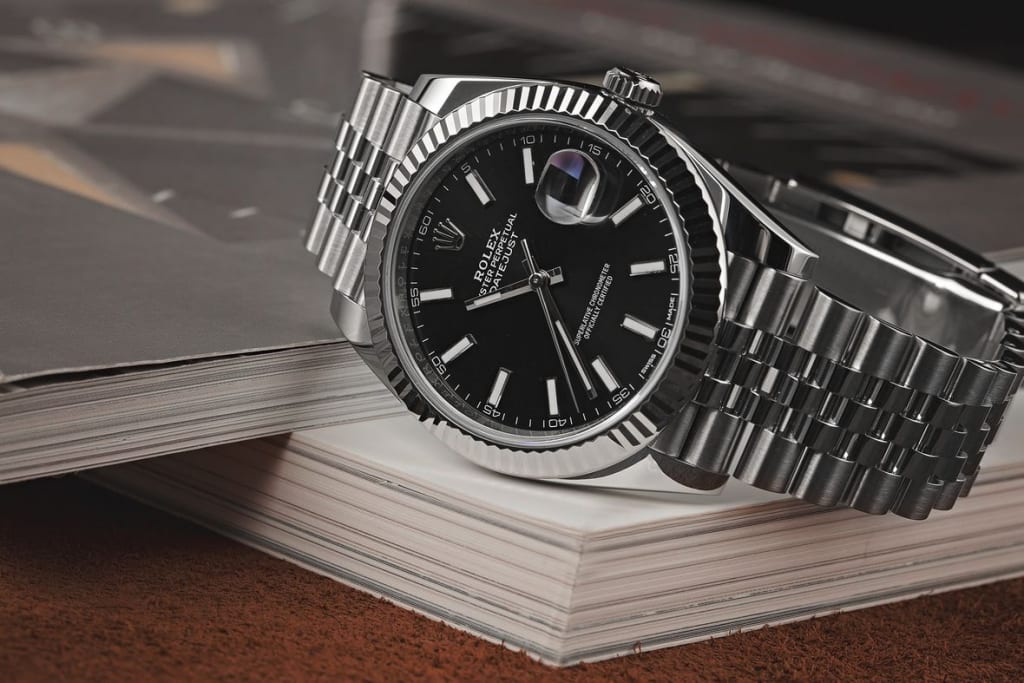
Second, the quiet outperformers weren’t steel sports models, they were classic Datejusts and gold Day-Dates. As a family, the Datejust 31 watches for sale posted the strongest price growth of any Rolex line we sell (median up roughly 28% year-over-year), followed by the Day-Date 36 (up about 16%) and the Lady-Datejust (up about 14%). Meanwhile the Submariner family, the watch everyone assumes is the “safe” investment, was up 3% overall. Safe? Yes. A growth story in 2026? Not this year.
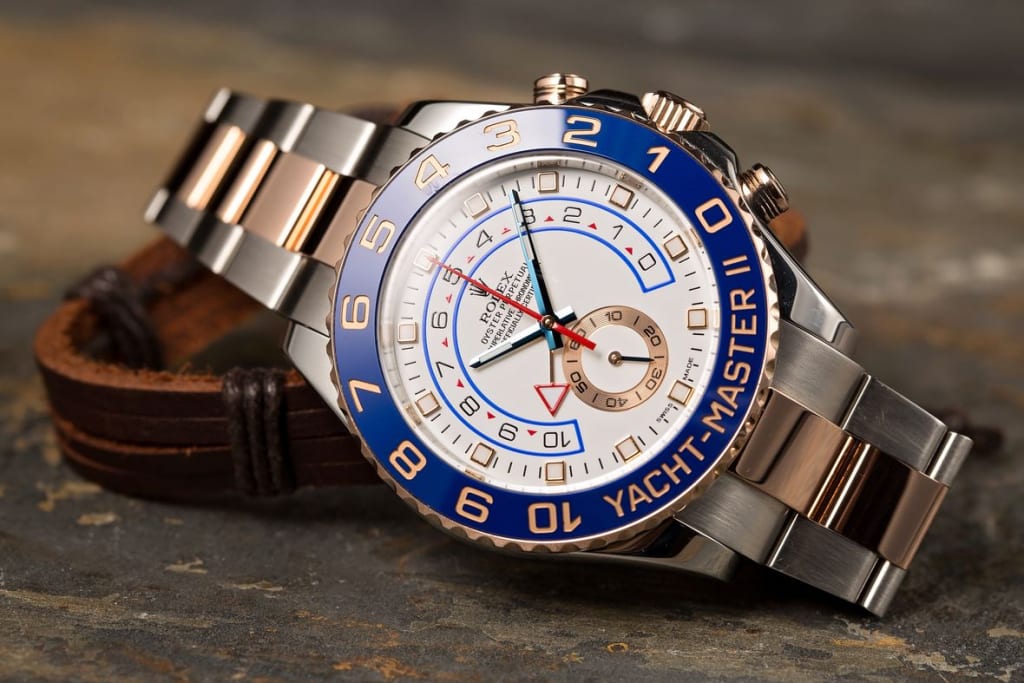
Third, a few long-time “undervalued” theses have gone stale. In earlier versions of this article I made the case for the Yacht-Master collection and Sea-Dweller as under-appreciated buys. Our 2026 data doesn’t support that anymore: the Sea-Dweller family was flat over the twelve months, and several Yacht-Master 40 references actually softened. I’d rather update my opinion than defend it.
Carol Altieri, our Co-Founder and COO, runs the buying side of the business, and her sourcing list tells the same story from the other direction:
“The watches we’re most aggressively trying to buy right now are Pepsi GMTs, modern and vintage, and clean 26mm and 31mm ladies’ Datejusts. Two years ago the ladies’ models were an afterthought in the market. Today, when a nice two-tone example comes across the desk, it doesn’t stay in inventory long. That shift in what we’re chasing is usually the earliest signal of where prices go next.”
Carol Altieri, COO of Bob’s Watches
The Best Rolex Investments in 2026, Ranked
1. Rolex GMT-Master II 126710BLRO “Pepsi”
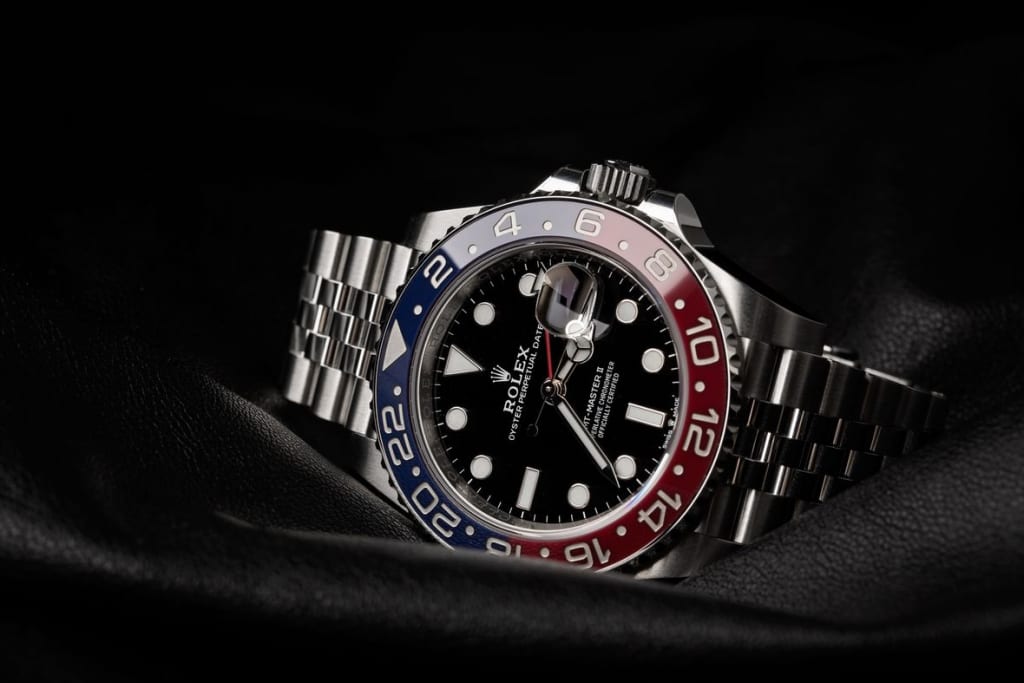
The current-production Pepsi on a Jubilee bracelet is, in my view, the best combination of appreciation, liquidity, and downside protection in the modern catalog.
What our data shows: median selling price rose from roughly $21,400 to $25,400 over the trailing twelve months, up 19%, on one of the largest transaction samples of any reference we sell. Demand is deep on both sides of our business; this is a watch we buy and sell continuously. Its sibling, the “Batman” 126710BLNR, gained a more modest 5% over the same period, in our data, the Pepsi bezel carried a clear premium in both price and momentum.
Who it suits: the buyer who wants one modern Rolex that they could realistically exit at any time without losing value.
Risk note: you’re paying well above Rolex retail prices, so a Rolex production change (a new GMT generation) is the main event risk. Browse the current pre-owned GMT-Master II collection to see where examples are trading this week.
My Opinion: If I could own only one modern steel Rolex, this would be it. The Pepsi is the unusual case where the emotional argument and the financial one point the same direction, it’s a legitimately useful travel watch with the most legible dual-time execution Rolex has ever made, and it happens to be the most liquid reference on our floor. The Jubilee is the part people argue about, and I’d argue it’s the reason to buy this configuration over the Oyster: it softens a watch that’s otherwise all hard edges and shaves a surprising amount of perceived bulk off the wrist. Buy the best example you can afford, complete with box and papers.
2. Vintage Rolex GMT-Master 1675

The Rolex 1675 is the strongest price move in our entire dataset.
What our data shows: median selling prices for the Rolex 1675 GMT-Master went from about $13,500 in the first half of the period to nearly $20,000 in the second, a 48% jump in medians, with average prices up roughly 25%. I want to be straight with you about why those two numbers differ: vintage 1675s span decades of production, and condition, dial variant, and originality create enormous spreads. The median move partly reflects better, more collectible examples coming through.
Who it suits: the collector-investor willing to buy the best example they can afford and hold.
Risk note: in vintage, an over-polished case or replacement dial can erase the entire investment thesis. Buy the watch, not just the reference, and buy from someone who guarantees authenticity.
My Opinion: I personally like the 1675 because unlike the current production the supply only shrinks, every year subtracts a few more through wear, theft, and bad restoration, and nothing replaces them. That said, plan around the 25% average rather than the 48% median jump, which mostly reflects better examples reaching the market: on a reference with a twenty-year production run, an unpolished case with sharp lug chamfers and an original insert is worth multiples of a tired one wearing the same number.
3. Rolex Lady-Datejust 179174 (26mm)

I’ve argued for years that the smaller ladies’ models were the most undervalued watches Rolex ever made, and 2026 is the year the data caught up with the thesis.
What our data shows: the steel-and-white-gold 179174 moved from a median of about $7,000 to $9,500, up 36%, and it wasn’t alone: the 69178 rose about 15%, and the Lady-Datejust family overall was up roughly 14%. The Datejust 31 family did even better, up about 28%, led by references like the two-tone 178274 (up 14% on its own).
Who it suits: anyone who wants genuine appreciation potential at a four-figure entry point; also the single best answer I have to “best Rolex investment under $10k.”
Risk note: these are trend-driven gains, smaller watches are fashionable right now, so the momentum could cool. But the entry price limits the downside in absolute dollars.
My Opinion: What I like best about the Ref. 179174 is that it reads as all stainless from across the room; the bezel is white gold, so you get the fluting and the dressiness without the two-tone commitment. It’s the one I’d expect to still look right in ten years. The thing I’d actually check before price on any of these is the bracelet: decades of wear stretch the links, it’s costly to fix and obvious on the wrist, and a tight $9,500 example will out-trade a sagging $7,500 one every time.
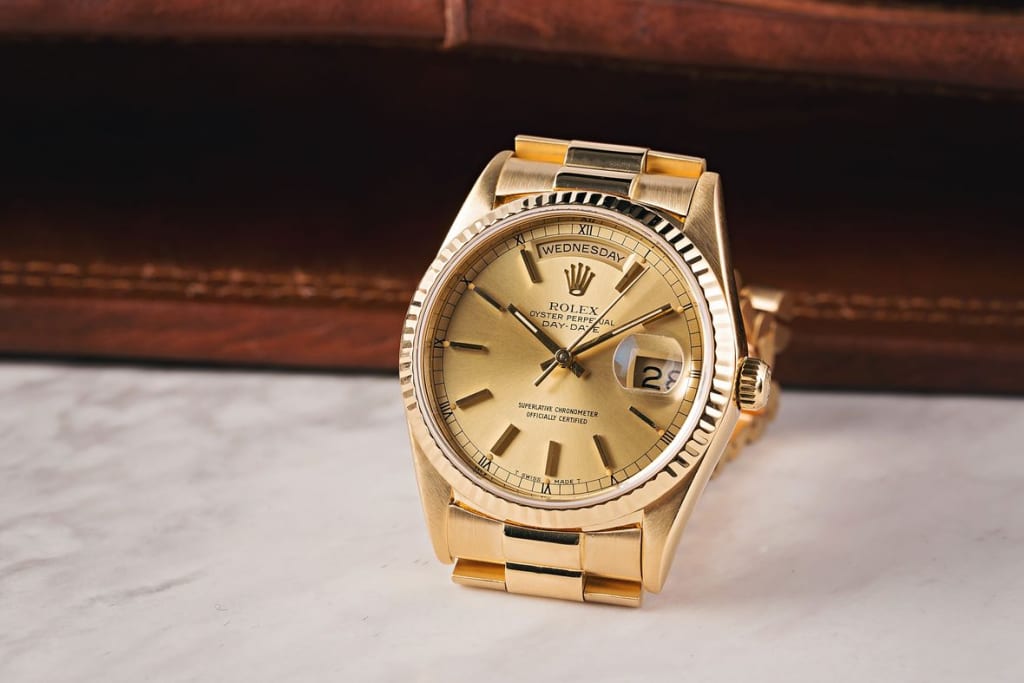
4. Rolex Day-Date 36 ref. 18238 (Yellow Gold)
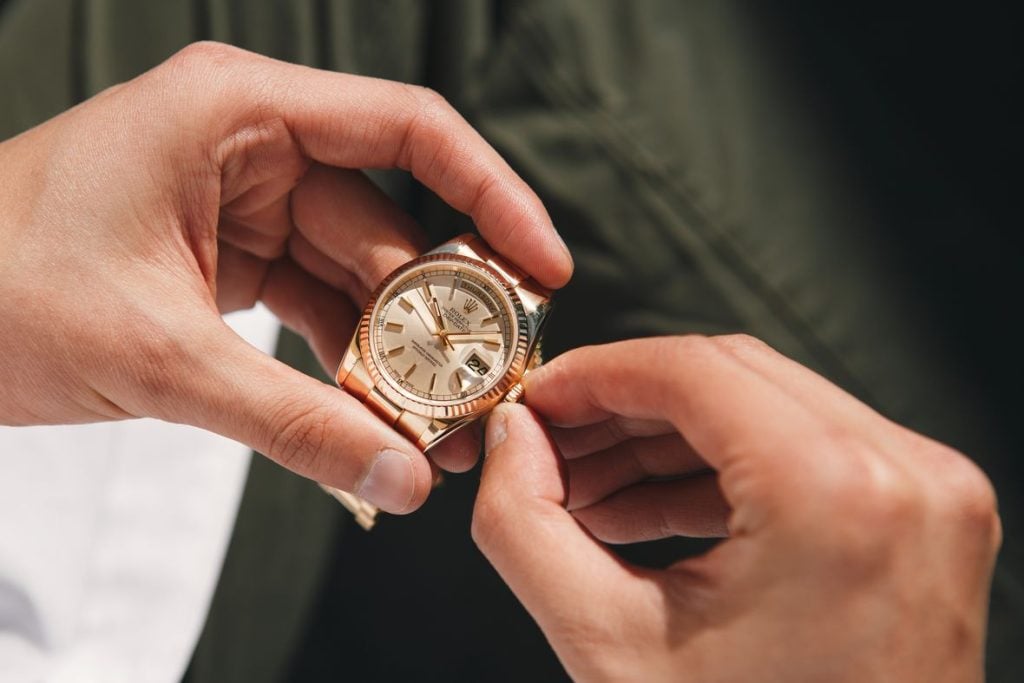
Solid gold is having a moment, and unlike the pandemic-era gold spike, this one is showing up in actual transactions.
What our data shows: the classic double-quickset 18238 rose from a median of roughly $19,500 to $22,400, up 15%, while its successor, the 118238, posted a nearly identical 14% gain, and the Rolex Day-Date 36 watches overall climbed about 16%. Rising gold prices put a hard floor under these watches: there are meaningful ounces of precious metal on your wrist.
Who it suits: the buyer who wants an asset with intrinsic material value plus the most recognizable “status Rolex” ever made.
Risk note: gold Day-Dates are less liquid than steel sports models; expect a sale to take longer.
My Opinion: When I’m choosing between the two, I still gravitate to the older 18238 over the 118238, even though they moved almost identically in our data, and my reasoning isn’t financial. The earlier case wears slimmer, and the President bracelet on the 118238 is more rigid than people expect for a watch this dressy.
Our CFO, Joe Alessindrini, watches these numbers more coldly than I do, and his read on the gold and classic-model strength is worth sharing:
“When I look at the twelve-month numbers, the story isn’t the hype models, it’s the breadth. Datejusts, Day-Dates, and ladies’ models all repriced upward at the same time, which tells you this is real demand, not speculation chasing one reference. From a pure value-retention standpoint, the watches backed by gold content and fifty years of continuous production are about as defensive as this category gets.”
Joe Alessindrini, CFO of Bob’s Watches
5. Rolex Datejust 41 ref. 126300
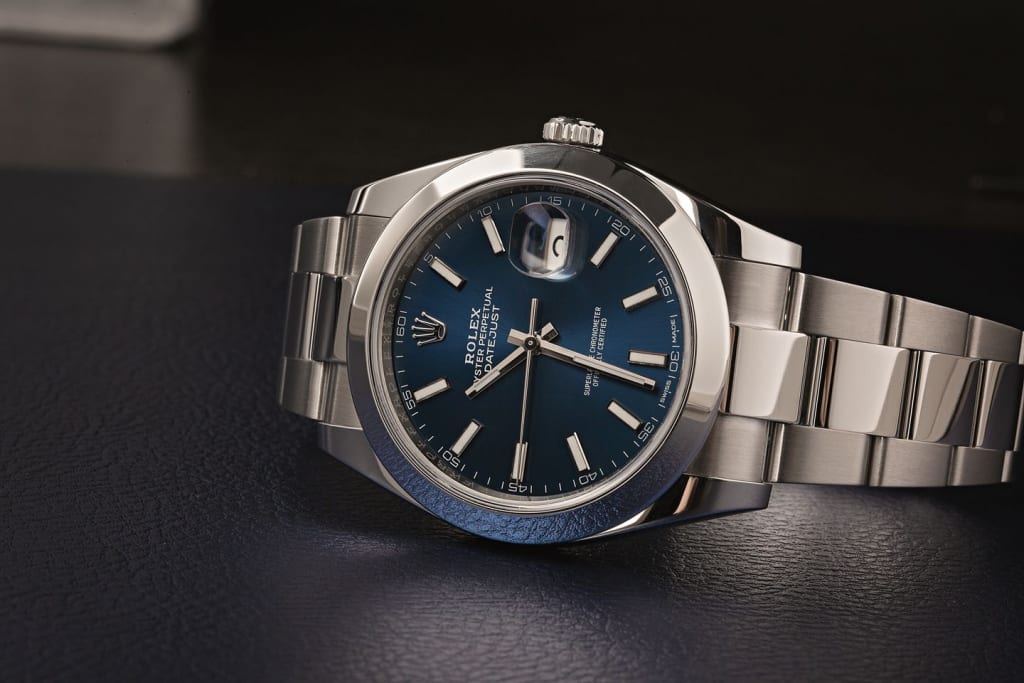
If I had to name the most dependable pick on this list, it’s this one.
What our data shows: up 11% over the year (median ~$10,600 to ~$11,800) on the single largest transaction sample of any current-production reference in our dataset, which means I trust this trend line more than any other number in this article. It also ranks among our most-transacted references overall. The fluted-bezel Datejust 41 ref. 126334, the version most often recommended as an entry-level investment, actually traded in even greater numbers in our data, but appreciated more modestly, up about 3% (median ~$15,300). Both deliver what every one of our Datejust 41 watch collections is known for: steady, liquidity-driven growth rather than hype-driven spikes; in our data, the smooth-bezel 126300 was simply the better performer of the two.
Who it suits: the first-time buyer who wants a do-everything Rolex with genuine, measurable appreciation and instant liquidity.
Risk note: honestly, few. This is the low-drama pick.
My Opinion: I see these smooth-bezel models move through our vault constantly because they offer unmatched liquidity alongside steady, market-driven growth. What I like about the smooth-bezel 126300 is that it’s the most versatile watch we sell, the flat bezel keeps it quiet enough for a jobsite and dressy enough for a wedding, and I think that range is exactly why it moves through our vault as constantly as it does.
6. Rolex Explorer 214270 (39mm)
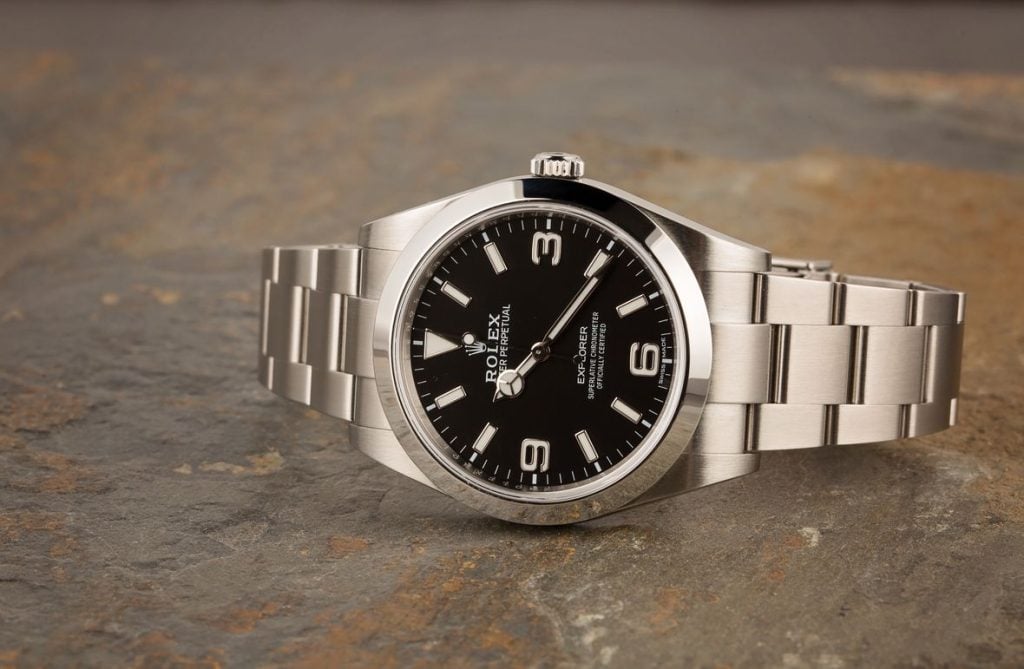
What our data shows: up 12% over the year, from a median of about $8,300 to $9,300. The discontinued 39mm case size gives it a “you can’t buy this new anymore” scarcity angle that its 36mm successor lacks, and notably, the current Explorer 36 was one of the few models in our data that declined slightly (down about 3%).
Who it suits: the under-$10k buyer who wants a steel sports Rolex rather than a dress model.
Risk note: the Rolex Explorer line has historically been a slow appreciator; this year’s move is above its long-term trend.
My Opinion: I always love a discontinued piece because that built-in scarcity gives it an edge that current-production models simply cannot replicate. It is pacing well ahead of its historical trend right now, making it the perfect low-drama alternative to a traditional dress watch. In my opinion, this is a good model for any collector that is looking to lock in a stainless steel sports model under the $10k mark.
7. Rolex Explorer II 16570

A housekeeping note first: an earlier version of this article mislabeled the 16570 as a GMT-Master, it is, of course, the “Polar/Black” Explorer II models produced from 1989 to 2011, and I’ve corrected that. It also happens to have earned its spot here on merit.
What our data shows: up 10% over the year, with a median around $9,600, still one of the cheapest ways into a discontinued steel sports Rolex with a 3186-era movement in later examples.
Who it suits: the value buyer priced out of Submariners.
Risk note: the broader Explorer II family (including the current 226570) was roughly flat, so the 16570’s move is reference-specific, driven, I believe, by buyers hunting the last genuinely affordable discontinued sports references.
My Opinion: I see collectors scrambling for these neo-vintage pieces because getting that rugged, discontinued steel sports aesthetic, especially with the later 3186 movement, under $10K is getting harder by the day. What I like about the 16570 is that it’s a genuine 40mm sports watch with a proper case and a screw-down crown, but the white “Polar” dial makes it extra special. If you want a rock-solid daily wearer with genuine upside while the rest of the family flatlines, this is the exact reference to target.
8. Rolex Submariner 124060LN (No-Date)
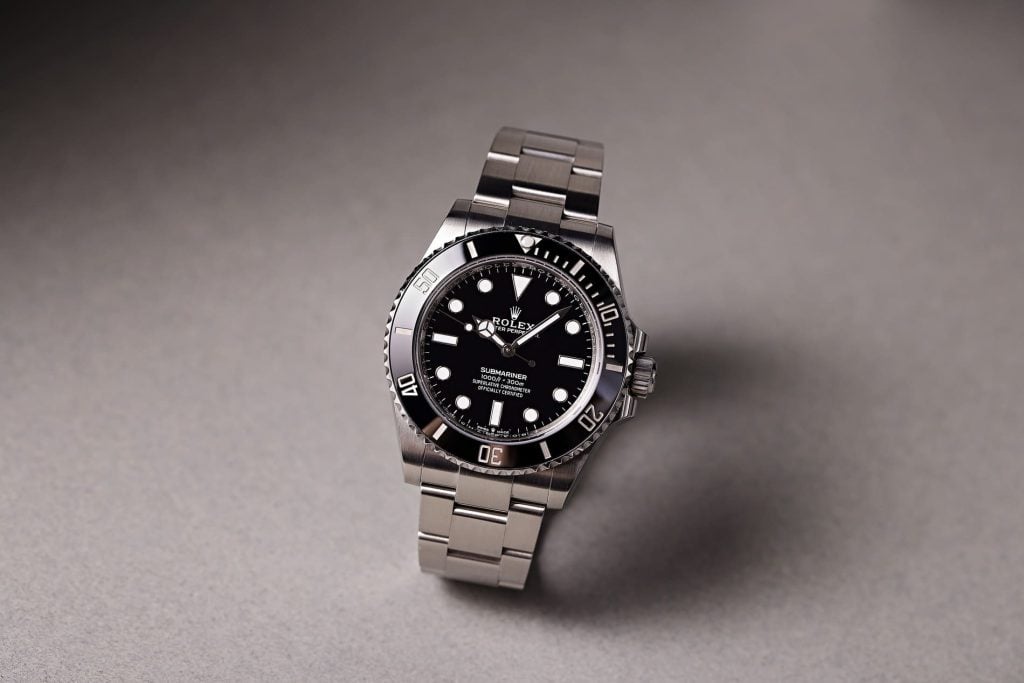
The Rolex Submariner collection isn’t the appreciation story it was in 2021–2022, and I’m not going to pretend otherwise.
What our data shows: the no-date 124060LN rose a steady 6% (median ~$13,800 to ~$14,700), modestly outpacing the date versions, the 126610LN was up about 4% and the “Starbucks” 126610LV about 2%. The Submariner family overall gained 3%.
Who it suits: the buyer whose priority is capital preservation and instant liquidity rather than growth. A Submariner is the closest thing this market has to cash.
Risk note: none to speak of on the downside; just don’t expect it to outrun the picks above it.
My Opinion: What I like about the no-date 124060 is the symmetry. There is no cyclops, and no date window breaking up the dial, just a clean black face that looks the way a dive watch was originally supposed to. I used to think that was purely an enthusiast’s preference, and the 6% says otherwise: the date models were the default for a decade and the premium has quietly shifted, which I don’t expect to reverse soon.
9. Rolex Cosmograph Daytona 126500LN
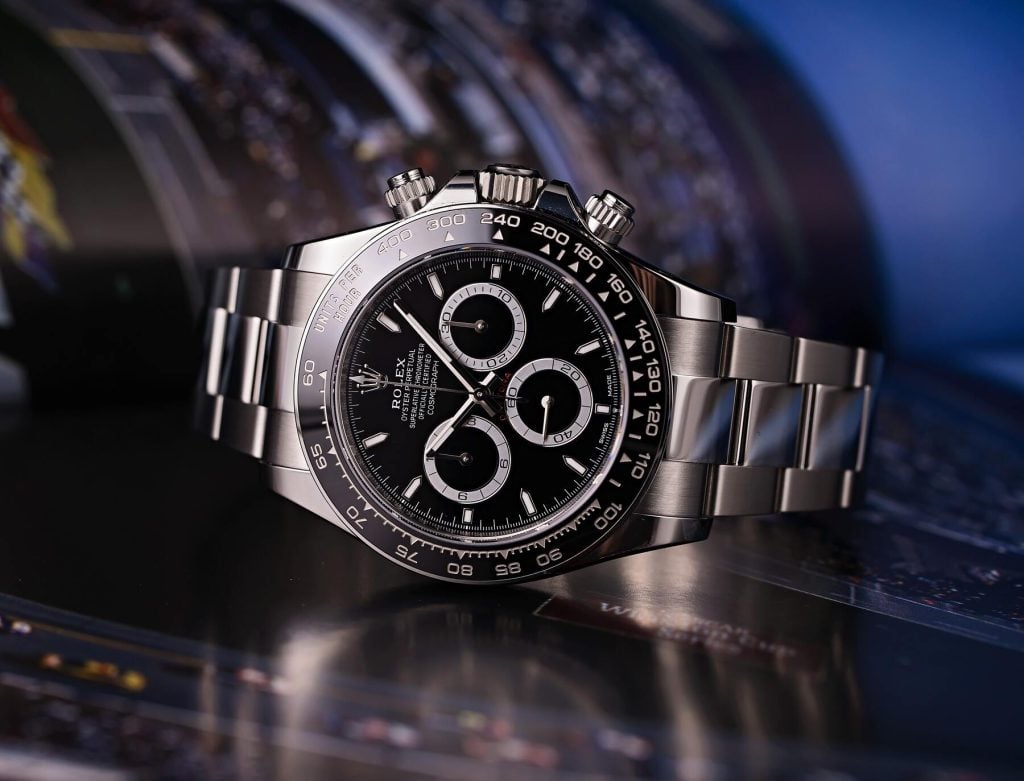
The Rolex Cosmograph Daytona line is the reference every “best Rolex investment” list puts first, so let me tell you what our transactions actually show, because the answer is more interesting than the consensus.
What our data shows: the current ceramic Daytona 126500LN appreciated about 7% over the twelve months (median ~$31,900), while its discontinued predecessor, the 116500LN, the one most guides still recommend, was essentially flat, down about 2%. The Daytona family overall gained roughly 5%. The Daytona remains the most prestigious chronograph in the world, and retail scarcity keeps secondary prices far above list. But in 2026, its price momentum trailed the Pepsi GMT, the classic Datejusts, and the ladies’ models by a wide margin.
Who it suits: the buyer who wants the blue-chip name and can pay ~$32,000 for a steel watch, buy the current reference, not the outgoing one.
Risk note: you’re paying the largest premium-over-retail in the catalog, which is exactly the premium that compresses first in a soft market.
My Opinion: I still see the Daytona as one of the strongest Rolex watches to own, especially for buyers who want a model with global recognition, enduring demand, and real collector appeal. What I like about the current 126500LN comes down to the dial: the dial configuration with the black ceramic bezel is the sharpest contrast Rolex has put on a steel Daytona, and the numerals moved onto the sub-dials give it a cleaner read than the model it replaced.
Honorable mentions from the data

The vintage Datejust 16030 was up 20% (median ~$5,500 to ~$6,600) and the modern white-gold-bezel Datejust 36 126234 up 13%, both reinforce the classic-Datejust story. The five-digit two-tone GMT-Master II 16713 “Root Beer” gained about 10%. And the white gold Daytona 116509 posted a 14% median gain, though on a small sample I’d want another quarter of data to confirm. I would like to see a little more data before drawing a firm conclusion on the 116509, but these results are a good reminder that strong opportunities can be found well beyond the Rolex references that usually dominate investment lists.
How to Buy a Rolex for Value Retention
First, understand why certain references hold value: authorized-dealer scarcity and multi-year waiting lists push buyers to the secondary market, and that structural demand, not the watch’s list price, is what supports pre-owned values for hot references. When scarcity eases, prices follow it down.
From there, four things matter more than which reference you pick.
- Condition: an unpolished or lightly polished case with crisp lugs will outperform a heavily polished example of the same reference every time; in vintage, it’s the entire game.
- Completeness: full-set examples, original box, papers, and warranty card, consistently command a premium over watch-only examples and are meaningfully easier to resell; if you’re buying for investment, always pay up for the full set.
- Originality: service dials, replacement bezels, and aftermarket parts cap your upside permanently.
- Provenance and paperwork: buy from a seller who guarantees authenticity and documents service history, if you ever want to sell your Rolex quickly, that paper trail is what makes it painless.
And one dose of realism from someone who sells these for a living: a Rolex is a store of wealth, not a wealth-generation machine. The right references appreciated 10–40% in our data this year, but over long horizons a diversified equity portfolio will usually outperform a watch. Buy a Rolex you’ll love wearing that also happens to hold or grow its value, that’s the honest version of “Rolex investing.”
Frequently Asked Questions
Methodology: All figures are derived from aggregated Bob’s Watches pre-owned Rolex transaction data from July 1, 2025 through July 31, 2026, several thousand completed sales. Price trends compare median selling prices in the first half of that window against the second half, by individual reference number, and are reported only for references with a meaningful number of transactions in both periods. Demand is expressed as relative rank. Figures are directional and rounded; individual watches vary with condition, year, and accessories. Data last updated: August 2026.
The post Best Rolex Investments in 2026: Ranked by Our Sales Data appeared first on Bob's Watches.