Bob's Watches Bob's Watches
The best chronograph watches pair a precise stopwatch mechanism with a design worth wearing every day, and the OMEGA Speedmaster Moonwatch Professional leads the category at roughly $7,800 at current retail. Chronographs run from about $475 to well past $30,000, which makes them among the most accessible and the most collectible luxury watches available today.
Key Takeaways
- The OMEGA Speedmaster Moonwatch Professional is the strongest overall pick in the category at roughly $7,800 at current retail, followed by the Rolex Daytona.
- Chronograph pricing spans roughly $475 to more than $30,000, so the category serves first time buyers and established collectors equally well.
- A chronograph is a stopwatch complication rather than a category of watch, which is why the same function appears on racing, pilot, dive, and dress designs.
- Current retail and pre-owned prices diverge sharply on allocated references, and the Rolex Cosmograph Daytona is the clearest example of that gap.
- Value retention tracks scarcity, condition, demand, and documentation rather than brand name alone.
The sections below follow the way buyers actually shop, starting under $1,000 and moving up through everyday Swiss, sports, and heritage pilot designs. A later section covers what these watches sell for pre-owned, using our own sold data.
What Are the Best Chronograph Watches?

The best chronograph watch overall is the OMEGA Speedmaster Moonwatch Professional, a manual wind mechanical chronograph priced around $7,800 at current retail. The Speedmaster pairs the Calibre 3861 movement with the space heritage that made it the first watch worn on the moon, and its 42mm steel case works on a bracelet or a strap. Buyers working to a smaller budget get the strongest value from the Seiko Prospex Speedtimer SSC813 at roughly $695.
A chronograph is a wristwatch with an integrated stopwatch function, operated by pushers on the side of the case and read on subdials against an elapsed time or tachymeter scale. The complication now appears across nearly every category of watch design, which is why the right chronograph depends less on brand ranking than on how you intend to use it.
All figures in the final column are current retail prices from authorized dealers, not pre-owned market values.
| Model | Category | Current Retail |
| Omega Speedmaster Moonwatch Professional | Overall pick | Roughly $7,800 |
| Seiko Prospex Speedtimer SSC813 | Under $1,000 | Roughly $695 |
| Brew Metric Retro | Under $1,000 | Roughly $475 |
| Bulova Lunar Pilot | Under $1,000 | Roughly $446 |
| Tissot PRX Automatic Chronograph | Everyday Swiss | Roughly $2,150 |
| TAG Heuer Carrera Glassbox | Everyday Swiss | $7,150 |
| Zenith Chronomaster Sport | Sports | Roughly $10,000 |
| Rolex Cosmograph Daytona ref. 126500LN | Sports | Roughly $16,900 |
| Breitling Navitimer B01 | Heritage and pilot | Roughly $8,900 to $10,300 |
| Breitling Top Time | Heritage and pilot | $5,850 |
How to Choose a Chronograph Watch
- Set your budget against the correct market. Retail and pre-owned availability are two different realities, and on allocated references such as the steel Daytona the pre-owned market is the only practical way to buy.
- Decide on the movement type. Manual wind is the most direct mechanical experience, automatic offers convenience, and meca-quartz gives crisp chronograph action at the lowest cost.
- Match the case diameter to your wrist. Chronographs run 38mm to 44mm in practical terms, and the pushers add visual width beyond the stated case size.
- Decide whether you want the tachymeter function or the look of it. A tachymeter bezel converts elapsed seconds into units per hour, and most owners value it as a design signature rather than a tool.
- Confirm the documentation. Original box and papers place a watch at the upper end of its market range, and their absence widens the gap between otherwise identical examples.
Best Chronograph Watches Under $1,000
The best chronograph watches under $1,000 are the Seiko Prospex Speedtimer SSC813, the Brew Metric Retro, and the Bulova Lunar Pilot, all three of which deliver genuine chronograph function without a mechanical movement premium. This is the most competitive bracket in watchmaking, where quartz, solar, and meca-quartz technology closes most of the performance gap with far more expensive pieces.
Meca-quartz is a movement type that pairs quartz timekeeping with a mechanical chronograph module, which gives a sweeping seconds hand and a snap back reset at a fraction of the cost of a fully mechanical chronograph. Anyone shopping for the best affordable chronograph watch should know this distinction, because meca-quartz feels closer to mechanical in daily use than standard quartz does.
- Seiko Prospex Speedtimer SSC813. Roughly $695. The Speedtimer runs Seiko Caliber V192, a solar powered chronograph movement, inside a 39mm case with a panda dial of dark subdials on a light background. Solar charging removes battery changes entirely.
- Brew Metric Retro. Roughly $475. The Metric Retro uses a meca-quartz movement in a squared off cushion case inspired by 1970s design, with a coffee timing scale reflecting the microbrand origins of the design house. Its presence alongside heritage Swiss names shows the affordable end of the category is no longer limited to legacy brands.
- Bulova Lunar Pilot. The Lunar Pilot is a high frequency quartz chronograph based on a watch privately worn on the lunar surface during Apollo 15 in 1971, priced near $446. Its movement times to one one thousandth of a second, which no mechanical chronograph at any price can match.
Quartz, solar, and meca-quartz movements deliver the most watch per dollar under $1,000 because mechanical chronograph movements are expensive to design, assemble, and regulate.
Best Everyday Swiss Chronographs
The best everyday Swiss chronographs sit between roughly $2,000 and $5,000, where Swiss automatic movements, sapphire crystals, and integrated bracelets become standard. This is the sweet spot for anyone searching for the best chronograph watch under $5,000, because the designs are built for daily rotation rather than occasion wear. The Baume and Mercier Riviera Chronograph also competes here with a twelve sided bezel and integrated bracelet.
Tissot PRX Automatic Chronograph
The Tissot PRX Automatic Chronograph is a Swiss automatic chronograph with an integrated bracelet, priced around $2,150 at current retail. Its 42mm case carries a reverse panda dial, meaning a dark dial with light subdials, the inverse of the classic panda layout. The design descends from a 1978 Tissot model, and the bracelet flows into the case without a visible lug break.
Inside is the Valjoux A05.H31 automatic movement, a Swiss caliber with a 60 hour power reserve, so the watch survives a full weekend off the wrist and still runs on Monday morning. Buyers who prefer a lower entry point can look at the Tissot PR516, a simpler racing inspired chronograph offered in both mechanical and quartz configurations.
TAG Heuer Carrera Glassbox
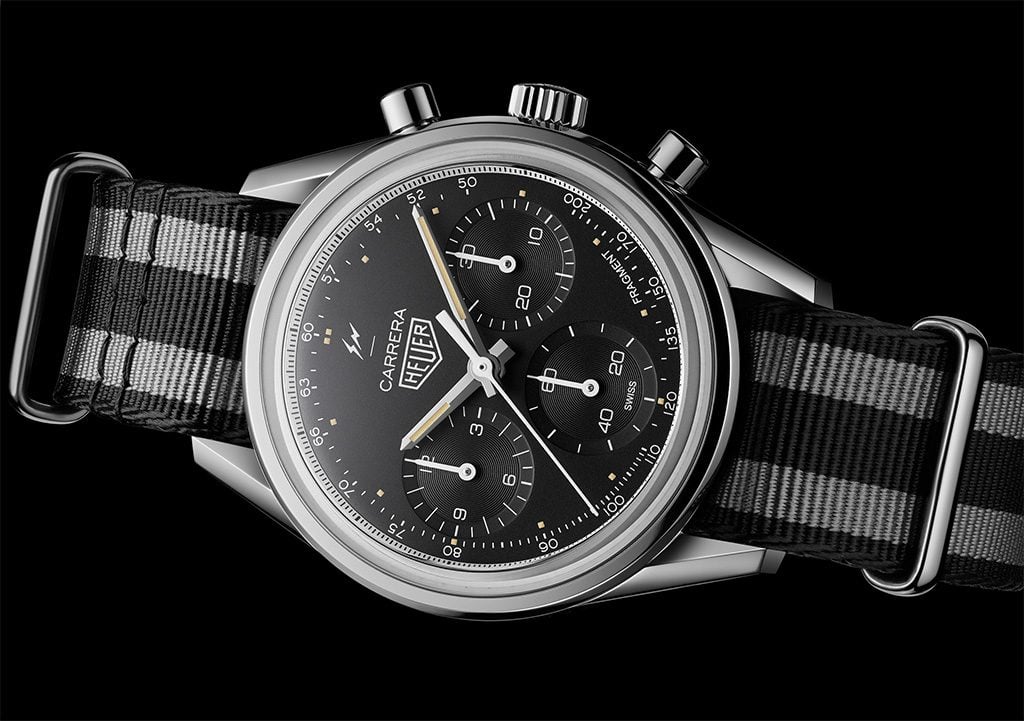
The TAG Heuer Carrera Glassbox is a 39mm Swiss chronograph defined by its domed box crystal, which rises above the bezel and wraps the tachymeter scale onto the vertical flank of the glass. The TAG Heuer Carrera line was introduced in 1963 and named for the Carrera Panamericana road race, and the Glassbox revives the crystal architecture of the earliest references.
The 39mm diameter makes this one of the few modern chronographs that reads as both a dress watch and a sports watch, and the domed crystal creates a compressed vintage dial view that flat sapphire cannot reproduce.
Best Sports Chronographs
The best sports chronographs prioritize timing precision and mechanical sophistication over case decoration, and the Zenith Chronomaster Sport and the Rolex Cosmograph Daytona set the standard at their respective price points. Both use column wheel architecture and a tachymeter bezel, and both trace their design language to motorsport timing. This is also where the gap between current retail and the pre-owned market becomes impossible to ignore.
Zenith Chronomaster Sport
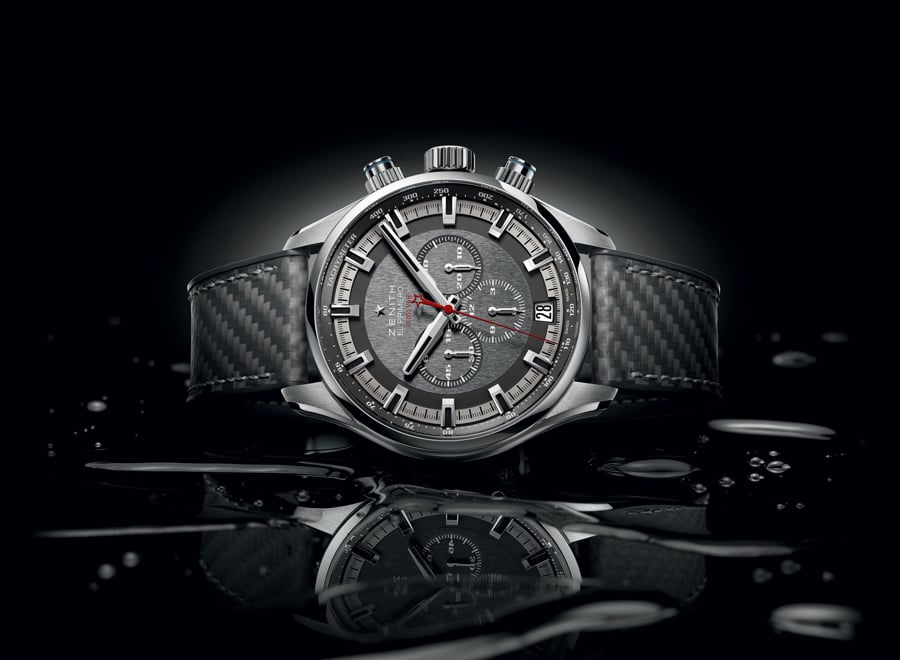
The Zenith Chronomaster is a 41mm automatic chronograph powered by the El Primero, a high frequency caliber introduced in 1969 as one of the earliest automatic chronographs, at around $10,000 current retail. The El Primero beats at 36,000 vibrations per hour, double the rate of most chronograph movements, which lets the central hand measure and display one tenth of a second.
The dial carries the tri-color subdials that have identified Zenith chronographs since the original A386, with grey, anthracite, and blue registers on a light background. The ceramic bezel is graduated in tenths of a second rather than the usual sixty second scale, which makes that timing capability legible rather than theoretical.
Rolex Cosmograph Daytona
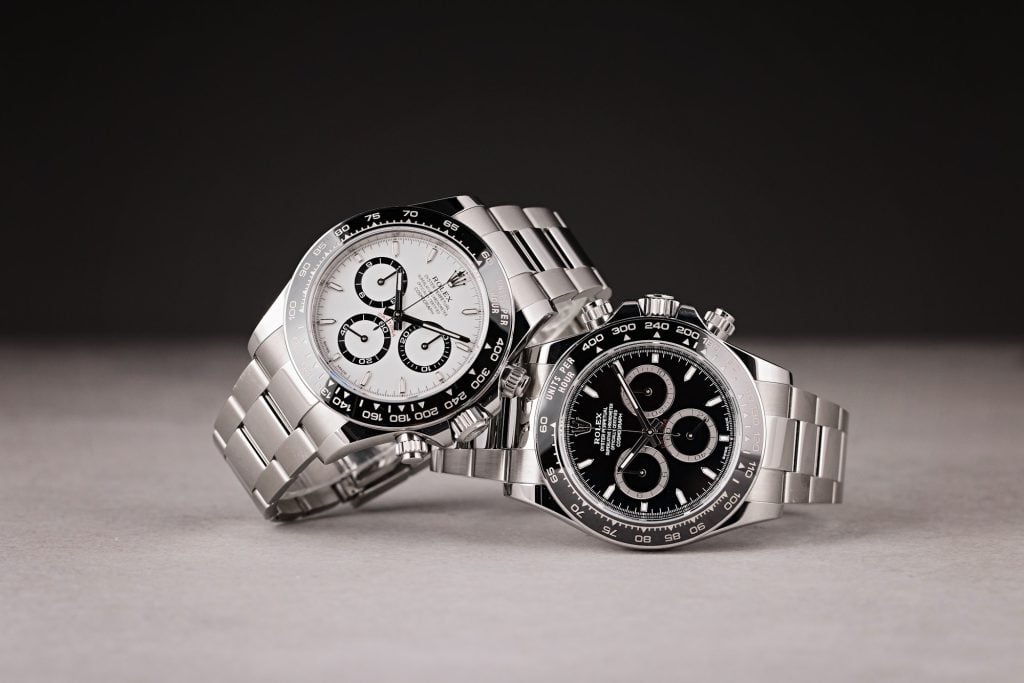
The Rolex Cosmograph Daytona is a chronograph wristwatch introduced in 1963 and built around a tachymeter bezel, currently produced as reference 126500LN in 40mm Oystersteel at roughly $16,900 retail. The current generation runs caliber 4131, an in house automatic chronograph movement with a column wheel, a vertical clutch, and a 72 hour power reserve. Its Cerachrom ceramic bezel resists the scratching and fading that affected the aluminum inserts of earlier generations, and the ceramic-bezel Daytona 126500 has become the reference point for the entire steel chronograph segment.
Retail availability is the complication. Authorized dealer allocation for the steel Daytona is constrained enough that the catalog price functions as a reference figure rather than a purchase price, which pushes demand onto the pre-owned market at higher levels. The Audemars Piguet Royal Oak Offshore Chronograph occupies the tier above, built around an octagonal bezel with exposed hexagonal screws and an integrated bracelet, and it trades in a market thin enough that condition and configuration matter more than any published figure.
Best Heritage and Pilot Chronographs
The best heritage and pilot chronographs are built around a specific historical function rather than a general sporting look, and Breitling holds the strongest position with the Navitimer and the Top Time. The Longines Spirit Flyback also belongs here, offering a flyback complication in a 39.5mm case. A flyback chronograph resets and restarts the timing sequence with a single press rather than requiring stop, reset, and start as three actions, a function developed for aviation navigation.
Breitling Navitimer B01
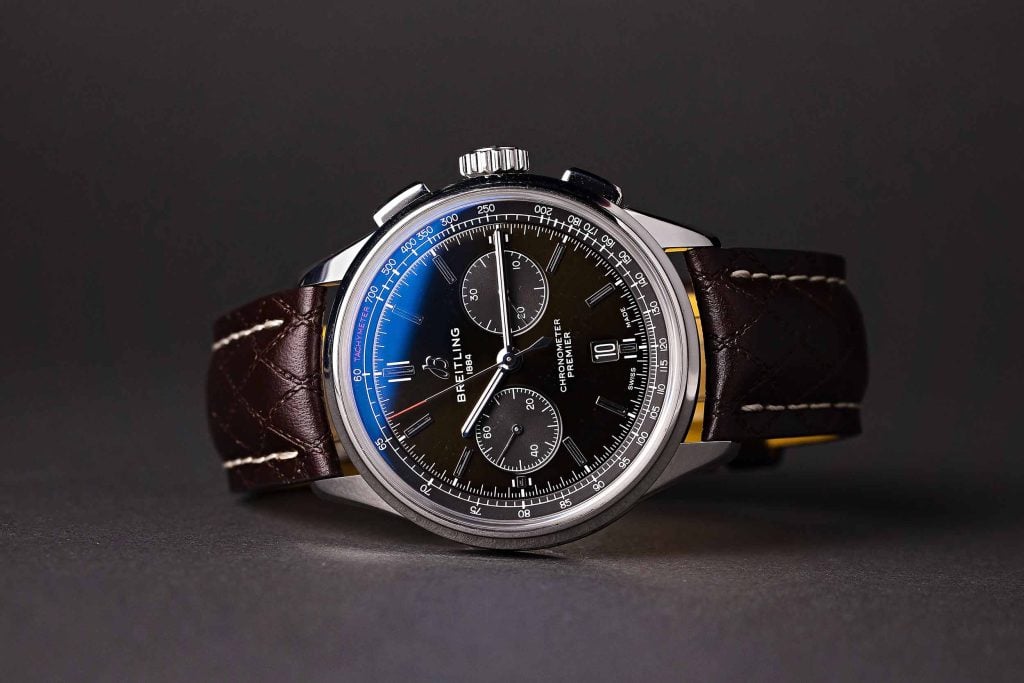
The Breitling Navitimer is a pilot chronograph defined by its rotating circular slide rule, a bidirectional bezel scale that performs multiplication, division, and unit conversion for flight calculations without electronics. Current retail for the Navitimer B01 runs roughly $8,900 to $10,300 depending on case size and material.
The Breitling B01 designation refers to Breitling caliber B01, an in house automatic chronograph movement using a column wheel to control the start, stop, and reset sequence. Column wheel construction gives the pushers a crisper action than the cam lever alternative, which is why enthusiasts treat the B01 as a genuine manufacture movement rather than a modified supplier caliber.
Breitling Top Time

The Breitling Top Time is a compact chronograph line introduced in the 1960s and aimed at a younger buyer than the professional Navitimer, with a cleaner dial and no slide rule. Its best known variants are the Zorro dial, named for the crossed geometric shapes formed by the subdials and dial sectors, and the panda dial with contrasting registers.
Modern Top Time references revive the 1960s case proportions at around 41mm, which places them among the more wearable heritage chronographs in production and anchors the more affordable end of Breitling chronograph ownership on both markets.
How a Chronograph Movement Works and Why It Holds Value
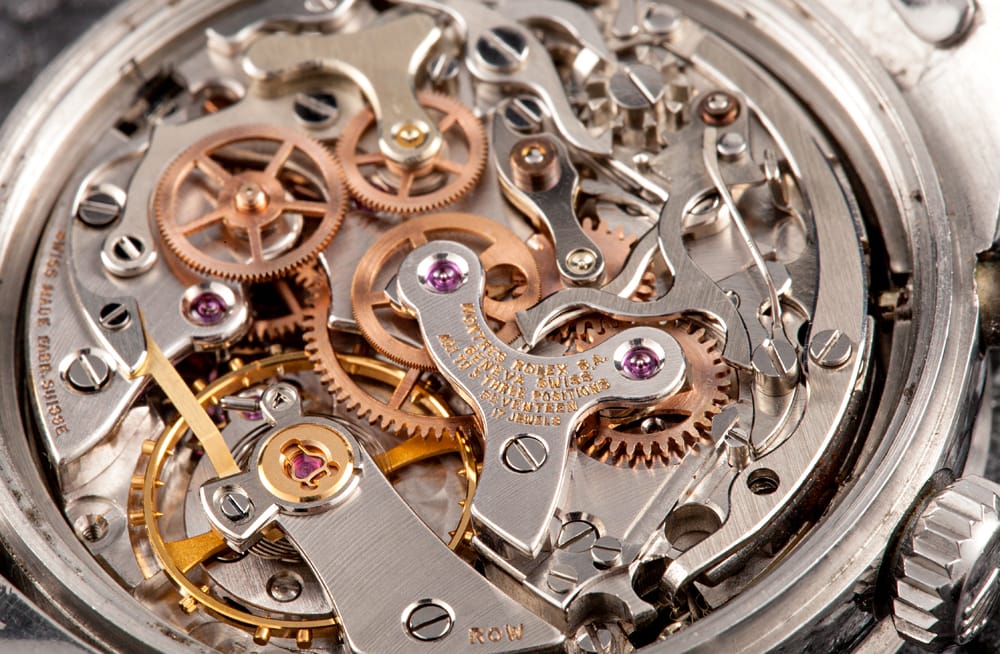
To learn how a chronograph movement works, we need to start by looking at the clutch. The movement uses a clutch to couple the running gear train to a separate elapsed time train, with a column wheel or a cam lever switch controlling the start, stop, and reset sequence. Hammers strike heart shaped cams on the chronograph wheels to return every hand to zero in a single motion. It is the most mechanically demanding complication in regular production outside perpetual calendars and minute repeaters.
Two clutch designs dominate. A lateral clutch swings a gear sideways into engagement, which is satisfying to watch through a display back but produces a slight stutter as the chronograph hand starts. A vertical clutch engages through stacked friction plates, eliminating that stutter and reducing wear on the teeth.
“When you service a pre-owned chronograph, you appreciate the genius of the original engineering. We look at a ten-year-old caliber under the loupe, replace a single worn vertical clutch or adjust a column wheel spring, and that movement immediately snaps back to zero with factory-level precision. That mechanical longevity is exactly why these pieces hold their market value.“
Carol Altieri, COO of Bob’s Watches
Vertical clutch designs such as the Rolex caliber 4131 eliminate the slight hand stutter on start that lateral clutch designs produce, which is one reason the architecture has become standard in modern in house chronograph calibers.
| Component | Function | Found In |
| Column wheel | Rotating pillared wheel that sequences the start, stop, and reset commands | Rolex caliber 4131, Breitling caliber B01, Omega caliber 321 |
| Vertical clutch | Engages the elapsed time train through stacked friction plates, preventing hand stutter | Rolex caliber 4131 and caliber 4130 |
| Meca-quartz module | Mechanical chronograph module driven by a quartz regulated time train | Brew Metric Retro and most chronographs under $1,000 |
| Tachymeter bezel | Fixed scale converting elapsed seconds into units per hour | Omega Speedmaster, Rolex Daytona, TAG Heuer Carrera |
Chronograph History and the Milestones That Defined It

Chronograph history runs through a series of dateable engineering milestones rather than a gradual evolution, and five of them explain the shape of the category today. Each either introduced a mechanism still in use or established a design convention competitors adopted wholesale.
- 1913: the first wrist worn chronograph. The complication moved from the pocket to the wrist, establishing the pusher and subdial layout that survives unchanged.
- 1957: the Omega Speedmaster CK2915. Omega introduced the Speedmaster in 1957 as part of a professional trilogy alongside the Seamaster 300 and the Railmaster, powered by the manual wind caliber 321 derived from the Lemania 2310, and it was the first wristwatch to move the tachymeter scale from the dial to the bezel. That change freed the dial for legibility and set the visual template for the modern chronograph. For collectors tracing how the Speedmaster’s design evolved, the CK2915 is where the lineage begins.
- 1963: the Rolex Cosmograph Daytona. Rolex launched the Cosmograph with an engraved tachymeter bezel and contrasting registers, creating the design vocabulary that the entire racing chronograph segment still borrows from.
- 1969: the automatic chronograph arrives. Zenith introduced the El Primero, the first automatic chronograph able to measure one tenth of a second, in a year when three development programs raced to eliminate manual winding from the complication.
- 2016: the ceramic bezel Daytona reference 116500LN. Rolex replaced the metal and aluminum bezel with Cerachrom ceramic, solving the scratching and fading problem that had defined chronograph bezel wear for six decades.
What Pre-Owned Chronographs Sell For
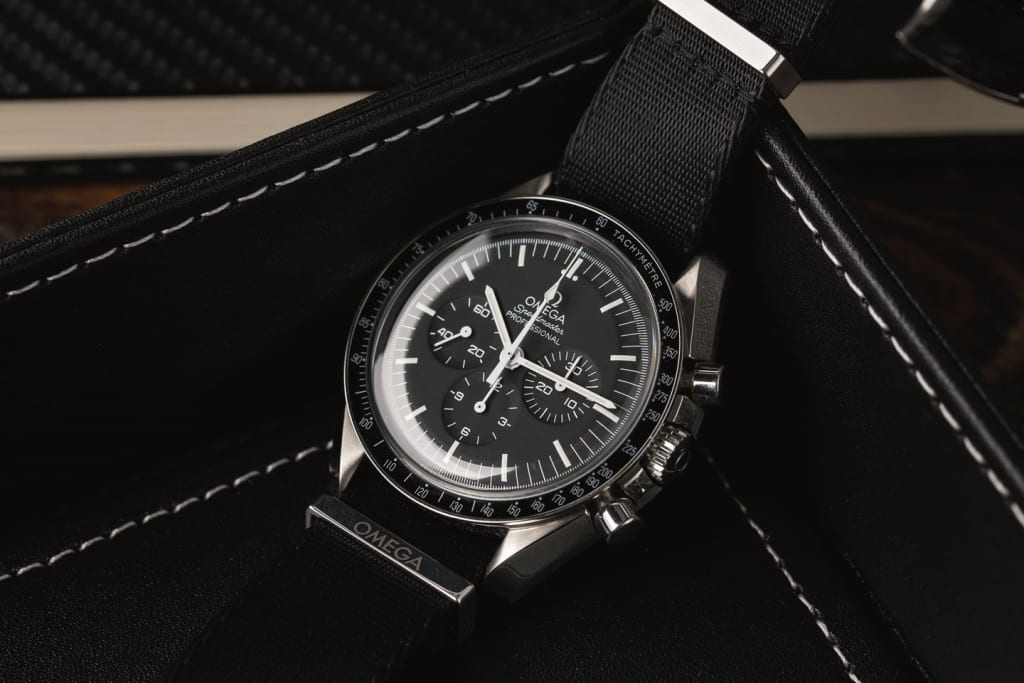
Pre-owned chronograph prices are set by the secondary market rather than by catalog retail, and the gap runs in both directions depending on the reference. Allocated steel sports chronographs trade above their current retail figures because authorized dealer supply does not meet demand. Chronographs freely available at retail generally trade below it, because a pre-owned example competes directly with a warrantied one in a boutique.
The figures below come from our own sold data covering July 2025 through July 2026. Each row shows the median sold price and the range covering the middle 50 percent of sales, which filters out the outliers that distort simple averages.
| Reference or Family | Median Sold Price | Typical Market Range |
| Rolex Daytona ref. 126500 | $36,032 | $31,876 to $38,051 |
| Rolex Daytona ref. 116500LN | $30,595 | $26,995 to $32,032 |
| Rolex Daytona ref. 116520 | $22,640 | $21,995 to $24,495 |
| Omega Speedmaster family | $6,582 | $4,670 to $7,995 |
| Breitling Navitimer | $5,495 | $4,295 to $6,995 |
| Breitling Chronomat | $5,570 | $4,095 to $7,545 |
| Breitling Avenger family | $3,895 | $3,295 to $4,995 |
| Breitling Top Time | $5,195 | $5,014 to $5,595 |
The generation spread is the most actionable number here. Our sold data puts the current ceramic Daytona reference 126500 at a median of $36,032 against $30,595 for the reference 116500LN it replaced, a premium of roughly $5,400 for the newer caliber 4131 and its revised case and bracelet. Buyers who want the ceramic bezel and the 40mm proportions rather than the latest caliber can have both for several thousand dollars less by stepping back one reference.
Pricing has been stable rather than volatile over the past year. Daytona medians held between $30,595 and $31,570 across all four quarters, and Speedmaster medians moved up modestly from $6,295 to $6,995. Relative demand is concentrated at the top: within our chronograph sales the Daytona accounts for roughly 35 percent and the Speedmaster about 29 percent, which puts Daytona demand at roughly 1.18 times the Speedmaster and roughly 3.2 times the entire Navitimer family.
Which Chronographs Hold Their Value?

Certain chronograph references are generally considered strong at holding value, and the steel Rolex Daytona and the OMEGA Speedmaster Professional are the two most consistent examples. Value retention tracks scarcity, condition, demand, provenance, and the presence of original box and papers rather than brand reputation alone. A full set example sits at the upper end of its market range and the same reference without documentation sits at the lower end, which is why the ranges above are as wide as they are.
No model guarantees a profit. Market prices move in both directions, and chronographs that were freely available at retail can trade well below their catalog figures for years. The mechanical case for value retention is serviceability: a well engineered chronograph caliber can be returned to original performance decades after it left the factory, and that longevity supports demand in a way a design trend cannot.
Finding the Best Chronograph Watch for Your Collection
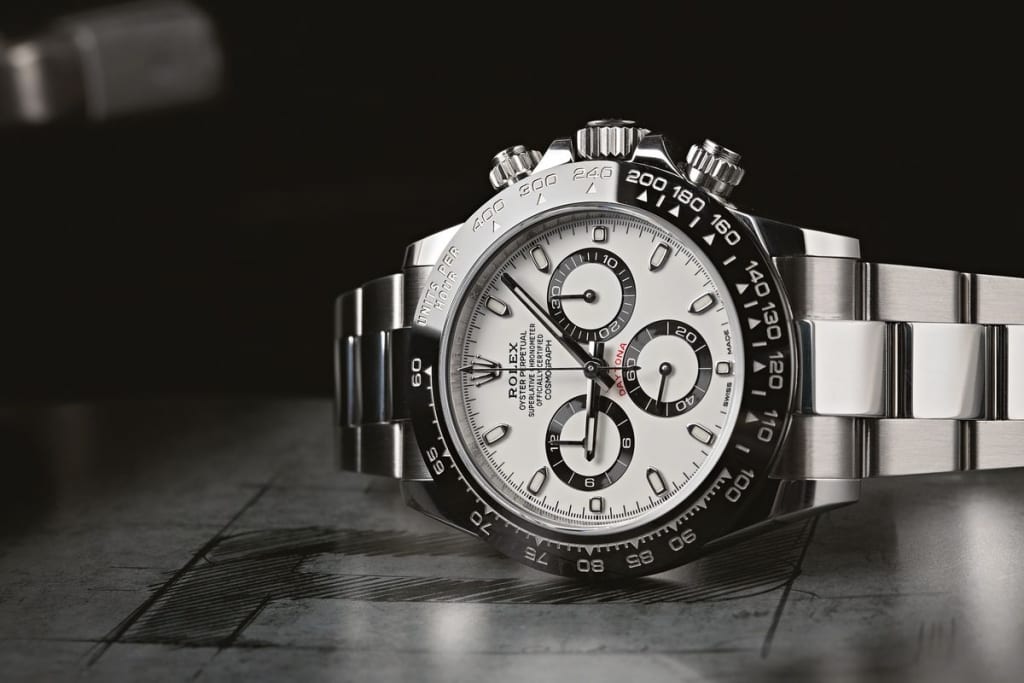
The best chronograph watches for men and women alike come down to the same decision, which is matching the watch to how it will actually be worn. The OMEGA Speedmaster Moonwatch Professional remains the strongest single answer, while the Seiko Prospex Speedtimer covers the same ground under $1,000, the Tissot PRX handles daily Swiss automatic duty, and the Rolex Daytona and Zenith Chronomaster Sport define the upper end of sports chronograph engineering. Choose by function, wrist size, and the market you can realistically buy in.
At Bob’s Watches, chronographs are among the most requested pieces in our pre-owned inventory, and the sold data above reflects a full year of those transactions. Every watch that passes through our facility is inspected and authenticated by in house watchmakers before listing, from the chronograph module and its clutch assembly through the bracelet and case finish. That process is what makes it possible to publish real market figures rather than estimates.
Frequently Asked Questions
The post Best Chronograph Watches for 2026 appeared first on Bob's Watches.