Bob's Watches Bob's Watches
Compared to fashion trends, shifts in the luxury watch market move at a glacial pace. However, transitions eventually do occur, as we have been seeing in recent years with the re-emergence of dress watches.
For most of the 2000s, stainless steel sport watches on integrated metal bracelets dominated, with the Audemars Piguet Royal Oak, Patek Philippe Nautilus, Rolex Daytona and Submariner becoming some of the most recognizable and sought-after watches in the world. Their popularity spurred brands at all levels to try to catch the wave with similar models that evoked the holy trinity.
Given this century’s more casual lifestyles, it makes sense that rugged sport watches would become everyday, all-purpose wristwear. No one would bat an eye at a Rolex Submariner paired with a tailored suit today, a move that previously would have qualified as a fashion faux pas. The steel sport watch became omnipresent, from auction catalogs to social media feeds to red carpets.
The Beginning of a Shift

As the hype-driven sport watch market cooled, enthusiasts and collectors have shifted their gaze to slimmer profiles, precious metals, minimalist dials, and classic proportions. It’s only natural that after decades of the sports watches occupying the spotlight, watch lovers are ready for a pivot to more elegant, understated timepieces that celebrate watch collecting’s enduring values of craftsmanship and tradition.
There are also signs that this renewed interest extends beyond anecdotal enthusiasm. Bob’s Watches’ own sales data points the same way. Through mid-November 2026, dress watch sales are up 86% over the same period in 2024, nearly double the growth rate of sport models, and Cartier watches has led the charge: Tank sales have more than doubled, with average selling prices up 39%, while the Ballon Bleu’s average selling price has climbed 61%. Rolex’s dressier references are moving too, with average selling prices up 17% for the Day-Date 36 and 29% for the Rolex Cellini over the same period. While individual model performance doesn’t establish an industry-wide shift, it suggests buyers are taking a fresh interest in more traditional designs.
What is a Dress Watch Today?

Traditionally, a dress watch was the proper accessory to wear with a tuxedo or a suit for a formal occasion. Customary definitions of a dress watch call for slim, refined precious metal or polished steel cases in restrained diameters from about 35mm to 40mm and a thickness under 10mm, allowing it to slide seamlessly under a shirt cuff without catching. Clean, minimalist dials (perhaps with a date window or small seconds) put the focus on the time, while unusual colors, textures, or treatments add interest. A supple leather, alligator, or exotic hide strap remains the purist choice, but finely made, flexible metal mesh or low-profile integrated bracelets offer a jewelry twist on the look.
These dimensions are useful guidelines rather than hard-and-fast rules. A dress watch doesn’t have to be exceptionally small or impossibly thin to look refined. Case shape, lug-to-lug measurement, dial proportions, and how the watch sits on the wrist all contribute to its overall presence. Today’s dress watches also encompass a wider range of styles, from traditional gold timepieces on leather straps to contemporary steel models with distinctive dials and integrated bracelets.
The quintessential dress watch, the Patek Philippe ref. 96, debuted in 1932 during the Great Depression (the Calatrava name came about a half-century later). At the time, wristwatches were emerging as streamlined, moderne replacements for fusty pocket watches.
As Patek’s first model to receive a reference number and a landmark in its history of serially produced wristwatches, the ref. 96 drew from the Bauhaus form-follows-function ethos. Its round approximately 31mm case featured tapered lugs, a polished bezel, a minimalist dial with gold trapezoidal markers, Dauphine hands, a pearled minute track, and a small-seconds sub-dial at 6 o’clock. It remained in the brand’s catalog until 1973, continuously evolving over the decades. Although the original reference 96 was not formally called a Calatrava during its production run, it established the design language that would define the collection. After Patek Philippe introduced the Calatrava name for its classic dress watch line in the 1980s, the collection has continued to evolve while retaining its elegance.
Jaeger-LeCoultre’s Art-Deco-era Reverso, as well as Cartier’s rectilinear Tank and square Santos also have proven longevity and remain as timely today as ever. While traditionally associated with leather straps, these designs can also take on a more contemporary character when paired with a finely finished metal bracelet.
Much like wearing a sport watch with a suit, the old lines about dress watch accessorizing have blurred beyond the formal to include everyday wear that takes one from the office to a casual weekend with friends, and, yes, even paired with jeans.
Ultimately, a modern dress watch is less about following a rigid set of rules than finding a timepiece with refined proportions, thoughtful design, and the versatility to suit the way you actually dress.
Why Now? The Forces Driving the Comeback

The return of the dress watch has been powered by a number of influences, from the overhype of the speculative market during the pandemic and the accompanying cultural fatigue of ubiquitous sport watches to shifting men’s fashion trends to a growing demographic of younger watch enthusiasts who were first wooed by vintage dress models with smaller proportions.
These forces are related, but each has contributed something different: a changing market, a desire for more distinctive designs, evolving personal style, and a new generation of collectors discovering traditional watchmaking.
The Over-Saturation of “Hype”
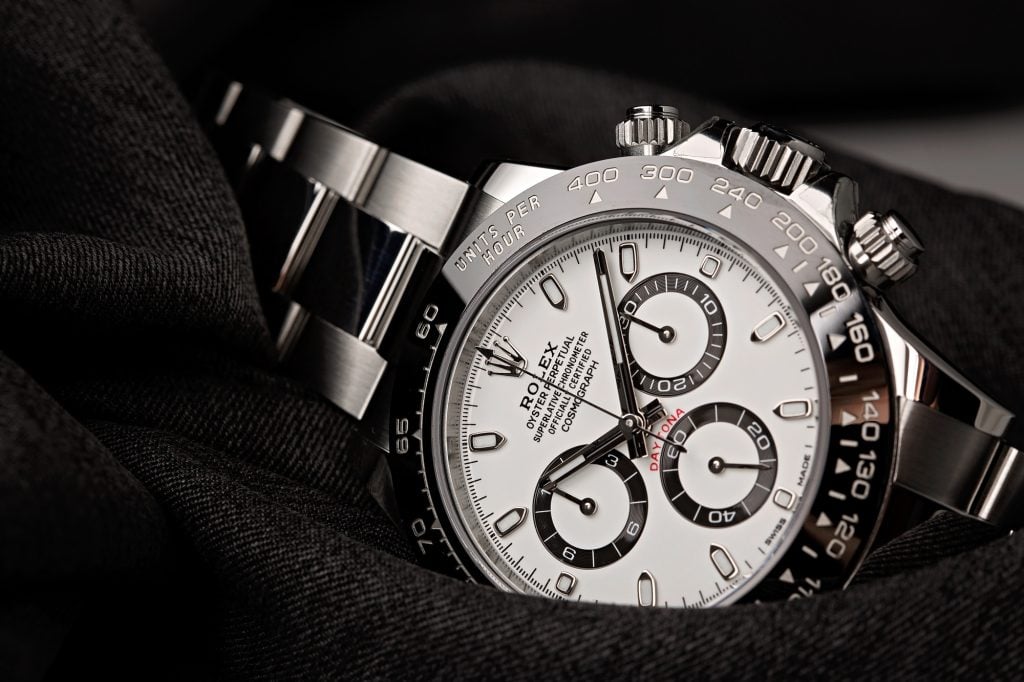
During the pandemic, pricing in the secondary market soared for coveted sport models, which were unobtainable at retail. The speculative bubble reached its peak around March 2022, when secondary prices for top grail models, including the Patek Philippe Nautilus 5711, Audemars Piguet Royal Oak 15202, and Rolex Daytona, were experiencing dramatic increases.
This spike attracted speculators hoping to capitalize on rapidly appreciating prices, bringing a new level of investment-driven attention to the category. It became so extreme that secondary market prices for steel grail watches outpaced precious metal complications from prestige brands.
The fever finally broke in March 2022, triggering a multi-year pricing correction that saw prices fall between 30 and 50 percent. This shift helped move attention away from short-term speculation and back toward the watches themselves, including their design, craftsmanship, history and lasting appeal. Bob’s Watches’ data suggests that correction has now run its course: through mid-November 2026, median selling prices for the steel Daytona ref. 126500, the GMT-Master II ref. 126710 and the Submariner ref. 124060 are all up between 12 and 14 percent versus the same period in 2024.
The Homogenization of Design

The runaway success of the luxury sports watch category, particularly the iconic Royal Oak and Nautilus models, drove the industry to embrace similar design cues. At the trend’s height, dozens of brands concurrently released steel sports watches featuring integrated bracelets and blue dials.
With the proliferation of steel tool watches, wearing a thin, precious-metal dress watch made a statement while signaling an awareness of horological connoisseurship.
The Evolution of Post-Pandemic Style

Similar to how the fashion trend of loud, casual streetwear suited the ascendance of the in-your-face sport watch, today’s shift to relaxed tailoring, 80s-inspired shoulders, and fluid mid-century silhouettes with wide trousers pairs better with a slim dress watch.
After years of the bigger-is-better aesthetic, the paradigm flipped with A-listers in sports, Hollywood, and the men’s fashion vanguard on social media donning refreshingly wearable 34mm to 36mm neo-vintage dress watches.
This quiet-luxury flex projects confidence, rather than feeling compelled to rely on size or branding to make an impression. Brands took notice and started downsizing to smaller and more classically proportioned watches. Bob’s Watches’ numbers back this up on price, if not yet on volume: since 2024, the average selling price of 34mm-to-37mm watches sold through the retailer has risen 10%, while models 42mm and larger have stayed essentially flat.
Generational Attitude Shifts

One surprising influence on the renewed interest in dress watches is the changing tastes of younger watch enthusiasts who tend to view a fine watch not as a tool but as a piece of jewelry that expresses the wearer’s individuality.
Such enthusiasts are drawn to distinctive pieces with shaped cases and more exclusive designs. Hyper-engineered steel utility is no longer the only point of attraction, as collectors increasingly have room in their collections for romantic complications like moon phases, unusual textured or retro stone dials, and hand-finished movements that feel artisanal compared to mass-produced sport models.
This burgeoning generation of collectors has spent the last several years educating themselves on the history of watchmaking. This intellectual curiosity has naturally led them to the mid-century golden eras of design, the 1940s through the 1960s. Brands have responded by digging into their archives, reviving historically significant, smaller-scale models that emphasize beauty and elegant simplicity over utilitarian durability.
What to Look for: Choosing Your Timepiece

If you have built a collection consisting of steel sports watches over the last decade, you might be wondering how to navigate this new territory, which presents an invitation to diversify and elevate your horological pursuits.
When searching for the best dress watch to extend your collection, focus on personal style preferences and how the watch interacts with your wrist, particularly when it comes to sizing and fit. The right combination of proportions, materials, dial design, and wearing comfort can make the difference between a watch that looks beautiful in a display case and one that becomes a regular part of your wardrobe.
- Case Size and Proportions: Don’t focus on case diameter. The metric for the ideal dress-watch fit is lug-to-lug distance, which is the total vertical length of a watch case measured from the top tip of the upper lugs to the bottom tip of the lower lugs. A sport watch can have lugs that stretch right to the edge of your wrist, while a dress watch should leave a visible border of skin on either side of the case. Target 36mm references for smaller wrists (15–16cm), and 39mm to 40mm for larger wrists (18cm+) to maintain elegant proportions.
- Look for Face Values: The relatively uncluttered nature of a dress watch dial invites aesthetic flourishes and subtle details that catch the eye as they reflect light. Consider graphic sector dial designs, sunburst or linen finishes, and other textures like engine-turned guilloché engraving or enamel to add surface interest.
- Choose Your Movement: Manual-winding movements deliver the slimmest profiles and a romantic daily winding ritual, while ultra-thin automatics provide grab-and-go convenience for modern lifestyles. High-quality quartz movements are thin, incredibly accurate, and ideal for occasional wear.
- Swap Steel for Hide: The best dress watches can shapeshift with a change of strap, and several brands have developed quick-change strap systems that allow for an easy swap to match your attire. A glossy black alligator strap is suited for black-tie affairs, while a matte tan calfskin or suede strap relaxes the look for a more casual ensemble.
- Invest in Heritage: Do your research on the secondary and vintage markets to find attractive values for neo-vintage and vintage dress watches from top-tier manufactures that were overlooked during the height of the steel sports craze.
The Power of the “Second Watch“
Embracing the understated luxury of a dress watch does not mean abandoning your well-worn sports watches. Think of a new dress watch as a quintessential “second watch” in a dual-ended collection. A classic dress model adds variety and an essential dimension to any watch collection.
While a robust dive watch or chronograph may be on point for weekends, travel, and casual outdoor activities, a slim dress watch elevates your evenings, professional meetings, and celebrations. Because dress watches are rooted in lasting values, they’re also ideal for multi-generational gifts or a reward for a significant life milestone, such as a promotion, closing a big deal, or getting married.
What the Dress Watch Era Means for You
The rugged sport watch will always have an indispensable place in any watch wardrobe, but the era of its absolute monopoly is over. The renewed interest in dress watches is less about replacing one category with another and more about collectors rediscovering the appeal of variety, craftsmanship, and timeless design. Whether you want to add a more refined piece to your collection or are searching for a meaningful gift, luxury dress watches offer plenty of ways to express your personal style.
The post The Dress Watch Is Back: Why Refined, Understated Luxury Watches Are Having a Moment appeared first on Bob's Watches.