Bob's Watches Bob's Watches
The best luxury sports watches combine three things: serious mechanical watchmaking, tough engineering, and a design you can wear every single day. In 2026, that formula belongs to a small group of sports watches, led by the Audemars Piguet Royal Oak, the Patek Philippe Nautilus, and the Rolex Submariner, along with a new generation of technical pieces built from titanium, ceramic, and carbon. This guide ranks the models that define the category, from the original integrated bracelet legends to modern tool watches and high complications, so you can find the right one for your wrist and your budget.
Key Takeaways
- The integrated bracelet design pioneered by the Royal Oak in 1972 still defines the category, and demand for steel versions of these watches remains far ahead of supply.
- Titanium and ceramic have moved from niche materials to the mainstream, offering lighter weight, better comfort, and cases that shrug off scratches.
- The top three overall picks for 2026 are the Audemars Piguet Royal Oak, the Patek Philippe Nautilus, and the Rolex Submariner, each for a different reason.
- Case sizes have settled into a more wearable 38mm to 42mm range, a clear shift away from the oversized watches of the 2000s.
Every watch on this list has earned its place through decades of production, proven engineering, and sustained collector demand. Below, we break down the icons, the tool watches, the technical showpieces, and everything you should weigh before buying.
The Holy Trinity and Icons of Luxury Sports Watches

Three names sit at the top of this category, and all three trace back to one idea: a steel watch, finished to the same standard as a gold dress watch, priced accordingly. Audemars Piguet proved the concept in 1972, Patek Philippe followed in 1976, and Vacheron Constantin completed the set in 1977. Fifty years later, these watches remain the hardest pieces to buy at retail, and online communities still debate the same question collectors argued about in the 1970s: does steel deserve a precious metal price? The market has answered with a firm yes.
Audemars Piguet Royal Oak (The Integrated Bracelet Pioneer)

The history of AP dates back to when Gérald Genta sketched the Royal Oak in 1972, the idea of a steel watch costing more than gold competitors seemed absurd. The octagonal bezel with exposed hexagonal screws, the tapisserie dial, and the bracelet that flows straight out of the case created a design language the entire industry has borrowed from ever since. The Audemars Piguet Royal Oak did not just join the luxury sports watch category. It invented it.
Today the 41mm reference 15510 and the 37mm reference 15550 carry the modern automatic caliber 4302, and demand still outpaces production by a wide margin. Experts and collectors consistently rank the stainless steel Audemars Piguet Royal Oak among the most desirable watches in the world, and waitlists at boutiques stretch for years. On the secondary market, clean examples routinely trade above retail.
Quick Specs: Royal Oak 15510ST
- Case: 41mm stainless steel, 8.1mm thick
- Movement: Caliber 4302 automatic, 70 hour power reserve
- Water resistance: 50 meters
- Bracelet: Integrated stainless steel
- Signature detail: Tapisserie dial and octagonal bezel with eight screws
Patek Philippe Nautilus and Aquanaut (The Pinnacle of Casual Elegance)
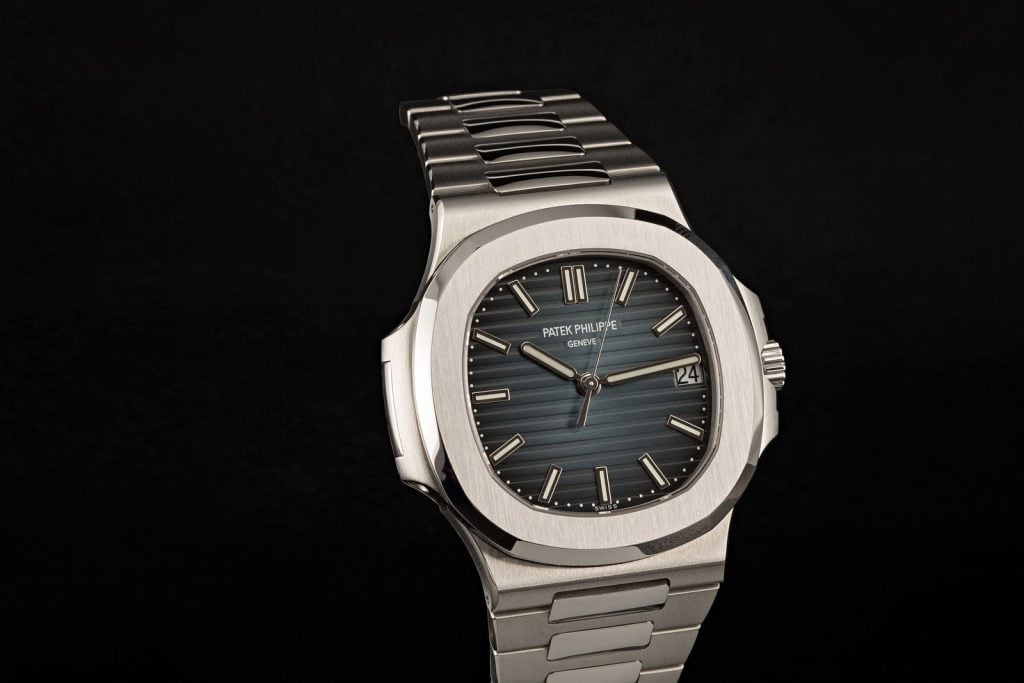
Genta struck again in 1976 with the Patek Philippe Nautilus, a porthole inspired design built for Patek Philippe. Where the Royal Oak feels angular and architectural, the Nautilus feels soft and rounded, with a horizontally embossed dial and a case that slides under any cuff. When Patek Philippe discontinued the steel reference 5711 in 2021, secondary prices spiked to several times retail, a clear signal of how central this watch has become to modern collecting.
The Rolex Aquanaut, introduced in 1997, gives the same DNA a younger attitude with a rounded octagonal case and a composite rubber strap. Online communities often describe the Aquanaut as the smart entry into Patek Philippe sports watches, though “entry” is relative when steel examples trade well into five figures. Both lines are now anchored by white gold and rose gold references, with the 5811 carrying the Nautilus torch at 41mm.
Quick Specs: Nautilus 5811/1G
- Case: 41mm white gold
- Movement: Caliber 26-330 S C automatic
- Water resistance: 120 meters
- Bracelet: Integrated white gold with fold over clasp
- Signature detail: Horizontally embossed dial and porthole case with side “ears”
Vacheron Constantin Overseas (The Ultimate Travel Companion)

The Overseas is the quiet achiever of the trinity. Its bezel echoes the Vacheron Constantin Maltese cross emblem, its finishing stands shoulder to shoulder with the Royal Oak and Nautilus, and it has one practical advantage neither rival offers: a quick change system that lets you swap between a steel bracelet, a leather strap, and a rubber strap without tools. For frequent travelers, the Overseas World Time and dual time references make the case even stronger.
For years the Vacheron Constantin Overseas traded at a discount to its two rivals, which experts often framed as the best value in high end sports watches. That gap has narrowed as collectors have caught on, but the Overseas remains the most attainable of the three at retail and on the secondary market.
Quick Specs: Overseas 4520V
- Case: 41mm stainless steel
- Movement: Caliber 1226 SC automatic with 22k gold rotor
- Water resistance: 150 meters
- Bracelet: Interchangeable steel bracelet plus leather and rubber straps included
- Signature detail: Bezel shaped after the Maltese cross
Elite Dive and Sports Watches Built for Performance
Not every luxury sports watch lives behind sapphire in a safe. The models in this section are genuine tool watches, engineered to survive saltwater, decompression chambers, and daily abuse, while still carrying the finishing and movements you expect at this price level. Collectors who actually wear their watches gravitate here, because these pieces were designed to take a hit and keep running within chronometer spec.
Rolex Sea-Dweller and Submariner (The Uncompromising Standards)

The Rolex Submariner watch is the most recognized dive watch ever made, and the current reference 126610LN shows why the design has barely changed since 1953. The 41mm case is machined from Rolex’s proprietary Oystersteel, a 904L alloy that resists corrosion better than the 316L steel most brands use, and the caliber 3235 inside is certified to run within plus or minus two seconds per day. At $11,350 retail in 2026, it remains the benchmark that every other dive watch is measured against.
The Rolex Sea-Dweller is the Submariner’s professional grade sibling, built in 1967 for saturation divers who needed a helium escape valve and far greater depth capability. The current 43mm reference 126600 is rated to 1,220 meters and carries a retail price of about $13,150 in 2026. For buyers, the Sea-Dweller has a quiet advantage: it is one of the few Rolex sports models that can often be found on the pre-owned market at or below retail, which makes it a strong value among modern professional Rolex divers.
Omega Seamaster Diver 300M and Planet Ocean (Co-Axial Innovation)

The OMEGA Seamaster Diver 300M earned pop culture fame on James Bond’s wrist in 1995, but its real strength is under the dial. Every current model runs a Co-Axial Master Chronometer movement, certified by the Swiss federal institute METAS for accuracy of 0 to plus 5 seconds per day and resistance to magnetic fields up to 15,000 gauss. That level of magnetic resistance matters more than most buyers realize, since phones, laptops, and speakers are the most common cause of accuracy problems in mechanical watches. Starting near $5,900, the Diver 300M delivers the strongest specs per dollar in this entire guide.
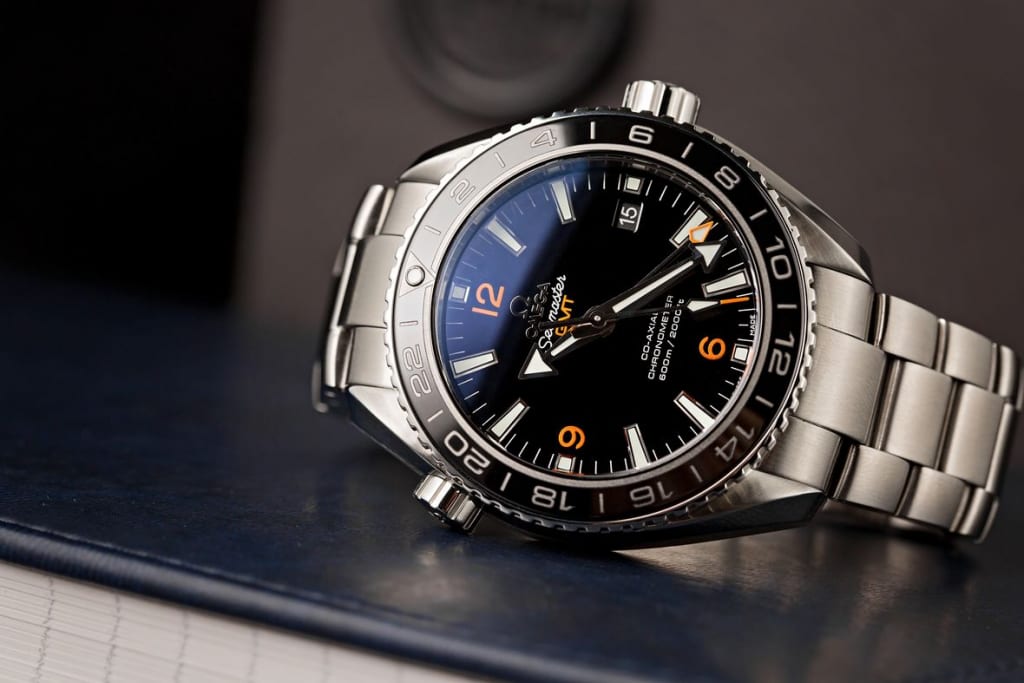
The OMEGA Planet Ocean pushes the same technology deeper, with 600 meters of water resistance and a beefier case. Omega refreshed the line in early 2026 with a slimmer 42mm two part case, redesigned bracelets, and the Master Chronometer caliber 8912, moves that brought the collection back toward the cleaner look of the original models. Between the two lines, the Diver 300M is the everyday pick and the Planet Ocean is the serious diver’s choice.
Blancpain Fifty Fathoms (The Original Modern Diver)

Before the Submariner, there was the Fifty Fathoms. Released in 1953 after Blancpain’s CEO Jean-Jacques Fiechter, himself a diver, worked with French combat divers to define the requirements, it established the template every dive watch still follows: a rotating timing bezel, a luminous high contrast dial, and a case sealed against water. Jacques Cousteau wore one of these Blancpain models. So did navy units around the world.
The modern Fifty Fathoms Automatique honors that history with a scratch resistant sapphire bezel insert, a caliber 1315 movement with a five day power reserve, and case options at 38mm, 42mm, and the classic 45mm. Pricing starts around $18,200, which positions it as the haute horlogerie choice among serious divers. It costs more than a Submariner, and in exchange you get movement finishing and heritage that few tool watches can match.
The Next Generation: Complicated Sports Watches and Material Innovation
The most interesting engineering in watchmaking today is happening inside sports watches. Complications like tourbillons and chiming mechanisms were once so delicate that a hard handshake could damage them. Modern micro engineering has changed that, and a handful of brands now build split second chronographs, tourbillons, and even chiming watches that survive tennis serves, golf swings, and daily wear. The materials driving this shift are forged carbon, grade 5 titanium, and high tech ceramic, all lighter and tougher than traditional steel or gold.
Richard Mille (Shock Resistance and Ultra Lightweight Mechanics)
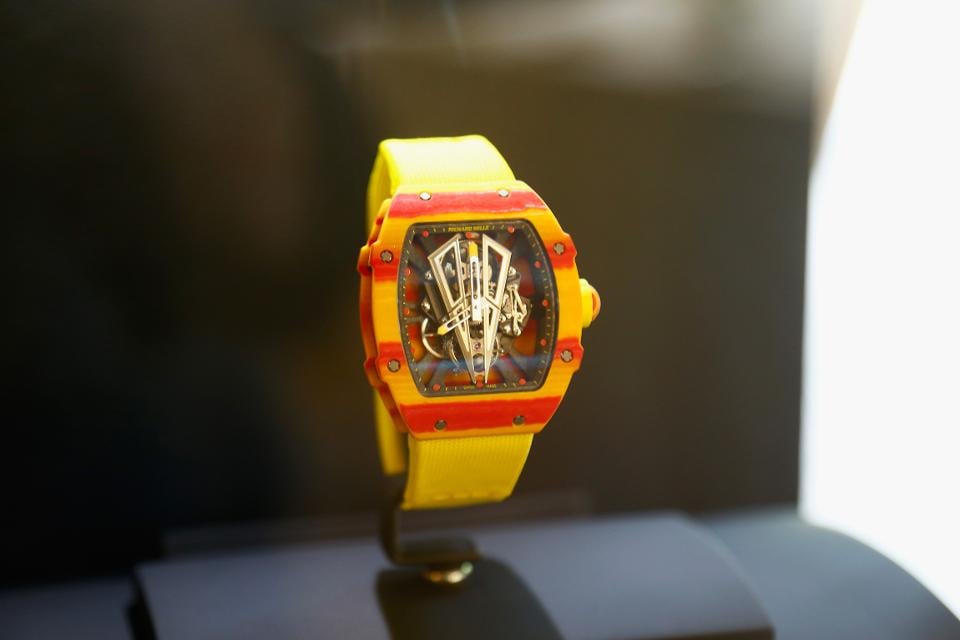
Richard Mille builds the closest thing watchmaking has to Formula 1 machines. The RM 27 series, developed with Rafael Nadal, put a tourbillon rated to withstand shocks of over 10,000 g on the wrist of a professional tennis player, in a case weighing well under 40 grams with the strap. Nadal wore his through actual Grand Slam matches, which remains the most convincing durability test any complicated watch has ever passed.
The secret is materials science. Richard Mille cases use Carbon TPT and Quartz TPT, composites built from hundreds of layered filaments, while movement baseplates are machined from grade 5 titanium for rigidity at minimal weight. Prices commonly run from the low six figures into the millions, and the brand has become the definitive status symbol among professional athletes.
Hublot Big Bang (The Art of Fusion and Bold Aesthetics)
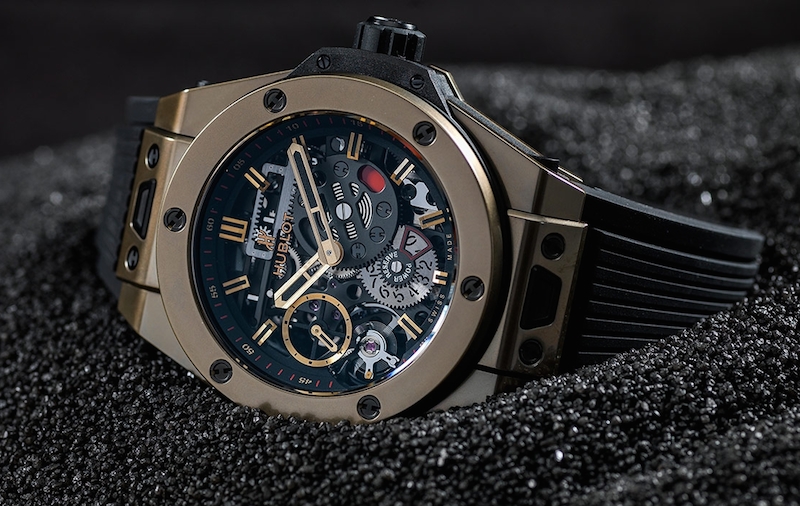
Hublot built its identity on what it calls the Art of Fusion, the pairing of materials watchmaking had never combined. The Big Bang, launched in 2005, mixes ceramic, carbon, sapphire, rubber, and Magic Gold, a patented gold alloy fused with ceramic that resists scratching far better than standard 18k gold. Full sapphire cases that expose the entire movement have become a brand signature.
Inside, the Unico movement is a flyback chronograph designed and produced in house, with a column wheel visible on the dial side. The Big Bang divides opinion, and Hublot seems comfortable with that. It is bold, loud, and unmistakable, which is exactly the point for buyers who find the classic icons too reserved.
Audemars Piguet Royal Oak Offshore (The Bold, Oversized Evolutionary Step)

When the Royal Oak Offshore appeared in 1993, its 42mm case was so large by the standards of the era that collectors nicknamed it “The Beast.” Designer Emmanuel Gueit took Genta’s original and exaggerated everything: a thicker case, exposed rubber gaskets, and oversized pushers. Purists were horrified. The market was not, and the Offshore went on to define the oversized sports watch wave of the 2000s.
The modern collection has matured with the market. Current Offshore chronographs use the in house caliber 4401 flyback chronograph, and case options span forged carbon, ceramic, and titanium alongside steel and gold. The Offshore now reads less like a rebellious spinoff and more like the performance division of the Royal Oak family.
Expert Buying Guide: Finding the Right Timepiece for Your Wrist

The right luxury sports watch is the one that fits your wrist, your wardrobe, and your habits, not just your budget. The market has moved decisively away from the oversized cases of the 2000s and back toward versatile proportions between 38mm and 42mm, sizes that work with a suit on Monday and a swimsuit on Saturday. Before you buy, run through this checklist:
- Case proportions and thickness. Diameter gets the attention, but thickness and lug to lug length determine how a watch actually wears. Anything under 12mm thick slides cleanly under a shirt cuff.
- Structural materials. Rolex’s 904L Oystersteel resists corrosion and polishes to a brighter finish than standard 316L steel. Titanium cuts weight by roughly a third. Ceramic bezels will look new decades from now.
- Movement credentials. Look for chronometer certification, power reserves of 70 hours or more, and resistance to magnetism, which is the most common real world threat to accuracy.
- Water resistance you will actually use. 100 meters covers swimming, 300 meters covers recreational diving. Beyond that, you are paying for engineering headroom, which some collectors love for its own sake.
- Emotional and resale value. Icons from Rolex, Audemars Piguet, and Patek Philippe hold value because demand is durable. If you may sell or trade someday, brand strength matters as much as condition.
- How you will really wear it. A watch that lives on your wrist should favor comfort and scratch resistance. A watch for occasions can favor precious metals and complications.
Fit is personal, but wrist circumference gives you a reliable starting point:
Wrist Size to Case Diameter Reference
| Wrist Circumference | Recommended Case Diameter | Example Models |
| Under 6.5 in (16.5 cm) | 36mm to 39mm | Royal Oak 37mm, Fifty Fathoms 38mm, Aquanaut 5268 |
| 6.5 to 7.25 in (16.5 to 18.4 cm) | 39mm to 42mm | Submariner 41mm, Nautilus 5811, Overseas 4520V |
| Over 7.25 in (18.4 cm) | 42mm to 45mm | Sea-Dweller 43mm, Royal Oak Offshore, Fifty Fathoms 45mm |
Investing in Time: The Future Outlook for Luxury Sports Watches

The luxury sports watch category enters the second half of the decade in a healthier place than it was during the speculative frenzy of 2021 and 2022. Secondary prices have stabilized at levels driven by genuine collector demand rather than flipping, which is good news for anyone buying a watch to actually wear. The trends shaping the next several years are already visible: brands continue to tighten production of steel icons, titanium and ceramic keep expanding across catalogs, and case sizes keep drifting toward the refined 38mm to 41mm range. Sustainability is becoming a real differentiator too, with recycled steel, responsibly sourced gold, and ocean conservation partnerships moving from marketing language to genuine brand commitments, led by dive watch makers like Blancpain, Rolex and OMEGA.
Technology, far from killing mechanical watches, has made them more desirable. A generation raised on smartwatches has discovered mechanical watchmaking as the analog counterpoint, something built to be serviced and passed down rather than replaced every two years. That cultural shift, combined with disciplined supply from the top brands, is why the great sports models remain the most stable anchor in any modern collection. Buy the icon you love, wear it, and let the decades do their work.
The post Best Luxury Sport Watches Ultimate Buying Guide appeared first on Bob's Watches.