Bob's Watches Bob's Watches
The Rolex laser etched crown is a microscopic, nearly invisible signature emblem embedded inside the sapphire crystal at the 6 o’clock position of modern Rolex watches. First introduced as a high-security anti-counterfeiting measure, this micro-coronet provides collectors with a reliable verification tool that is exceptionally difficult for replica manufacturers to reproduce with authentic precision.
Key Takeaways
- Rolex introduced the laser-etched crown gradually starting in 1999, standardizing it across almost all lines by early 2004.
- The micro-coronet is composed of microscopic bubbles suspended at different depths inside the sapphire crystal rather than cut into the surface.
- Concentric circles and letters inside the bottom loop of the crown decode specific crystal features, such as anti-reflective coatings and service history.
- The Rolex Milgauss ref. 116400GV with its green-tinted sapphire crystal remains the only modern model that completely omits this etching.
- The etching supports authentication but does not prove a watch is genuine on its own, since counterfeiters attempt crude copies and older watches may carry service replacement crystals.
The Rolex coronet is one of the most misunderstood details in modern watchmaking, and most guides stop at the fact that it exists. The sections below cover the engineering that places a three-dimensional logo inside solid sapphire, the five-year rollout that brought it to every collection, the coding system hidden inside its bottom loop, and the easter eggs other luxury brands conceal in plain sight.
What is the Rolex Laser-Etched Crown?

The Rolex laser-etched crown is a microscopic brand logo embedded inside the sapphire crystal at the 6 o’clock position of modern Rolex watches. Introduced as a highly sophisticated anti-counterfeiting measure, this micro-coronet is intentionally designed to be virtually invisible without bright, angled lighting and high magnification. Its structural composition of microscopic dots ensures that the physical integrity of the sapphire remains completely uncompromised.
Luxury watch collectors and watchmakers refer to the feature as the LEC, short for laser-etched crystal or laser-etched coronet. The emblem sits directly above the 6 o’clock hour marker, formed from hundreds of individual points of light suspended within the glass itself. Under normal wear, the crown disappears entirely. Under a 10x jeweler’s loupe with a light source raked across the crystal, the coronet resolves into a crisp, three-dimensional outline. That deliberate invisibility is the point: a security feature that requires specialized equipment to create is a security feature that budget counterfeiters struggle to copy convincingly.
A common misconception dates the etching to around 2001. In reality, 2001 marks the middle of a phased rollout, not its beginning. The feature first appeared in 1999, spread across the professional lines over the following years, and became a universal hallmark by early 2004. Understanding that timeline matters, because a genuine watch produced during the transition years can legitimately appear with or without the etching depending on its reference and serial range.
The History and Evolution of Rolex Crystal Etchings
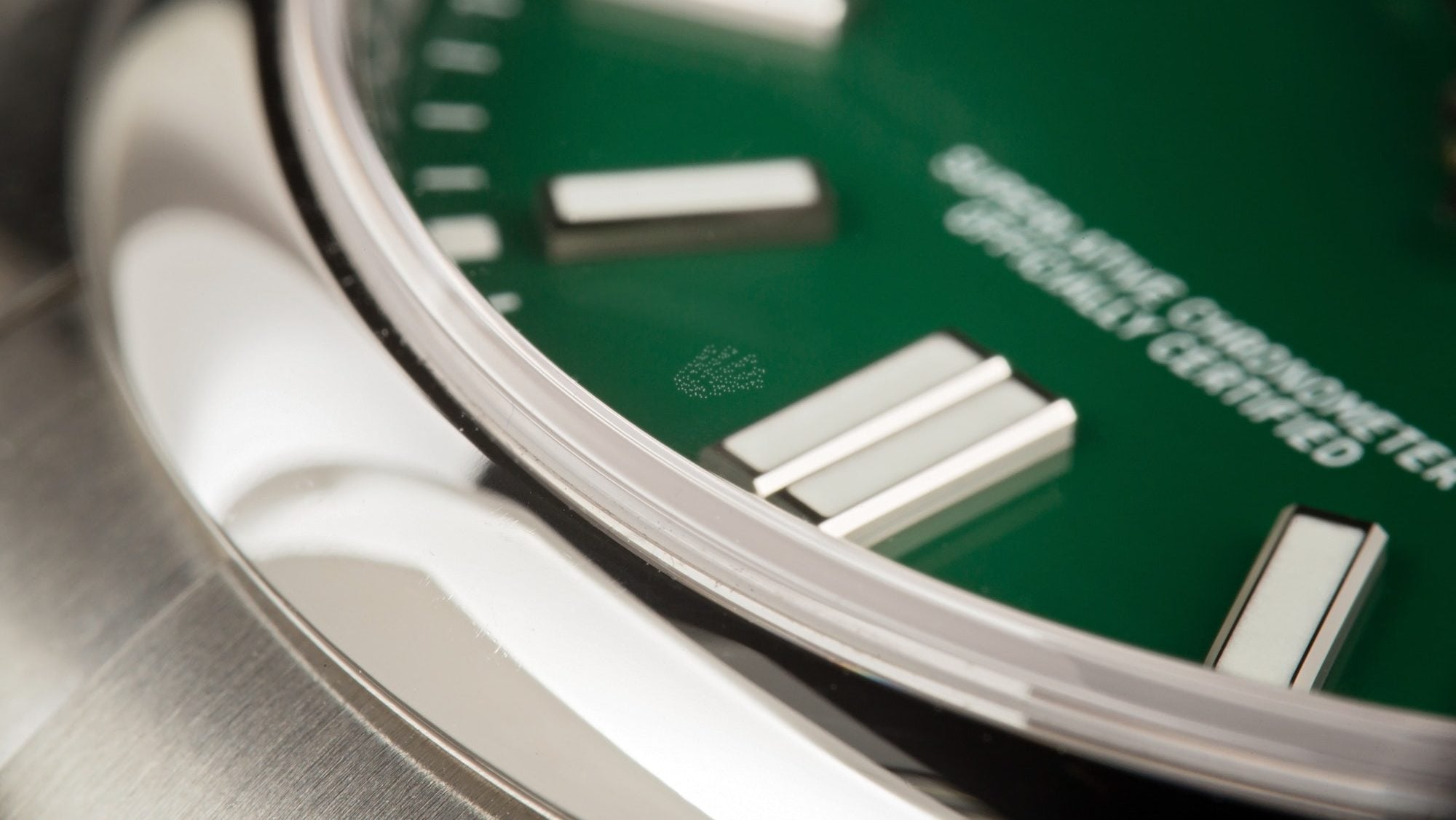
Rolex first introduced the laser-etched crown in 1999 on the sapphire crystal of the Yacht-Master reference 16622, before gradually phasing the security feature across other professional lines like the Submariner and Daytona, and finally standardizing it across all collections by early 2004.
The Yacht-Master reference 16622 is a luxury sports watch featuring a platinum bezel and dial, introduced by Rolex in 1999. Its debut made it the natural testbed for the new crystal signature, and the earliest etched crystals appeared on this reference before the feature spread to the rest of the catalog. The rollout was deliberate rather than instantaneous. Professional models such as the Submariner ref. 16610, powered by the Caliber 3135, the Cosmograph Daytona, and the Explorer II ref. 16570 transitioned during the 2001 to 2003 window, which is why two otherwise identical watches from this era can differ on whether the etching is present.
The timing places the LEC within one of the most active transition periods in modern Rolex production. During the same years, Rolex completed its move away from tritium dial lume to Luminova and then Super-Luminova, so serial ranges from 1998 through 2004 carry a cluster of dating clues that collectors use together. A watch from this window should be evaluated against its specific reference and serial range rather than a blanket rule.
One historical wrinkle regularly confuses buyers: vintage Rolex watches produced before the etching existed can still display a micro-coronet today. When an older watch passes through an official Rolex Service Center and receives a replacement crystal, that new crystal carries modern markings, including a service designation inside the bottom loop of the crown. A 1995 Submariner with an etched crystal is not automatically suspect. It is often simply a watch with documented service history.
The Engineering Behind the Micro-Coronet

Rolex started using sapphire crystal in 1970, debuting the material on the reference 5100, before phasing it across the catalog through the late 1970s and 1980s as acrylic crystals were retired. By the time the laser-etched crown arrived in 1999, sapphire had been the standard Rolex crystal material for over a decade, which made the crystal itself the logical canvas for a new security signature.
Synthetic sapphire is laboratory-grown aluminum oxide, chemically identical to natural corundum and second only to diamond in scratch resistance. That hardness is exactly what makes the crystal difficult to mark. Any cut, scratch, or engraving on the surface of sapphire creates micro-fractures, and those stress lines become the starting points for cracks and shattering under impact. Surface engraving a logo onto a watch crystal would weaken the very component designed to protect the dial.
Rolex solved the problem by never touching the surface at all. The micro-coronet is created by a specialized laser that focuses its energy inside the volume of the sapphire, leaving both the outer and inner faces of the crystal completely intact. At each focal point, the concentrated energy creates a microscopic bubble, a tiny internal void that scatters light differently than the solid sapphire around it.
The technique works like pointillism rendered in three dimensions:
- The laser focuses at varying depths within the crystal, at up to 150 distinct depths, rather than marking a single flat plane.
- Hundreds of microscopic voids are arranged in the shape of the five-pointed Rolex coronet.
- Because each void sits at a different depth, the assembled dots reflect light as a subtle three-dimensional outline under magnification.
- The surrounding sapphire remains structurally uncompromised, with no engraved channels or stress lines to invite fracture.
This internal approach explains why genuine etchings look the way they do. The crown is not a frosted white line but a constellation of individual points, and that distinction becomes the single most useful detail when comparing a genuine crystal against a counterfeit.
How to Decode Laser-Etched Crown Configurations

The Rolex laser-etched crown serves as a physical schematic of the crystal’s specifications, where a single ring at the bottom of the coronet indicates a standard crystal, whereas a double concentric ring denotes the presence of an anti-reflective coating on the underside of the sapphire.
The bottom oval of the micro-coronet functions as a coding system rather than a static design element. Early crystals from the 1999 through mid-2000s era carry a simple single loop. As Rolex began applying anti-reflective coatings, the etching evolved to document them: a double concentric loop marks underside AR coating, and a double loop with a line marks AR coating applied to both sides of the sapphire, a configuration found on current-generation references such as those in the Caliber 3235 era.
Service replacement crystals carry their own designation. Rolex introduced the first service mark in 1999 as a horizontal, laying letter “S” inside the bottom loop, which later transitioned to a vertical “S” and has continued to evolve alongside the AR-coating concentric circles. An “S” inside the loop identifies a crystal fitted by an official Rolex Service Center rather than an original factory crystal, which matters to collectors who prize fully original examples.
Table: Rolex Laser-Etched Crown Configurations
| Etching Design | Technical Specification | Example Watch Models |
| Standard Single Loop | No AR coating, or AR coating restricted solely to the Cyclops lens. | Submariner Ref. 16610, Daytona Ref. 116520 |
| Double Concentric Loop | Anti-reflective (AR) coating applied to the underside of the sapphire. | Submariner Ref. 126610LN, Datejust 41 |
| Concentric Loop with Line | Double-sided (internal and external) AR coating applied. | Explorer 36, Rolex 1908 |
| Letter “S” Inside Loop | Official Rolex Service Center (RSC) replacement crystal. | Serviced GMT-Master II, Serviced Sea-Dweller |
| No Etching Present | Vintage models (pre-2001) or specific green-tinted sapphire. | Milgauss Ref. 116400GV, GMT Ref. 16710 (early) |
When decoding a crystal, always weigh the etching design against the watch’s production era. A double concentric loop on a reference that never received underside AR coating from the factory signals a replacement crystal, not a factory configuration, and that context changes how the watch should be valued.
The Exception: Rolex Milgauss 116400GV

The Rolex Milgauss is an anti-magnetic tool watch introduced in 1956, engineered for scientists and engineers who work around strong magnetic fields. When Rolex revived the collection in 2007, the headline reference 116400GV arrived with a green-tinted sapphire crystal, the “GV” standing for glace verte, and it remains the only modern Rolex that completely omits the laser-etched crown.
The green crystal itself is a statement of manufacturing confidence. Rolex never patented it, claiming the production process is so complex and so costly that no other brand would attempt to replicate it. Each crystal reportedly requires weeks of production time, and the tint is achieved within the sapphire itself rather than through a surface coating, so the color can never fade or wear away.
That same chemistry is why the crystal carries no micro-coronet. The green sapphire is infused with copper and aluminum oxide, and the altered composition makes internal laser etching structurally risky. Rather than compromise the crystal, Rolex leaves it entirely unetched. For buyers, this flips the usual logic: on a Milgauss ref. 116400GV, the absence of an etched crown is correct, and the presence of one would be a red flag.
Spotting a Fake Rolex: Genuine vs. Counterfeit Crystal Etchings
Counterfeiters have known about the laser-etched crown for two decades, and modern replicas frequently include an imitation. The good news for buyers is that the imitations fail in consistent, checkable ways. There are several ways to spot a fake Rolex with the laser-etched crown:
- The Naked Eye Test: On a genuine Rolex, the etching is so microscopic that it is virtually impossible to see with the naked eye under normal lighting. If the crown is easily visible without magnification, it is likely a counterfeit.
- The Line Composition: Counterfeiters often use cheap acid or mechanical surface engraving, resulting in a thick, frosted, solid white line. Genuine Rolex crystals use precise pointillism made of distinct, individual micro-bubbles.
- Depth and Alignment: Genuine micro-coronets feature dots placed at multiple depths inside the glass. Fake versions are flat and etched directly onto the outer or inner surface.
Position and proportion matter as well. The genuine coronet sits centered above the 6 o’clock marker with crisp, consistent geometry. Copies drift off-center, distort the crown’s five points, or render the bottom loop as a solid blob rather than a defined oval. Run these checks with a 10x loupe and a strong angled light, and compare the result against a confirmed genuine example of the same reference whenever possible.
Apply the tests with the model in mind. On a Rolex Submariner or Datejust, the etching should behave exactly as described above. On a pre-2001 vintage reference, no etching should be present unless the crystal was replaced during service, in which case the service designation should appear inside the bottom loop. Treat any mismatch between the etching, the reference, and the production era as a prompt for deeper inspection rather than an automatic verdict in either direction.
Horological Heritage: Other Iconic Luxury Watch Easter Eggs
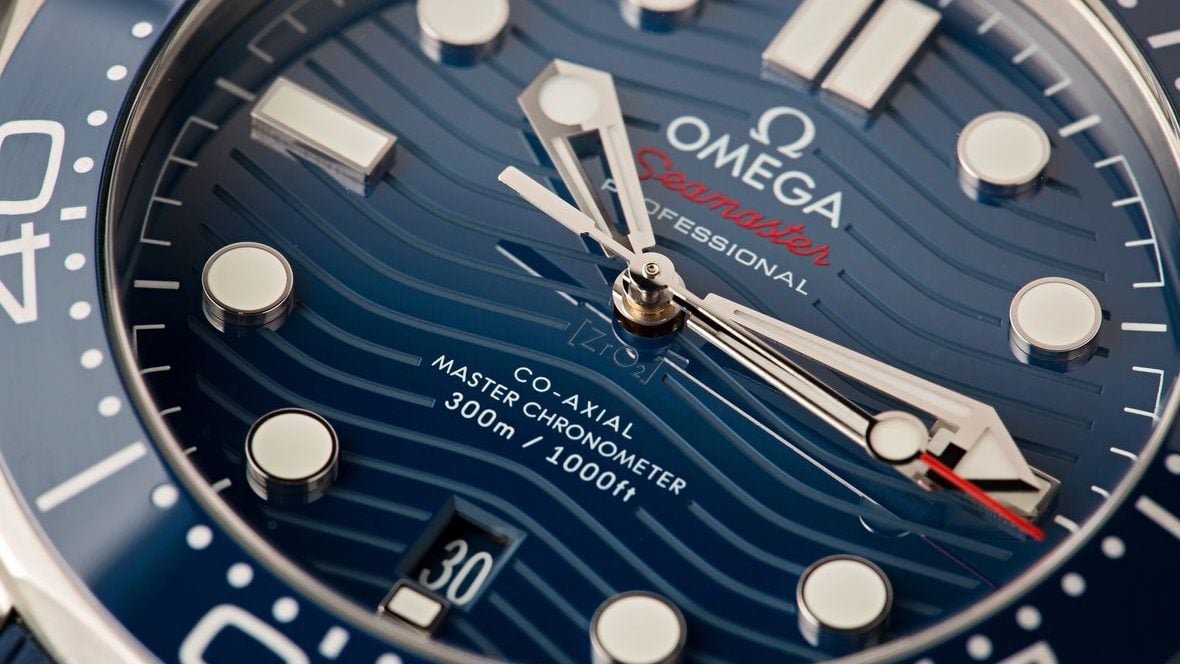
Rolex is not the only manufacturer hiding details in plain sight. Hidden markings have served as quiet authentication tools and brand signatures across the luxury watch industry for decades, and a few of the best examples come from OMEGA.
- The Micro-Omega Logo on Hesalite Crystals: OMEGA has etched a microscopic Omega symbol into the exact center of its Hesalite acrylic crystals since the 1950s. The mark is most famous on the OMEGA Speedmaster Moonwatch, where the domed Hesalite crystal, chosen because acrylic does not shatter into fragments in zero gravity, carries the tiny logo directly over the center of the dial. Like the Rolex coronet, it is nearly invisible without magnification and angled light.
- The “ZrO2” Marking: OMEGA’s modern ceramic dials carry a discreet “ZrO2” etching, the chemical formula for zirconium oxide. The mark identifies the dial material itself, turning a materials-science footnote into a subtle authentication detail on models like the Dark Side of the Moon Speedmaster.
- The Two-Color Lume on Seamaster Professional Watches: The OMEGA Seamaster Professional line uses two distinct colors of Super-LumiNova, blue for the hour markers and hands and green for the minute hand and bezel dot. The split is functional, designed so a diver can instantly isolate elapsed-time indicators in deep, dark water.
These details reward the same habit the Rolex micro-coronet does: looking closer. The difference between a mass-produced replica and a genuine luxury watch often lives in features the manufacturer never advertises.
Authenticating and Securing Your Rolex Investment
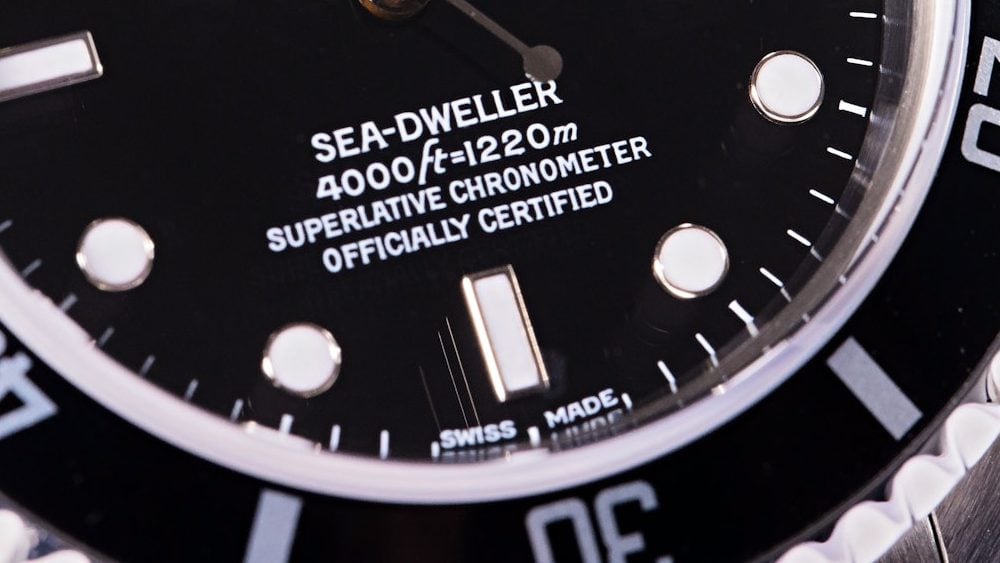
The laser-etched crown is one data point in a multi-step authentication process, never a single source of truth. Advanced replicas have begun attempting crude copycat etchings, and genuine watches can carry service replacement crystals, so the LEC must be weighed alongside the serial and reference engravings, the rehaut engraving on modern references, the movement architecture, the dial printing, and the case finishing. A watch passes authentication when every detail agrees, not when one feature checks out.
This is where buying from an established specialist matters. Bob’s Watches built its reputation on exactly this kind of scrutiny: every pre-owned Rolex passes through a double-certified, in-house watchmaker inspection that verifies each detail, from the caliber’s hairspring down to the microscopic dots inside the sapphire crystal. For collectors, that process turns the micro-coronet from a curiosity into what it was always meant to be, one more layer of confidence in a genuine watch.
The post What Is the Laser-Etched Crown at 6 O’Clock on a Rolex? appeared first on Bob's Watches.