Bob's Watches Bob's Watches
A Rolex GMT-Master at an authorized dealer retails for roughly $11,800 to $12,300 in stainless steel, with solid gold models climbing between $38,000 to 57,000. On the secondary market, modern steel references generally start around $17,000 and rise well beyond that for the most sought after colorways. The gap comes down to supply, since Rolex produces fewer watches than buyers want, which pushes demand into the pre-owned market. That gap widened in April 2026, when Rolex discontinued the famous “Rolex Pepsi” GMT and lifted prices on the remaining steel models.
Key Takeaways
- Retail entry point: Stainless steel models on Oyster or Jubilee bracelets start around $10,700 to $11,300 MSRP.
- The price gap: Secondary market prices on steel references typically run above retail.
- Value drivers: Reference number, bezel material, box and papers, and bracelet type all shape the final number.
- Recent shift: The steel and white gold “Pepsi” references were retired in 2026, and that scarcity is now part of the pricing picture.
One point worth setting up front: every GMT-Master in production today is a Rolex GMT-Master II, while the original GMT-Master line that ran from 1955 to 1999 now lives entirely on the vintage market. The sections below break down current retail figures, secondary market values, and the key references from both lines. Use them to set a realistic budget before you start shopping.
Current Rolex GMT-Master II Retail Prices (MSRP)

MSRP is the price Rolex sets for a watch at an authorized dealer, or AD. Rolex reviews these figures periodically, usually once a year, so the numbers move over time. The catch is availability. Stainless steel Rolex GMT-Master II models sit behind long waitlists, which makes the retail price a useful reference point rather than a number most buyers will pay at the counter.
| Reference | Nickname / Material | Bracelet Options | Current Retail (MSRP) | Pre-Owned Price |
| 126710BLNR | “Batman” / “Batgirl” (steel, blue and black) | Oyster / Jubilee | $11,800 to $12,000 | $22,000 – $26,000 |
| 126710GRNR | “Bruce Wayne” (steel, grey and black) | Oyster / Jubilee | $11,800 to $12,000 | $19,995 – $22,795 |
| 126720VTNR | “Sprite” (steel, green and black, left-handed) | Oyster / Jubilee | $12,300 to $12,600 | $17,000 – $19,000 |
| 126713GRNR | Two-tone Rolesor (grey and black) | Jubilee | $20,450 | $22,000 – $24,000 |
| 126718GRNR | Yellow gold (grey and black bezel) | Jubilee | $50,800 | $42,000 – $44,000 |
One important update: Rolex discontinued the steel “Rolex Pepsi” (Ref. 126710BLRO) and the white gold “Pepsi” (Ref. 126719BLRO) in April 2026, and no “Coke” replacement was announced. Both references have left the catalog, so the Pepsi now exists only on the secondary market, which is covered in the next section.
Secondary Market and Pre-Owned Values: The True Cost of a GMT-Master

When supply cannot keep up with demand, buyers turn to the secondary market, where watches change hands between dealers and private owners rather than through Rolex. This is where most people actually buy a steel GMT-Master II, since waiting years at a boutique is not realistic for everyone. Prices here are set by what the market will bear, and they move with demand rather than a fixed sheet.
The figures below reflect recent data tracked by market indexes and verified by dealers who handle these watches every day. Values shift week to week, so treat them as a current snapshot rather than a permanent price list. The strongest demand sits with the stainless steel sport models, so the analysis starts there.
The Stainless Steel Rolex Watches (Pepsi vs. Batman vs. Sprite)
Among steel references, the Pepsi has long carried the highest cost, a position that the 2026 discontinuation reinforced. The red and blue ceramic bezel is technically difficult to produce, since fusing two colors on a single piece of Cerachrom took Rolex years to perfect, and that rarity feeds collector demand. Here is roughly where the main steel colorways trade today:
- “Pepsi” (Ref. 126710BLRO): About $22,000 to $25,000, with full set Jubilee examples reaching higher as buyers react to the discontinuation.
- “Bruce Wayne” (Ref. 126710GRNR): Roughly $19,000 to $23,000, with the Jubilee version sitting at the top of that range.
- “Batman” / “Batgirl” (Ref. 126710BLNR): Around $15,000 to $20,000, with the Jubilee carrying a slightly higher cost over the Oyster.
- “Sprite” (Ref. 126720VTNR): Roughly $16,000 to $20,000, the left-handed model with a green and black bezel.
The pattern is consistent across all four: every current steel reference trades above its retail price, and the bracelet you choose can swing the number by $1,000 to $2,000.
Precious Metals and Two-Tone Market Trends
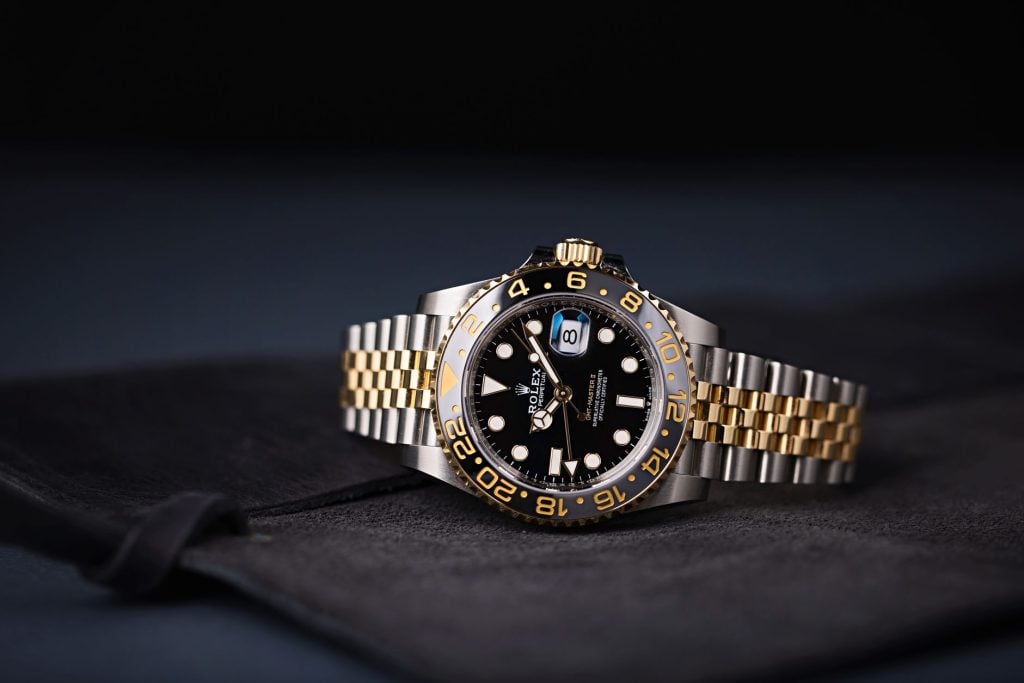
Solid gold and two-tone Rolesor models follow a different rhythm. They do not carry the same percentage based markup over retail that steel does, mostly because fewer buyers are competing for them and the higher entry price thins out demand. A yellow gold Rolex GMT-Master II retails near $38,000 – $57,000.
The exception is the discontinued white gold Pepsi (Ref. 126719BLRO), which retailed in the low $40,000s and now trades higher on the secondary market, with clean examples often listed near $48,000 to $49,500. For most precious metal references, though, the lesson holds: the markup is far gentler than the one applied to steel.
Vintage vs. Modern Rolex GMT-Master Pricing
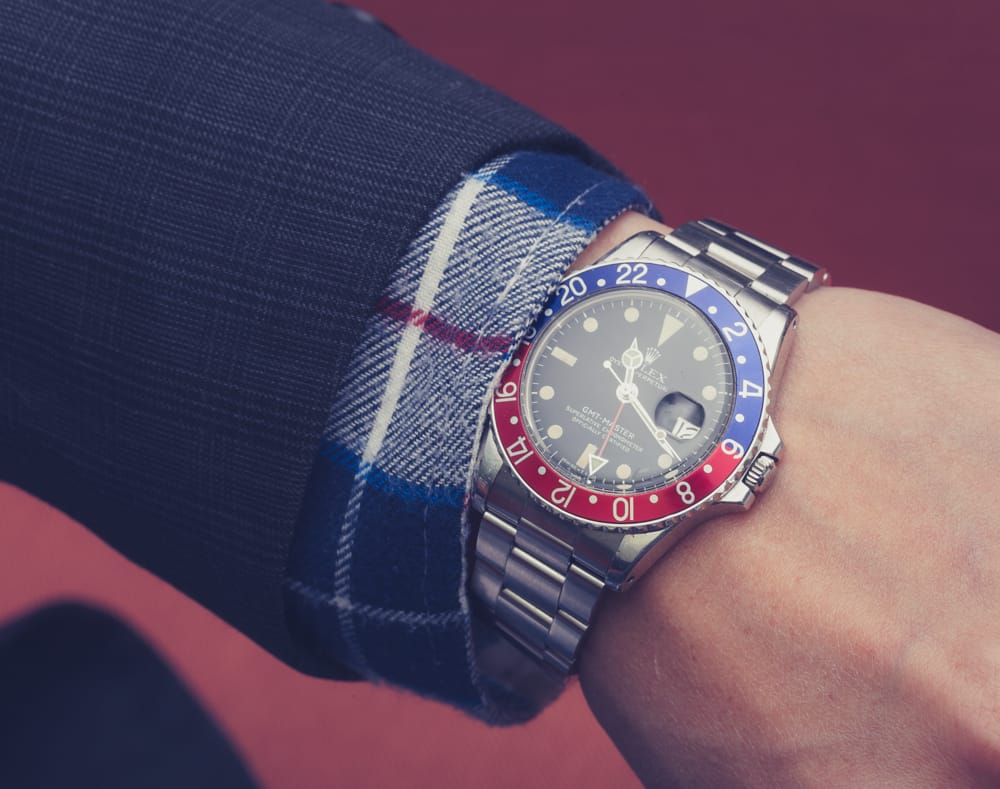
The GMT-Master name actually covers two distinct families. The original GMT-Master ran from 1955 to 1999 and used a 24-hour hand linked to the main hour hand, so reading a second time zone meant rotating the bezel. The GMT-Master II arrived in 1982 with an independently adjustable hour hand, which lets you track a second zone on the dial and a third with the bezel. Every model Rolex has produced since 1999 is a GMT-Master II.
That history shapes how the watches are priced. A modern GMT-Master II is a daily wearer, with a scratch-resistant Cerachrom bezel and the Caliber 3285 movement built for strong accuracy and a long power reserve. A vintage piece is a collectible asset, where condition, originality, and history matter far more than function, and small details can swing the value sharply. The references below are the ones collectors track most closely, split by line.
The Original GMT-Master References (1955 to 1999)
These are the watches that built the name, all fitted with aluminum bezels and the coupled hand layout. They are now found only on the vintage market.
- Rolex 6542 (the original): The first GMT-Master, known for its fragile early Bakelite bezel. Museum grade examples can command $50,000 to well over $100,000 at auction.
- Rolex 1675 (the long run classic): Produced from 1959 to 1980. Prices vary widely with condition, dial type, and patina, typically landing between $12,000 and $30,000, with rare gold and exotic dial versions higher.
- Rolex 16750 (the transitional): Made from 1981 to 1988, it added a quickset date and came with matte and later gloss dials. Examples generally trade between $11,000 and $16,000, with early matte dials at the top of that range.
- Rolex 16700 (the last of the line): Built from 1988 to 1999, this was the final original GMT-Master and the only one with a sapphire crystal. Clean examples usually run $10,000 to $14,000, with complete sets higher.
The First GMT-Master II References
When Rolex uncoupled the hour hand, the GMT-Master II was born. These early references are where the modern travel function starts, and they sit at the affordable end of the collectible market.
- Rolex 16760 (“Fat Lady” / “Sophia Loren”): Introduced in 1983 as the first GMT-Master II, with the red and black “Coke” bezel and a thicker case. Clean examples are scarce and often trade from around $15,000 upward depending on condition.
- Rolex 16710 (the neo-vintage entry): Produced from 1989 to 2007 with Coke, Pepsi, and black inserts, this is the most accessible way into the early GMT-Master II era, generally trading in the $10,000 to $14,000 range.
Key Factors That Drive the Value of a GMT-Master

Two watches with the same reference number can sell for very different prices. Before buying, verify the details below, because each one moves the final figure in a real way.
- Box and papers: Original documentation can affect the price by 10% to 20%. A complete set always sells for more than a watch head alone.
- Condition and polishing: Unpolished cases with sharp, original factory bevels are worth far more than over-polished examples with rounded lugs.
- Component originality: On vintage pieces, matching original luminous plots and period correct hands can roughly double a watch’s value compared to one fitted with service replacement parts.
- Bracelet type: Jubilee bracelets often carry a small increase in price over Oyster on modern references, reflecting current taste.
Sourcing a GMT-Master: Authorized Dealers vs. The Pre-Owned Market
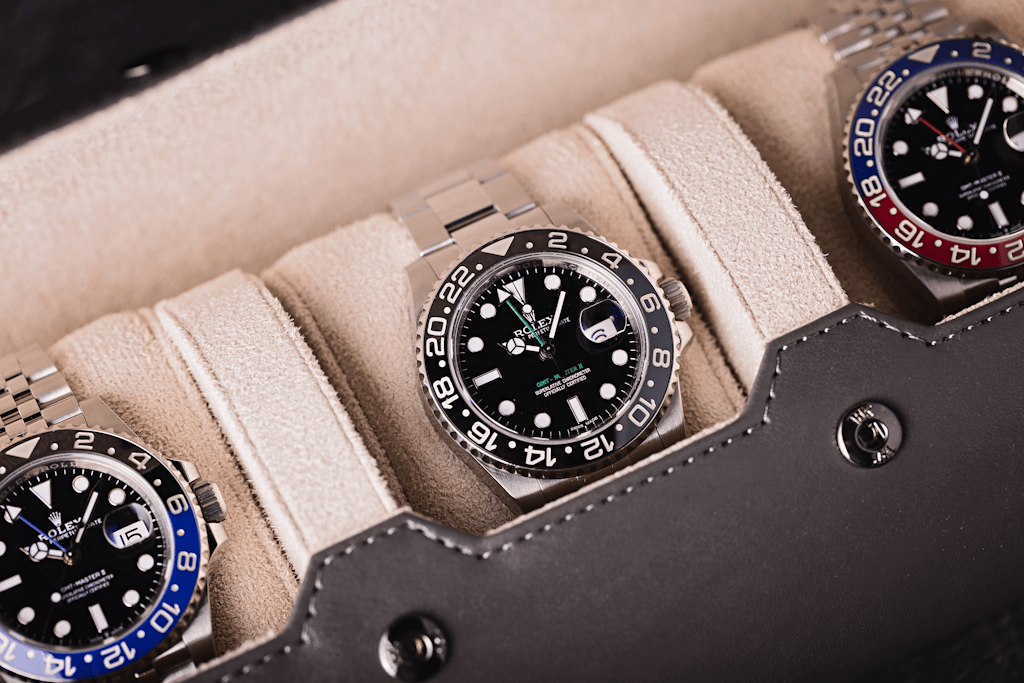
Buying at an authorized dealer looks like the cheapest path on paper, but the retail price is only part of the story. Most steel GMT-Master II models require an established purchase history before a dealer will offer you “the call,” which often means spending thousands on other jewelry or watches first. Add a wait that can run one to two years, and the true cost of going retail is measured in patience and side purchases as much as the sticker price.
The pre-owned market removes the wait, and you pay for that immediacy in the form of a premium. Rolex’s own Certified Pre-Owned program sits at the higher end of this market, offering factory backed authenticity and a warranty, though those guarantees usually price the watches above standard secondary market rates. Whichever route you choose, the deciding factor is how much your time is worth relative to the premium.
Is a Rolex GMT-Master a Good Investment?
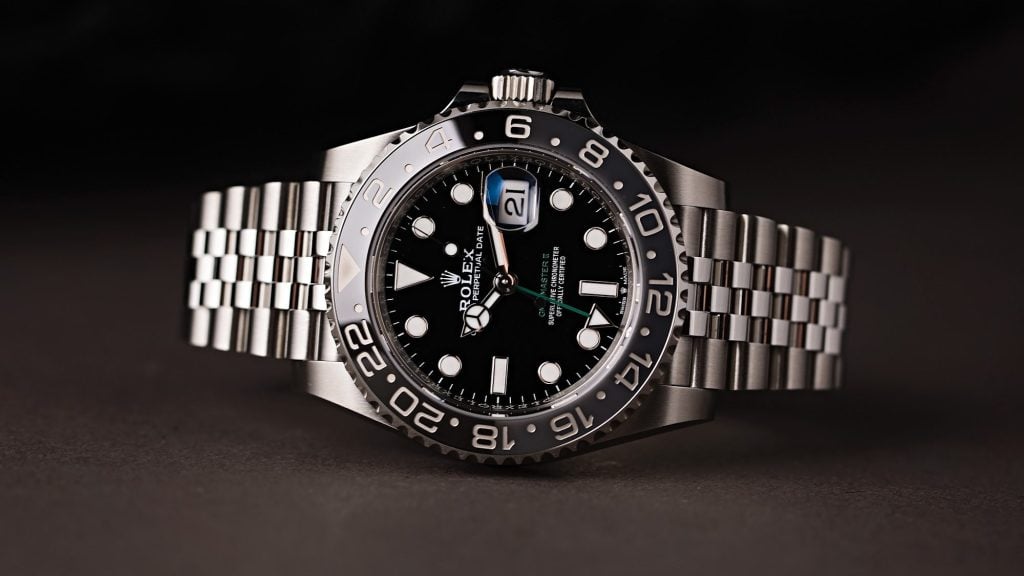
The GMT-Master II is one of the steadier sports models in the luxury watch world. Steel references have historically held their value better than most jewelry and entry level luxury watches, and a long view shows that nearly every GMT-Master II reference has appreciated over time, putting it in the same conversation as the Submariner and the Daytona. The discontinuation of the Pepsi added a layer of scarcity that has supported prices on the remaining steel lineup.
Value retention is not the same as a guaranteed return, though. The market cooled after its peak in early 2022, and buyers who paid top dollar at that moment watched prices settle back. A watch is far less liquid than a stock, and resale always depends on demand at the time you sell.
The GMT-Master II holds its value better than most jewelry and entry level luxury watches, but buying at a peak secondary market price means accepting the risk of a correction. Buy for the engineering and the heritage first, and treat any financial appreciation as a bonus.
Final Verdict: Navigating Your GMT-Master Purchase
If waiting years is not an option, that premium is simply the price of wearing a watch today, and the used Rolex market gives you immediate access to the exact reference and bracelet you want.
Whether you choose a vintage matte dial Reference 1675 or a modern ceramic steel model, the GMT-Master remains a benchmark for travel watch design and everyday durability. Before you commit, run through a short checklist: confirm the reference number, inspect the case for honest wear, ask for the box and papers, and buy only from a trusted, vetted dealer who guarantees full authenticity. Verification is what protects both your money and your peace of mind.
Frequently Asked Questions (FAQs)
The post Rolex GMT-Master Price Guide: What It Costs at Retail and Pre-Owned appeared first on Bob's Watches.